

A Four-Person Team Shipping What Twelve Used To
Three client engagements. Three galaxies. Real numbers.
The Before
A traditional consulting engagement for a mid-market construction company: 12-person team. Two architects, four developers, two QA, one BA, one PM, one DevOps, one DBA. Weekly sprint cadence. 6-month timeline for a portfolio website with CMS, project galleries, and vendor management.
Cost to client: $840,000. Time to first deliverable: 8 weeks.
The After: WaltersFL
Same scope. Construction company. Portfolio website with real project galleries, CDN-delivered imagery, category filtering, project detail pages.
Team: one Modern Principal and three domain contributors (client stakeholders providing content and feedback).

Timeline:
- Day 1: Vibe foundation + galaxy setup + epic design
- Day 1-2: Miracle executes 5 phases overnight
- Day 3: Forge verification + content population
- Day 4-5: Client review + revisions
- Five days to deliverable. Not eight weeks.
Cosmic emissions (actual token costs):
| Phase | Model | Input Tokens | Output Tokens | Cost |
|---|---|---|---|---|
| Analysis (5 phases) | Sonnet | 245K | 62K | $2.14 |
| Execution (5 phases) | Sonnet | 312K | 89K | $3.72 |
| Total | 557K | 151K | $5.86 |
Five dollars and eighty-six cents in AI costs for a website that previously cost $840,000 in labor.
The labor is not zero, the Principal’s time, the client’s time, the revision cycles. But the ratio changed from 12 people × 6 months to 1 person × 5 days plus client involvement.
SolarScore: The Pattern Repeats
Solar proposal scoring platform. Seven phases. 334 files. One day of design, one night of Miracle execution.
Cosmic emissions:
| Activity | Tokens | Cost |
|---|---|---|
| Epic decomposition | 42K | $0.35 |
| Analysis (7 phases) | 380K | $3.10 |
| Execution (7 phases) | 520K | $4.95 |
| Total | 942K | $8.40 |
PropertyManagement: Concurrent Streams
While WaltersFL and SolarScore were running, a third galaxy was in flight: PropertyManagement. Vendor management, lease tracking, maintenance workflows.
Three concurrent client engagements. One Principal. One workspace.
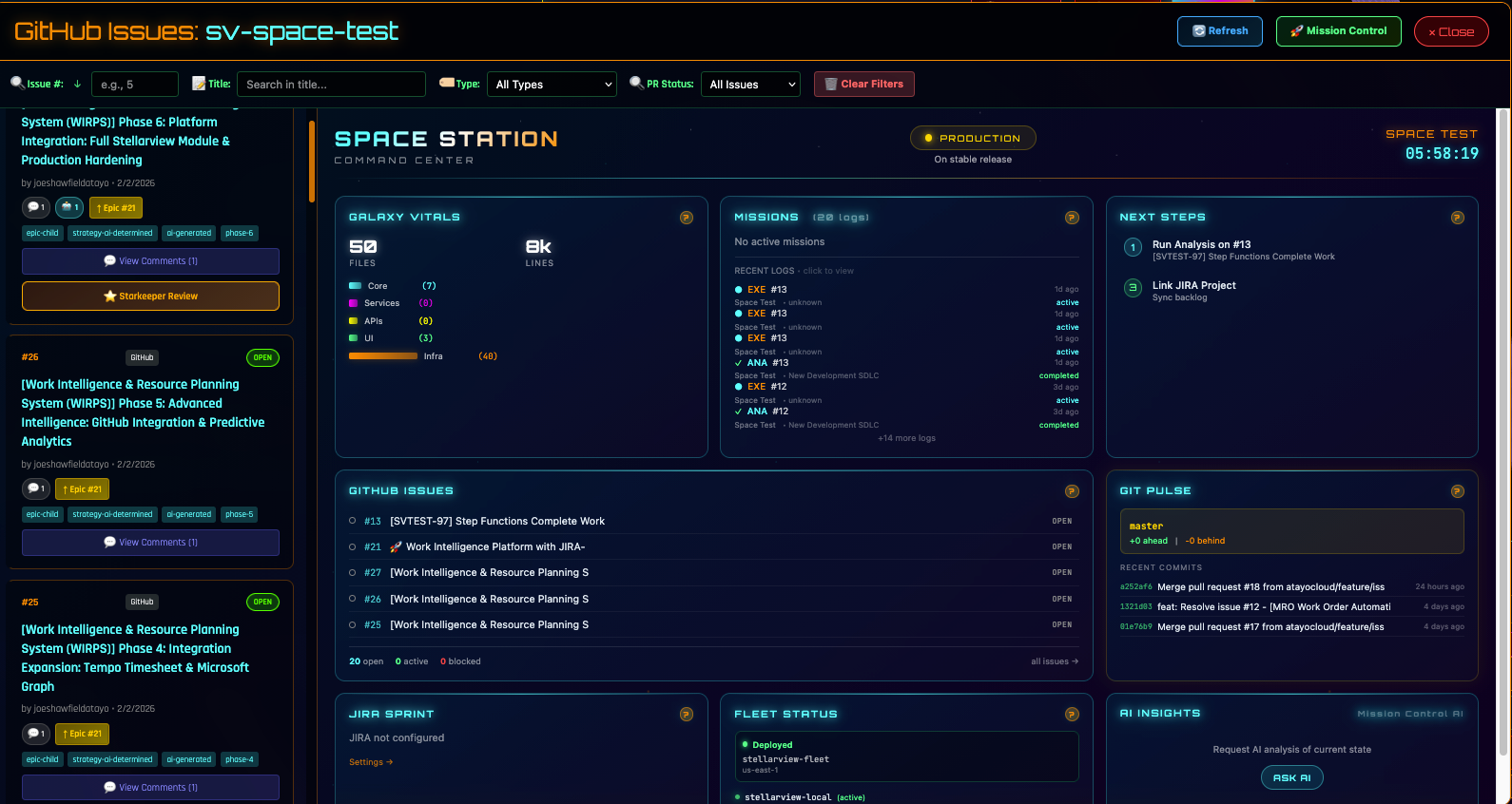
This is the multiplier effect. The skills built for WaltersFL (CRUD patterns, deployment configs) compound into SolarScore. The patterns from SolarScore (data scoring, compliance) inform PropertyManagement. Every galaxy makes the next galaxy faster.
What Changed, What Didn’t
Changed:
- Code generation: AI-driven, 334 files in a night
- Architecture: AI-decomposed with human review
- Testing: Forge verification (still improving. SolarScore taught us about boot checks)
- Deployment: Fleet-managed infrastructure
- Knowledge: Space Lake captures everything for the next engagement
Didn’t change:
- Client relationships: still human
- Requirements gathering: still conversations
- Design decisions: still the Principal’s judgment
- Quality standards: still PracticAI Nobility
- Accountability: still one person owns the outcome
The AI replaced the labor of implementation. It did not replace the craft of practice.
The Real Cost Comparison
| Traditional | StellarView | |
|---|---|---|
| Team size | 12 | 1 + 3 client contributors |
| Timeline | 6 months | 5 days |
| Labor cost | $840K | Principal’s time (~$15K equivalent) |
| AI token cost | $0 | $5.86 |
| Knowledge retention | Wiki nobody reads | Space Lake, queryable forever |
| Reuse for next client | Start from scratch | Skills + patterns compound |
The numbers speak. The practice works.