
Scared of the cloud? Unsure about Scrum or Agile?
Your documents in. A running, supported company out.
StellarView builds complete platforms and deploys them to the cloud, where they run with support. Two documents in, a running product out →
Who are you?
New, Oct 12: Agents in the ceremonies you already run: one sprint, on the record
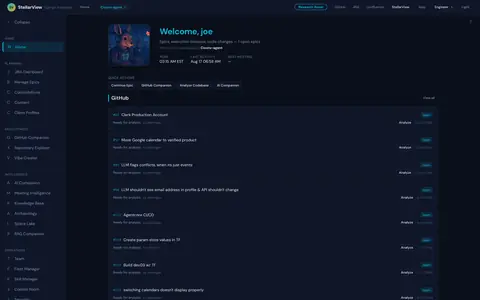
You no longer have to master GitHub, Jira, Confluence and every cloud console to use them.
StellarView brings them to your fingertips, in plain words, at the step you are on.
Our mission
Giving life and vision to the Software Development Lifecycle for everyone, as the foundation for working faster with AI agents in the modern enterprise.
This is why we built it. We could not keep up, and learning every technical detail was overwhelming us. We want to orchestrate the work, not operate every lever.
Agents write the code now, and more consistently than we do. The difference is the practitioner who guides them from above: PractiCAI is for that person, the SDLC gives us the subjects, and StellarView amplifies them.
Why, and who it is for →Developer Seeker: picked for you
- Watch The whole lifecycle , 19:42
- Read The Modern Principal
- In 40 seconds Big Bang
Platform Visionary: picked for you
- Watch The longer take, with a demo , 5:10
- Read Show HN: we breed the whole horse
- In 40 seconds Fleet
Project Manager: picked for you
- Watch One sprint , 7:27
- Read The Cyborg SDLC series
- In 40 seconds Epic
Investor: picked for you
- Watch Welcome to PractiCAI , 1:11
- Read The demo is not the system
- In 40 seconds Big Bang
Kept in your browser only. Nothing is sent.
How it works, in six steps
-
01
See it
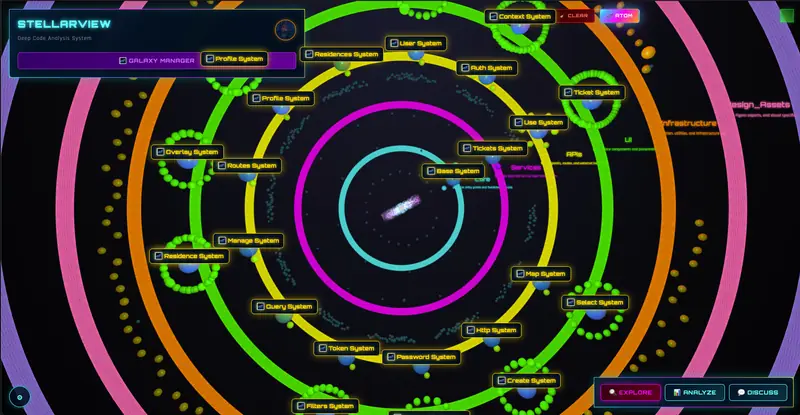
It reads a codebase out of its own repository and draws it as rings, one ring per architectural layer, every system labelled.
-
02
Plan it
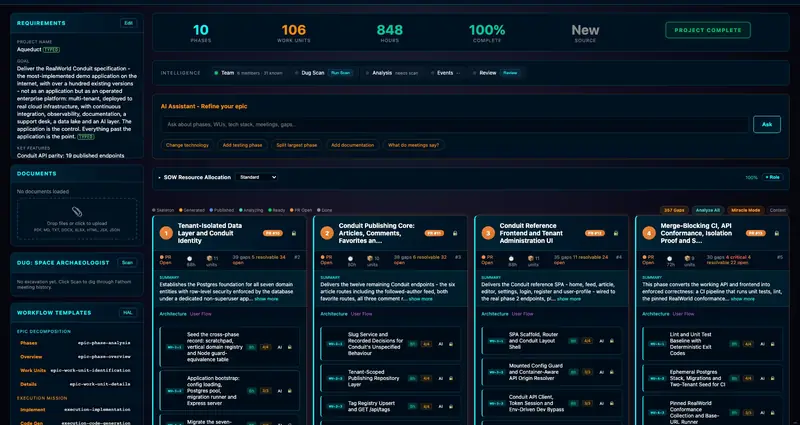
Your documents go into the Big Bang. On the RealWorld Conduit build, one document came out as a full plan, and every question it would not answer for itself went to a person.
Watch: The plan, and its questions · 5:06 → Source: StellarView Alpha, part one →
-
03
Build it
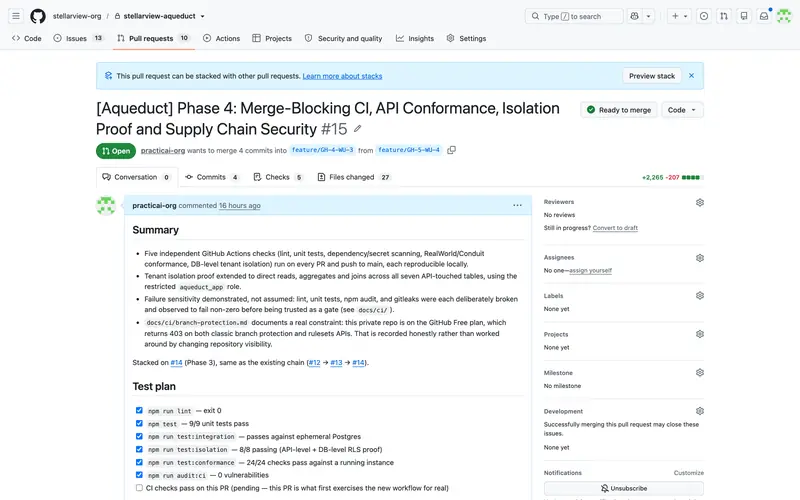
The phases run unattended on your own repositories, a branch and a pull request per phase, each stacked on the one before.
Watch: The run · 3:24 → Source: StellarView Alpha, part three →
-
04
Launch it
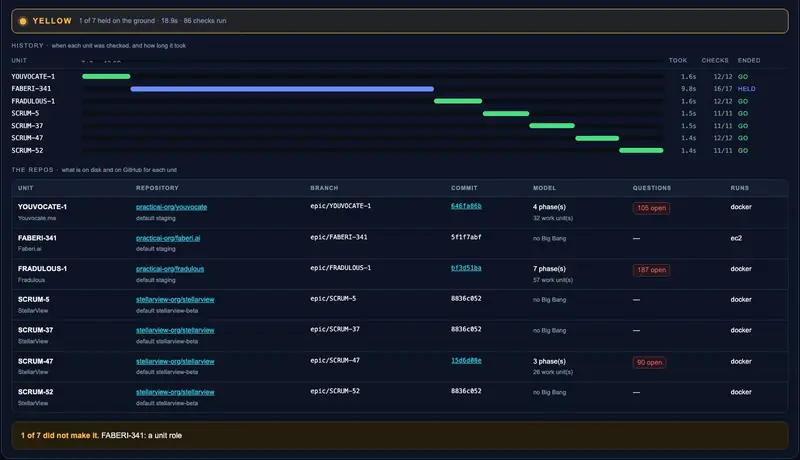
It deploys to the cloud, and a launch can say no: one unit was held at its checks while the others went.
Watch: Launch day · 5:36 → Source: Show HN: the whole horse →
-
05
Run it together
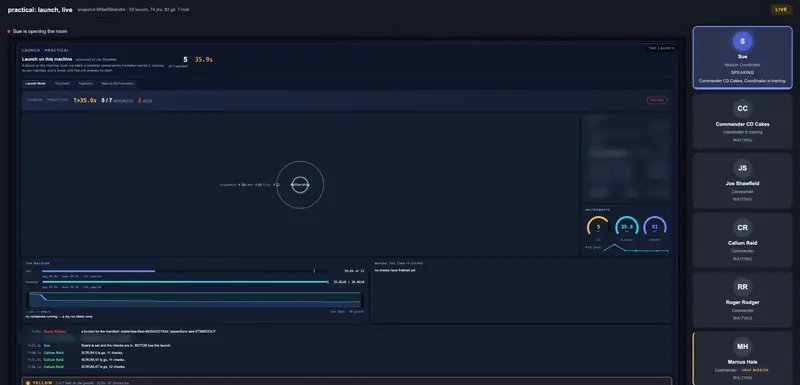
People and agents work in the same rooms on one record. In the sprint’s meetings, a claim that does not cite a fact is struck before it is said.
Watch: One sprint · 7:27 → Source: Every claim cites a fact →
-
06
Hand it over
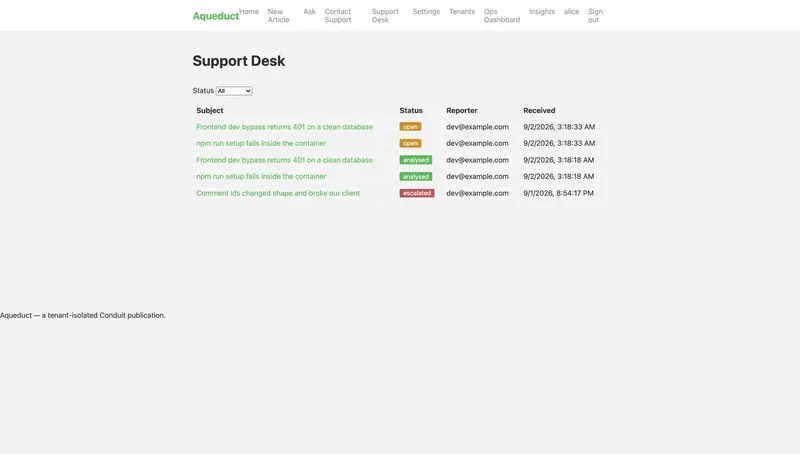
It stays on your repositories, your issues, your board and your wiki. The published RealWorld suite passes thirteen of thirteen, and it comes with its own support desk.
Watch: Operated · 3:41 → Source: StellarView Alpha, part five →
The skill first, then the app
Few AI products connect what they do to the knowledge of the SDLC. Ours are worked examples of it, and the skill comes first.
-
LDS
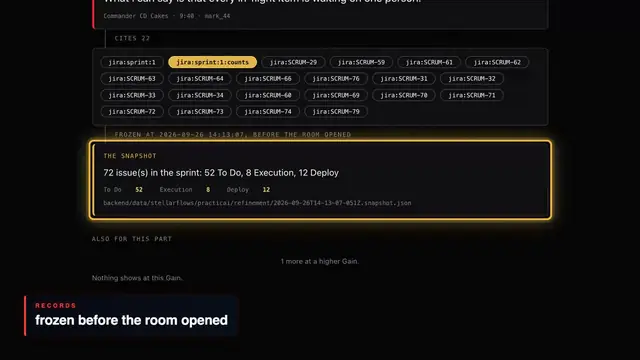
Little Doowop Snapper turns a recording into a film with the whole record underneath it.
Discuss it: Under the film: what one meeting leaves behind →
-
What it teaches
- how a product is built with StellarView
- how it is maintained
- how it is deployed
- how it is distributed
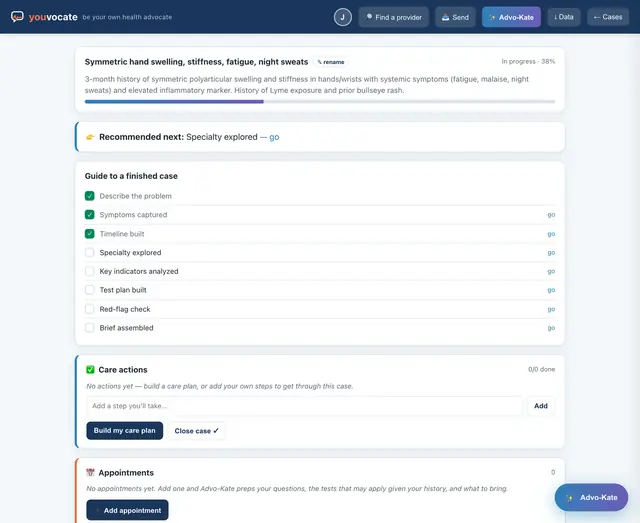
Youvocate
An advocate beside somebody working through their own health. It organises and routes. It never diagnoses.
-
What it teaches
- the AWS account
- migration to the cloud
- the landing zone
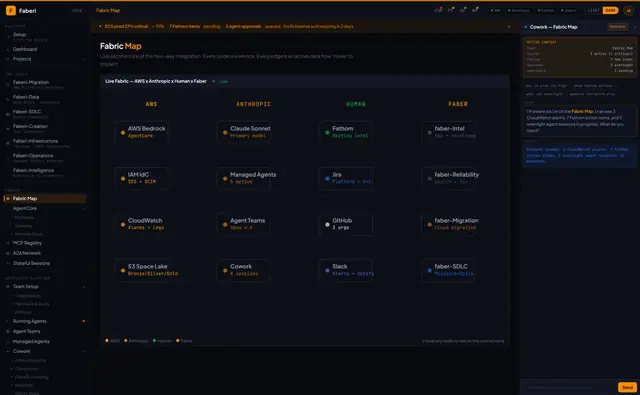
Faberi
Enterprise AI operations. It shows every signal that needs a person, and what the models cost.
-
What it teaches
- database administration
- tuning
- backup and recovery
- database migration
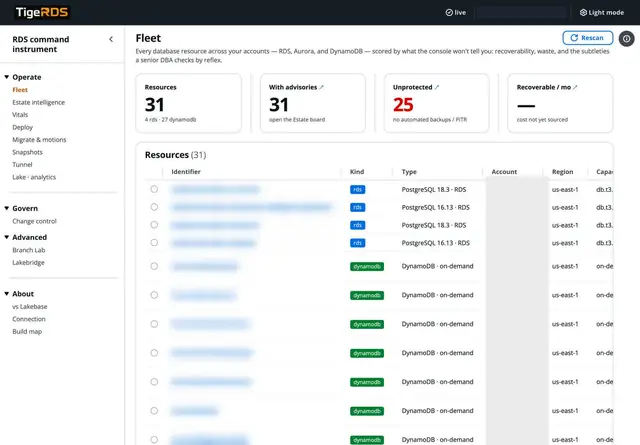
TigeRDS
The database estate, scored for recoverability and waste.
Latest
New on the Journal
57 articles and 44 films across the site, with new ones most weeks.
- Cyborg SDLC Newest: Agents in the ceremonies you already run: one sprint, on the record
 Series, 3 parts
 - Show HN: Everyone can generate a demo now. Almost nobody can hand over a company.
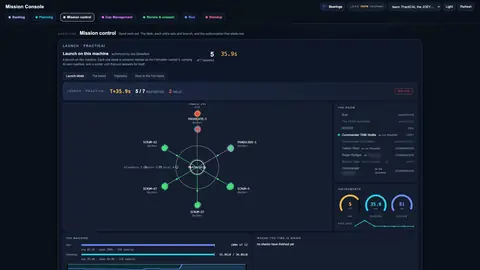
- The JOEY Mob Newest: The JOEY Mob, part four: two documents in, a running product out
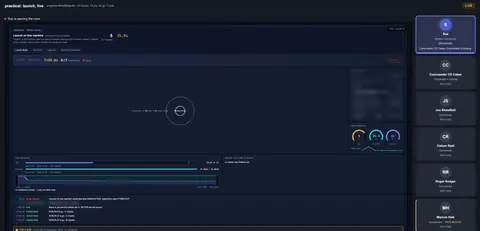 Series, 4 parts
 - A Dance, Not a Decision: Building Sonia von der Lippe's Sentence
- StellarView Alpha Newest: StellarView Alpha, part five: their suite failed us by one request
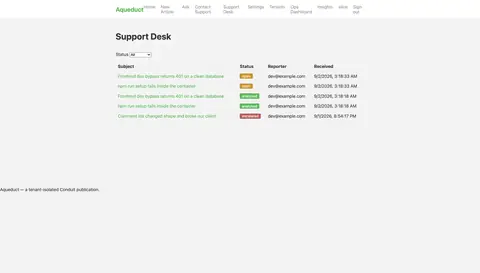 Series, 5 parts
 - The experience was the hard part
- There Are No Best Practices For This Yet
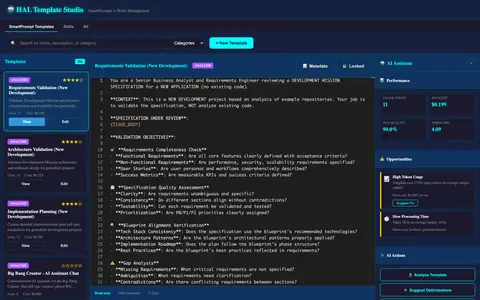
- The Enablement
It is still you.
AI writes code. A chatbot will not build an enterprise, and the SDLC will not learn itself.
Bring your documents Start learning Bring your documents See one sprint, on the record Talk to Joe Why we built it →We hand over an enterprise platform, not a prototype: the repository, its record and the running system, with your team trained in the meetings it already holds.
You see it built and running before you pay anything. The engagement can be included in the cost of the product.