
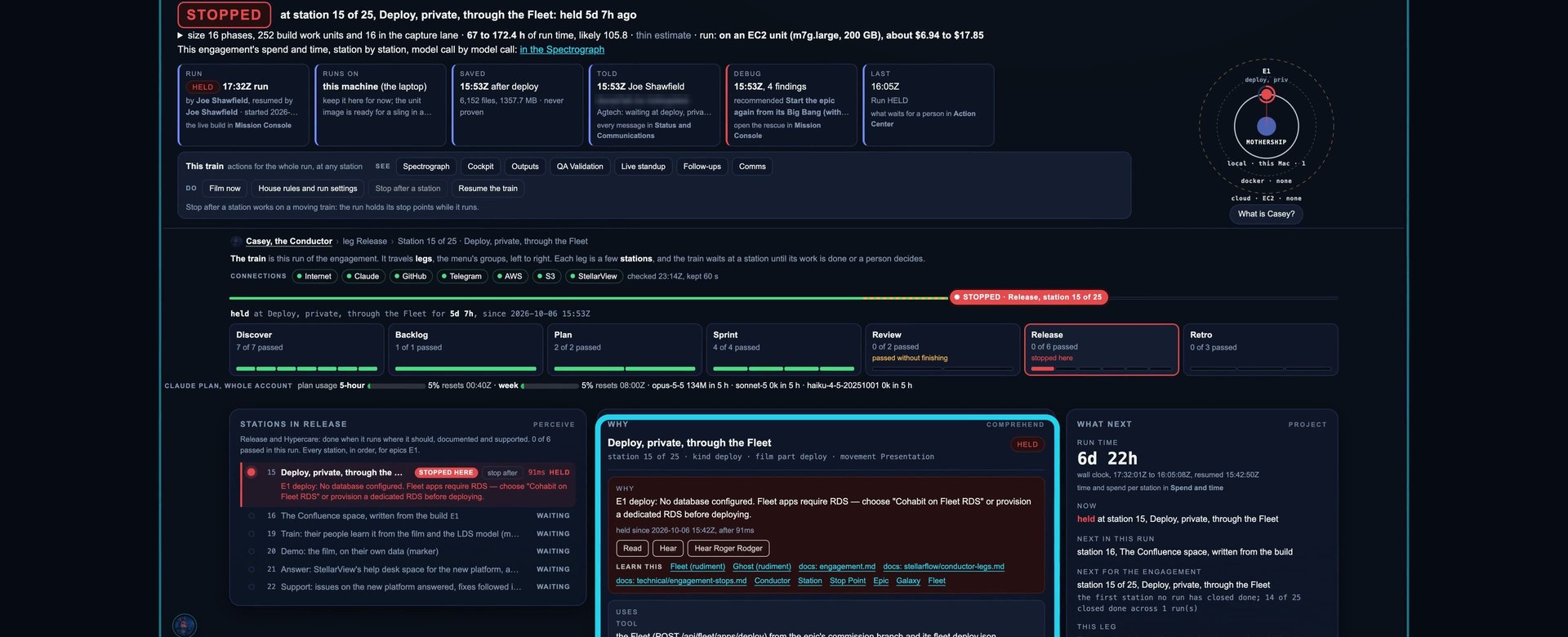
Pulse Operations
Traditional project management assumes a beginning and an end. Pulse Operations assumes a stream of signals that never stops. The Modern Principal does not manage projects. They operate systems.
We are not replacing the human in the loop. We are removing the wait from the loop.
What the Pulse is
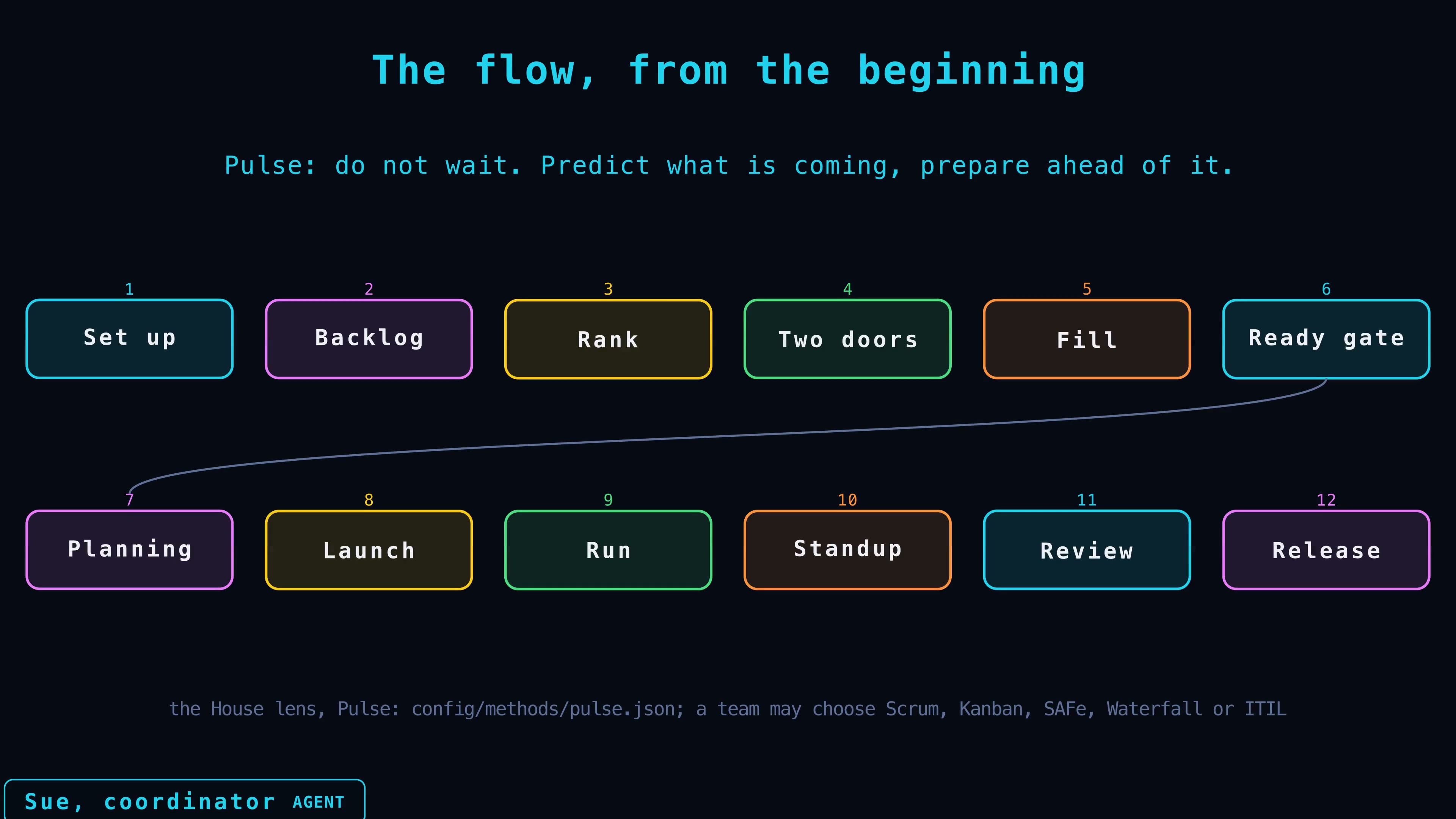
The Pulse is our own way of working, and the house default in StellarView: agents flow, people meet on a cadence, and a person decides. It sits beside the ways teams already work. A team can run StellarView under Scrum, Kanban, SAFe, Waterfall or ITIL instead; the Pulse is one lens on the same machine.
Its flow runs from the beginning: set up, the backlog, the order, the two doors into an epic, the fill, the ready gate, then planning, the launch, the run, the standup, the review and the release. The agents do not wait between stations. People meet on their cadence, in the meetings a team already holds.
Read · one sprint, on the record
The six states
Every signal that enters the practice moves through six states. They are states, not stages: a signal can be in more than one at once, across different projects.
Detect → Classify → Intercept → Resolve → Close → Echo
Detect
Signals arrive from everywhere: meetings, Jira, GitHub, transcripts, support tickets and alerts. The platform reads them as they come. Every meeting is recorded and read, so the Principal checks one place where the signals are already waiting, not twelve dashboards.
Classify
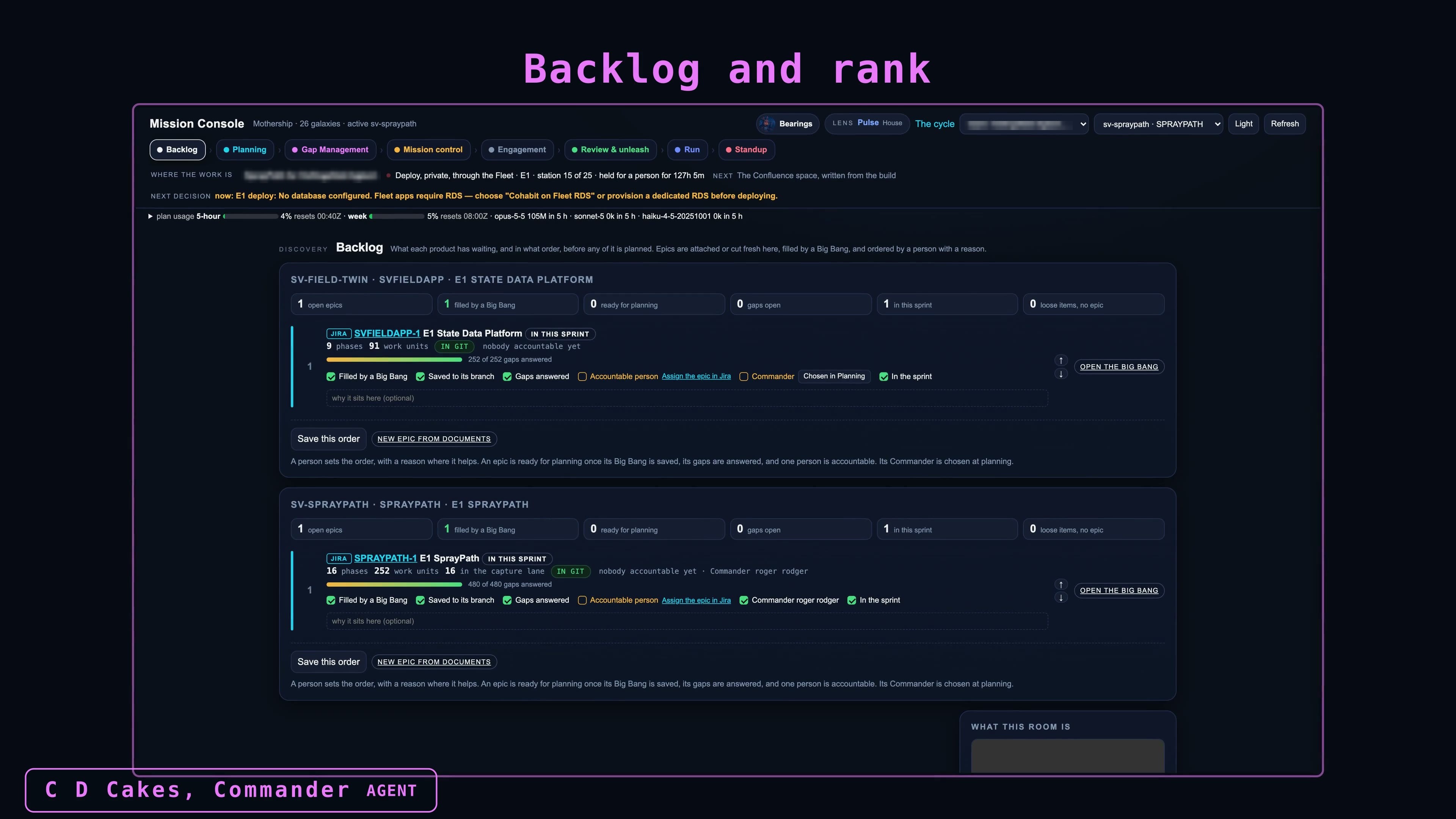
Not every signal needs action. Classification separates noise from signal and puts the rest in order. In the Pulse an agent may propose the order; a person sets it, with a reason for each epic.
Read · one sprint, on the record
Intercept
This is the critical state: acting on a signal before it compounds. Something stuck at eight in the morning is a ten-minute fix. The same thing found during a Friday demo is a reputation problem.
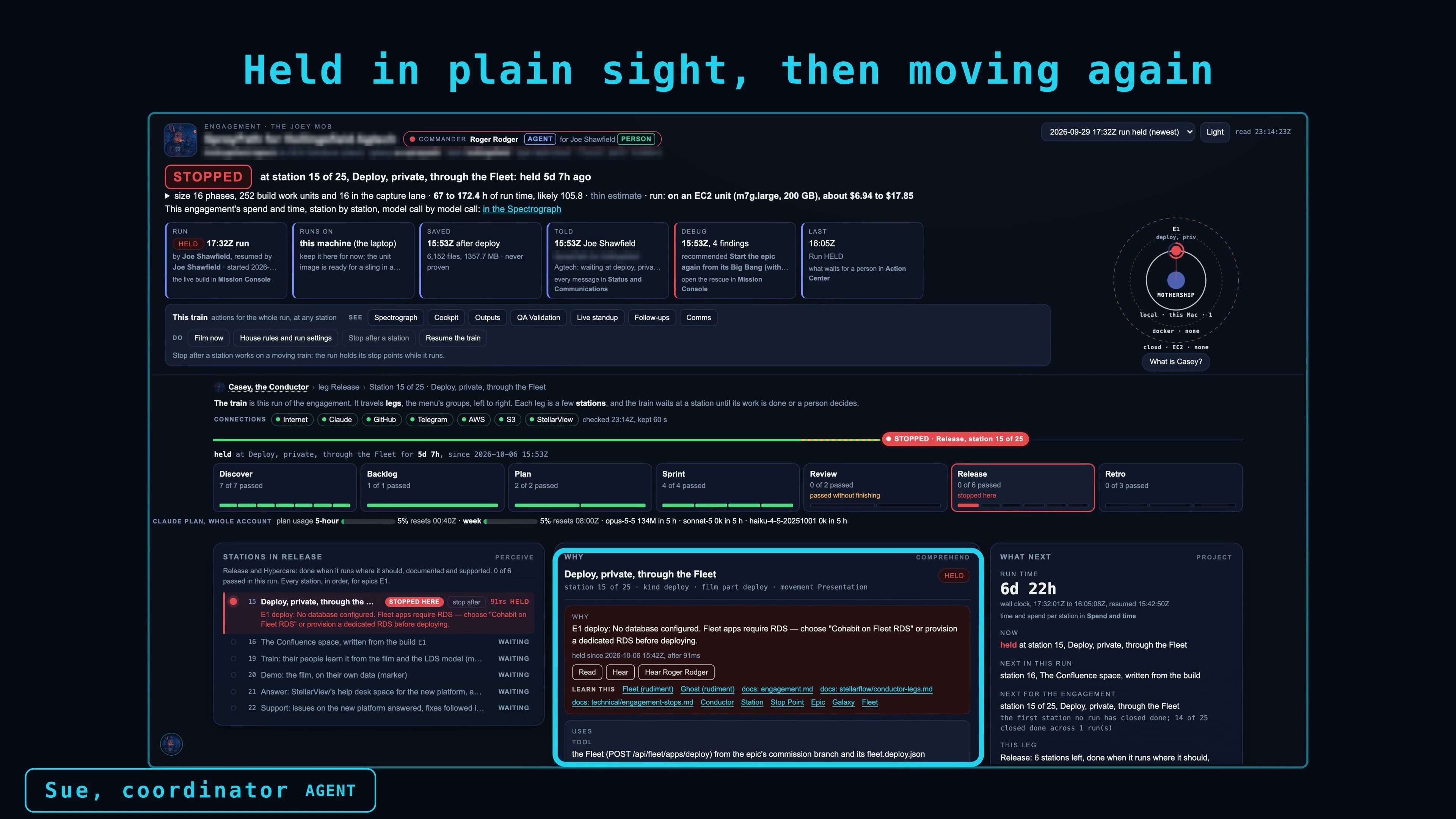
The run does not hide a stop. A station that is held shows as held, in plain sight, with its reason, until a person moves it on.
Read · one sprint, on the record
Resolve
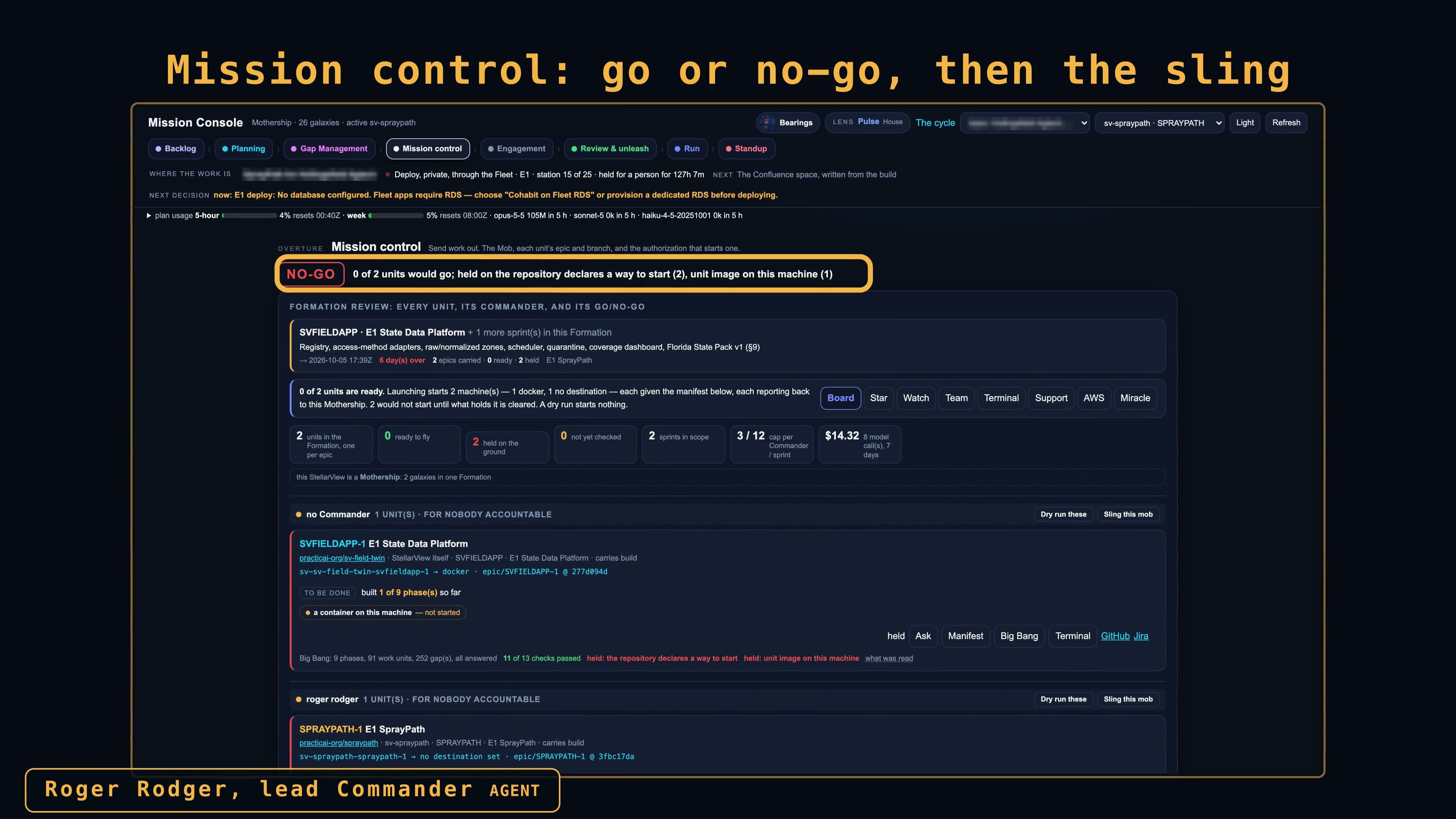
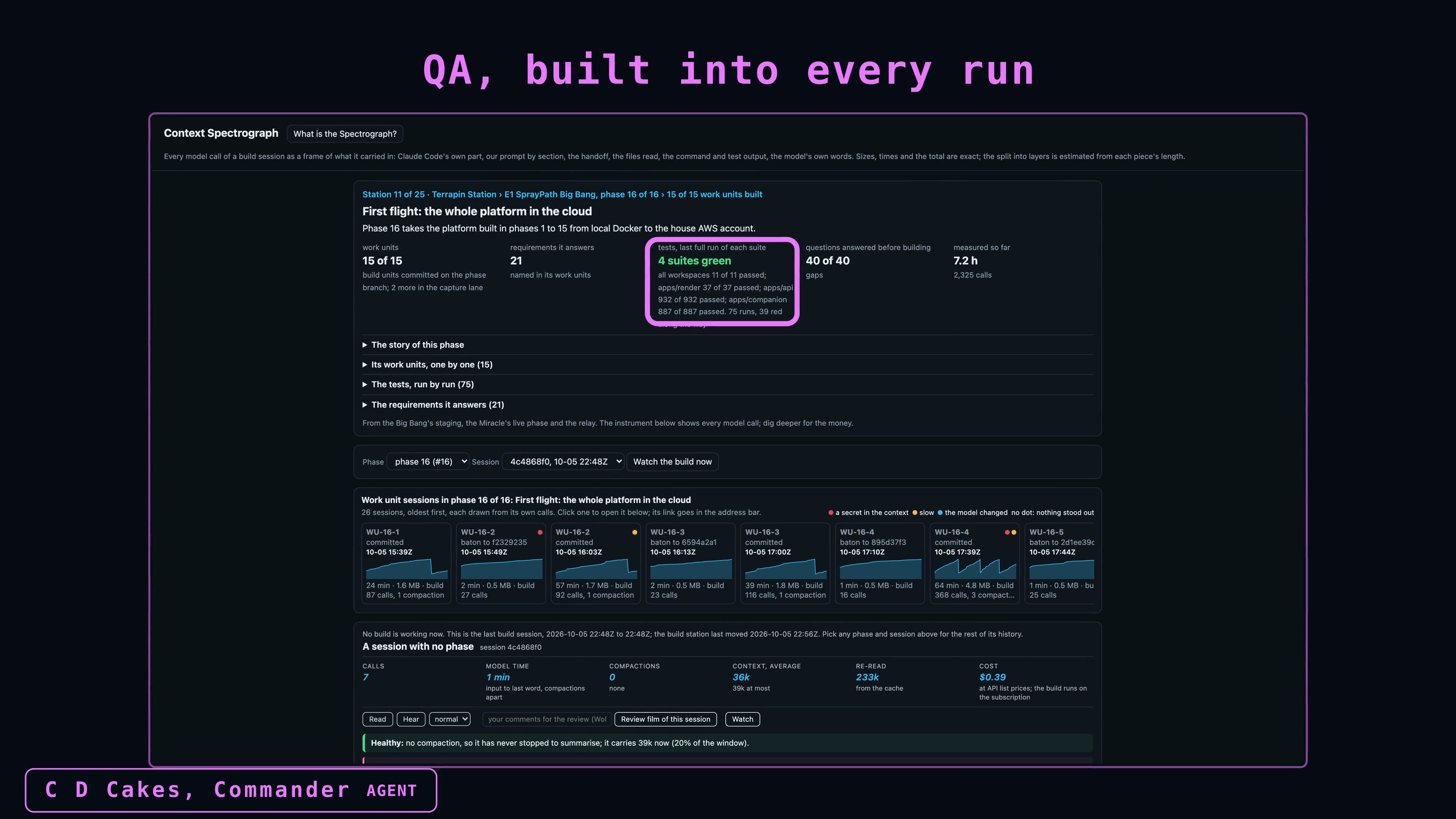
Resolution is the work itself. Mission Control gives each unit its go or no-go before it is sent to run, and a named person authorizes it. Quality is not a phase at the end: the tests run inside every run, and their results are judged on evidence.
Read · one sprint, on the record
Close
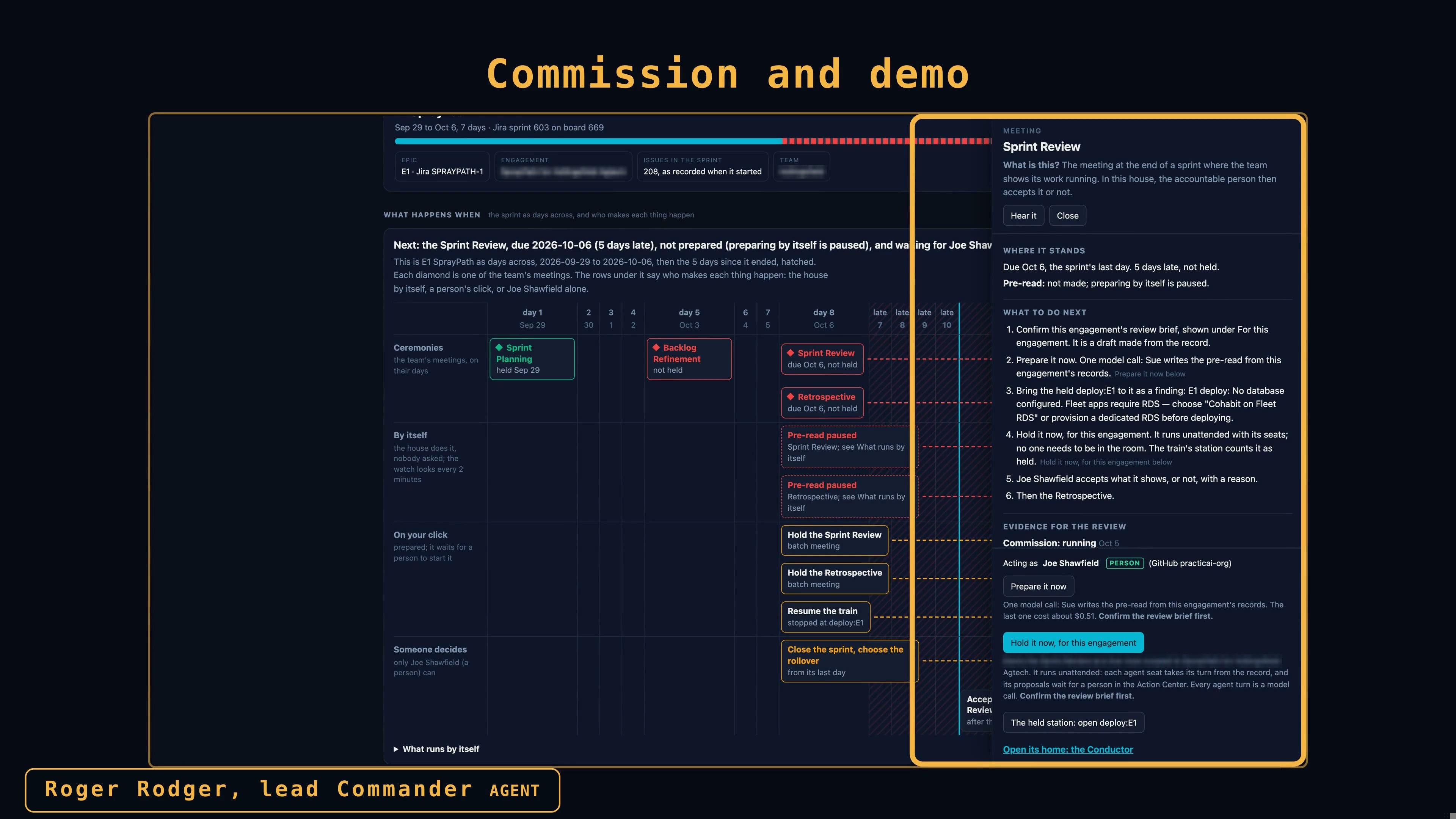
Closing is not “done.” Closing means the signal is resolved and the resolution is verified. The Commission is that verification: it boots the whole stack from clean and runs every gate. On SprayPath it found work the agents had left, fixed it on its own branch, and wrote down why the end-to-end tests that failed did. Only then are the stacked pull requests merged, in order, and the product shown to the people who asked for it.
Read · one sprint, on the record
Echo
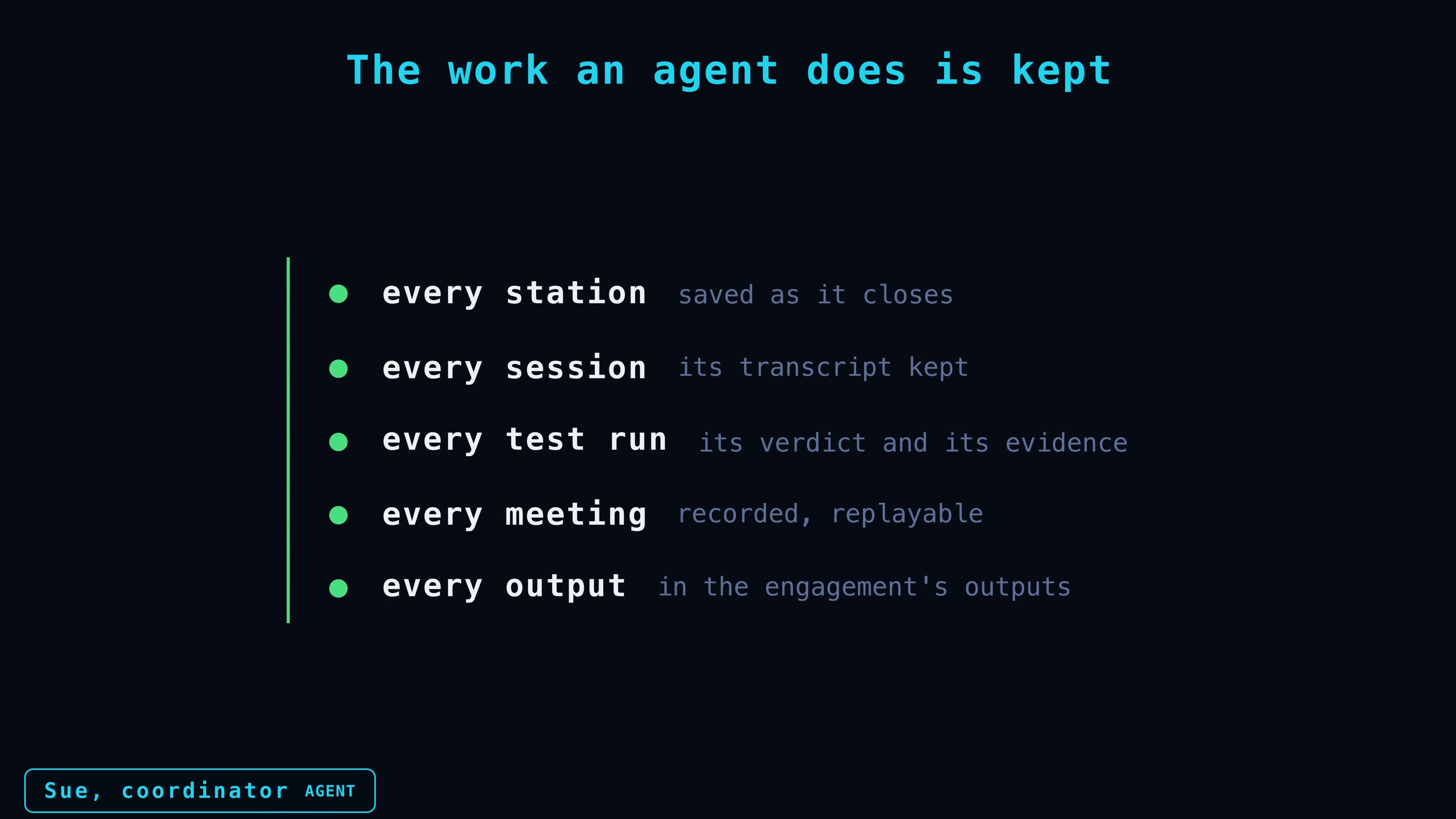
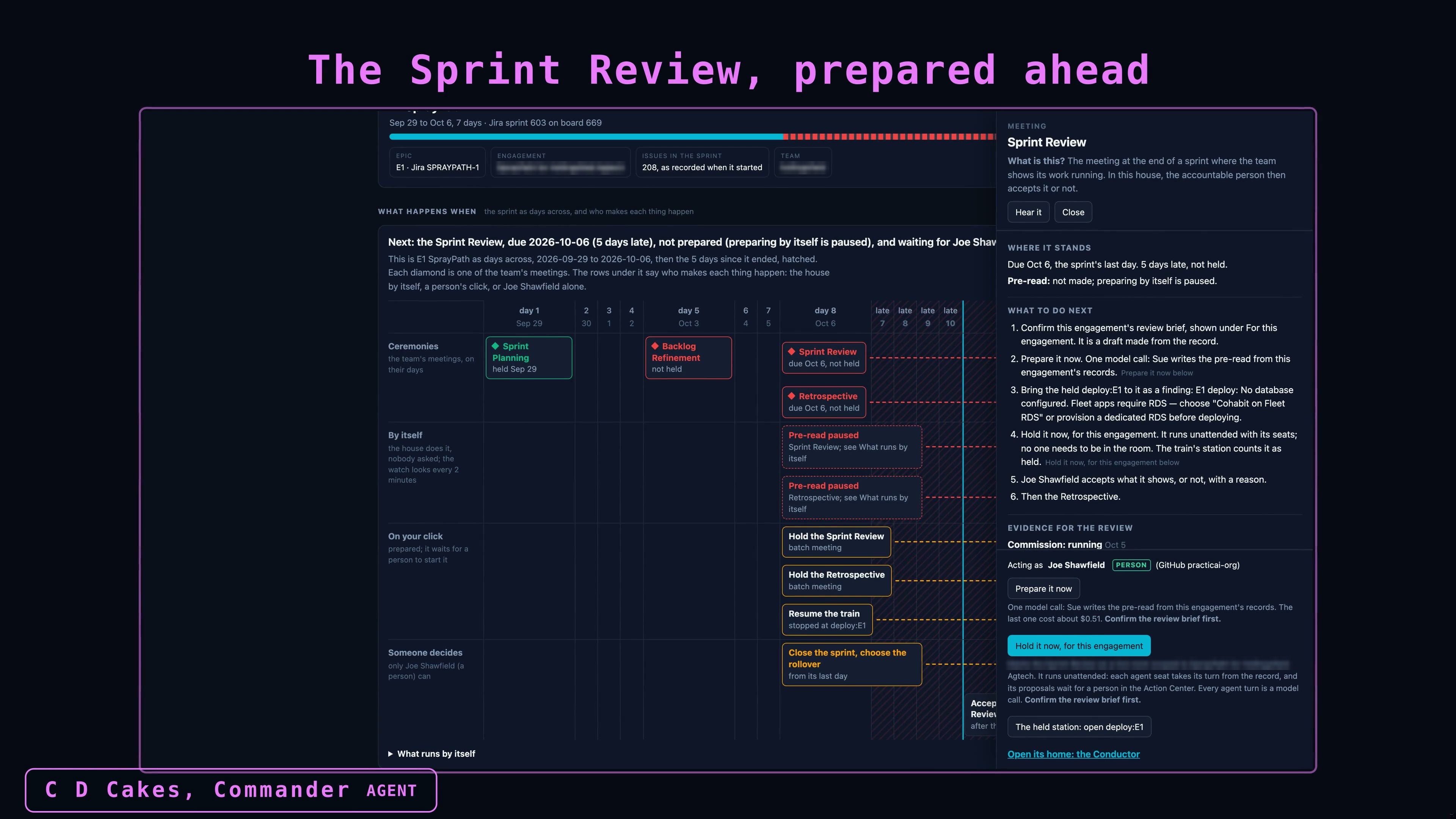
The resolution feeds back. Every station is saved as it closes, every session keeps its transcript, every test run keeps its verdict and evidence, and every meeting is recorded. The next sprint starts from that record: the review is prepared ahead from it, and the retrospective starts from its measurements.
Read · one sprint, on the record
Why the wait is the point
The time between two actions costs the same whether anyone is working or waiting. So the Pulse reclaims it where it is expensive: the step a person happened to be the bottleneck on. From above, we can see the whole run and predict it, so the work happens in the wait, and the pre-read is on the table before the meeting opens. The Modern Principal calls that folding time, and The Control Layer, part 2 makes the argument in full.
Pulse and project management
| Project management | Pulse Operations | |
|---|---|---|
| Unit of work | A task with a start and an end | A signal with a state |
| Tracking | A Gantt chart or a sprint board | The flow, station by station, on your own board |
| Done means | The task is marked complete | Resolved, verified, closed out and kept |
| Knowledge | Lost between projects | Kept in the record the next sprint starts from |
| Who decides | Whoever is in the meeting | A named person, with the evidence in front of them |
| Tools | Jira, Asana or Monday | Your Jira and GitHub, with StellarView reading them |
Practicing Pulse
Pulse Operations is not a framework you adopt on Monday. It is a discipline you practice daily. Start with:
- One project, one signal stream. Pick your most active one and let every signal come through one place.
- Detect before you classify. Let the signals arrive before you decide what to do with them.
- Intercept early. Look first at what is held, and why. What needs ten minutes now instead of two hours on Friday?
- Close with verification. No merge without its evidence, no resolution without proof.
- Let it echo. Read the record before the review and the retrospective.
The rhythm becomes natural. The platform carries the load, and the Principal carries the judgment.
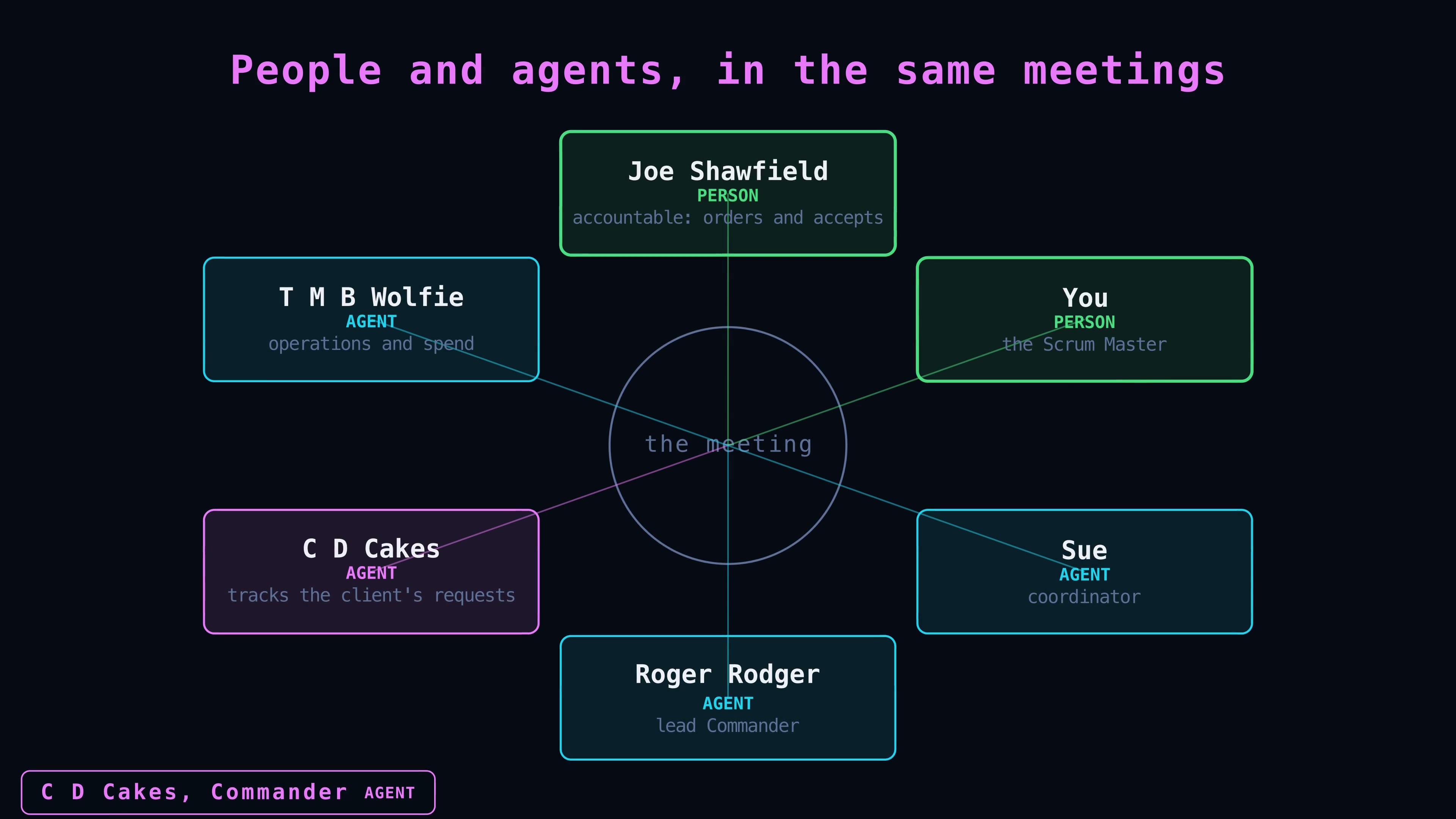
The pictures are cards and screens from the One sprint film; the names of the client in them are blurred.
Enter the practice
- If you want who runs this rhythm: read The Modern Principal.
- If you want the craft at each gate: read The Discipline.
- If you want to watch a whole sprint: read one sprint, on the record.
- If you want to run it on your work: bring your documents.