
The Control Layer, Shown, Part 3: Not One App, a Fleet of Platforms
Across Part 1 and Part 2 we honored two essays, Dickerson on the control layer and Tracy on agent workspaces, and showed what their convictions look like flying: a control plane you can see, a manager coordinating parallel analysis and a single sequential coder, all grounded in a seeded data plane. That produced one running system. This part is about the thing a single demo can never prove: that the motion repeats.
First, close the loop on the one build
The Cicero build (for the client Gravitas) did not end at “the code compiles.” It ended where enterprise software actually has to end: running, governed, and documented.
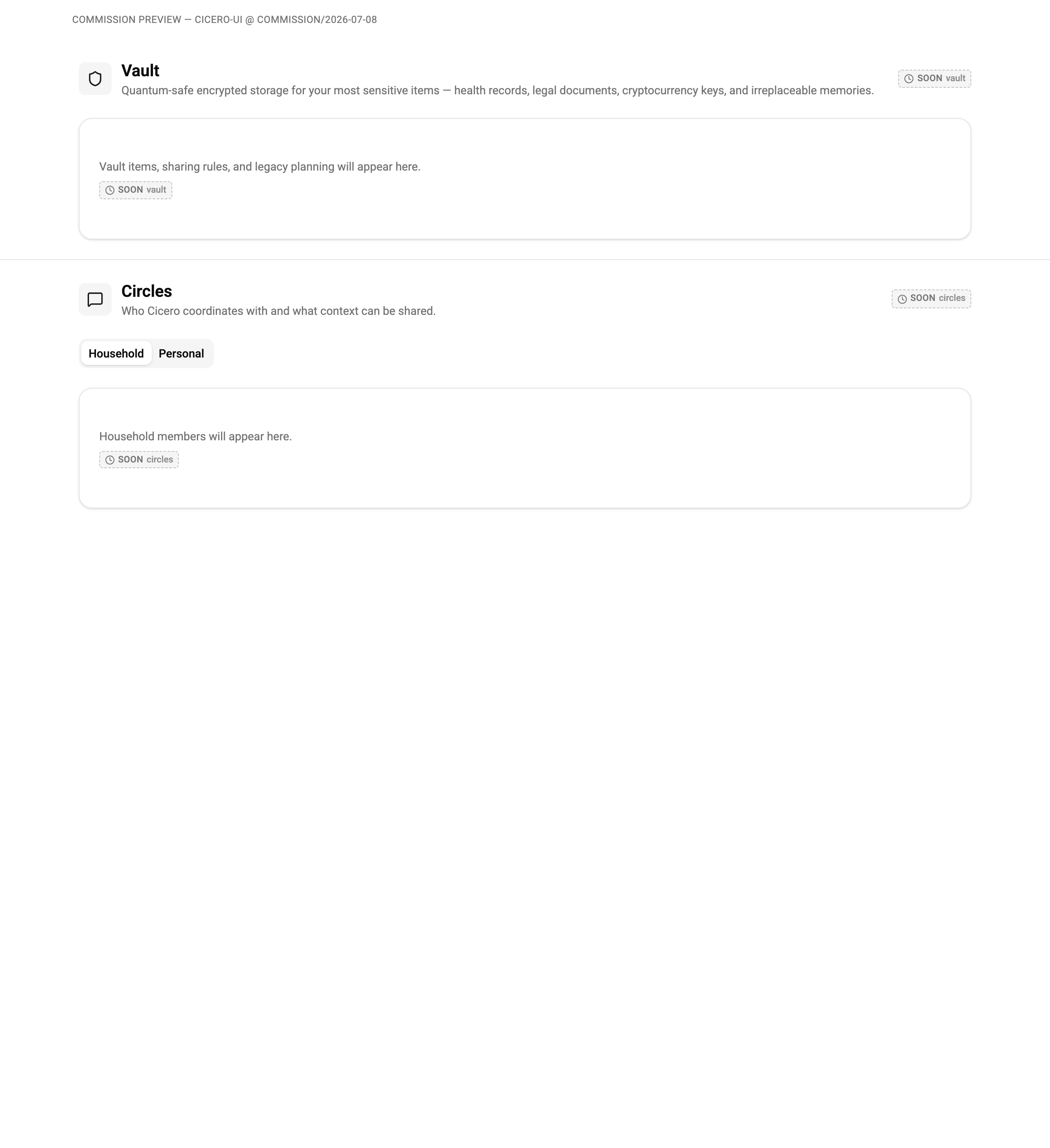
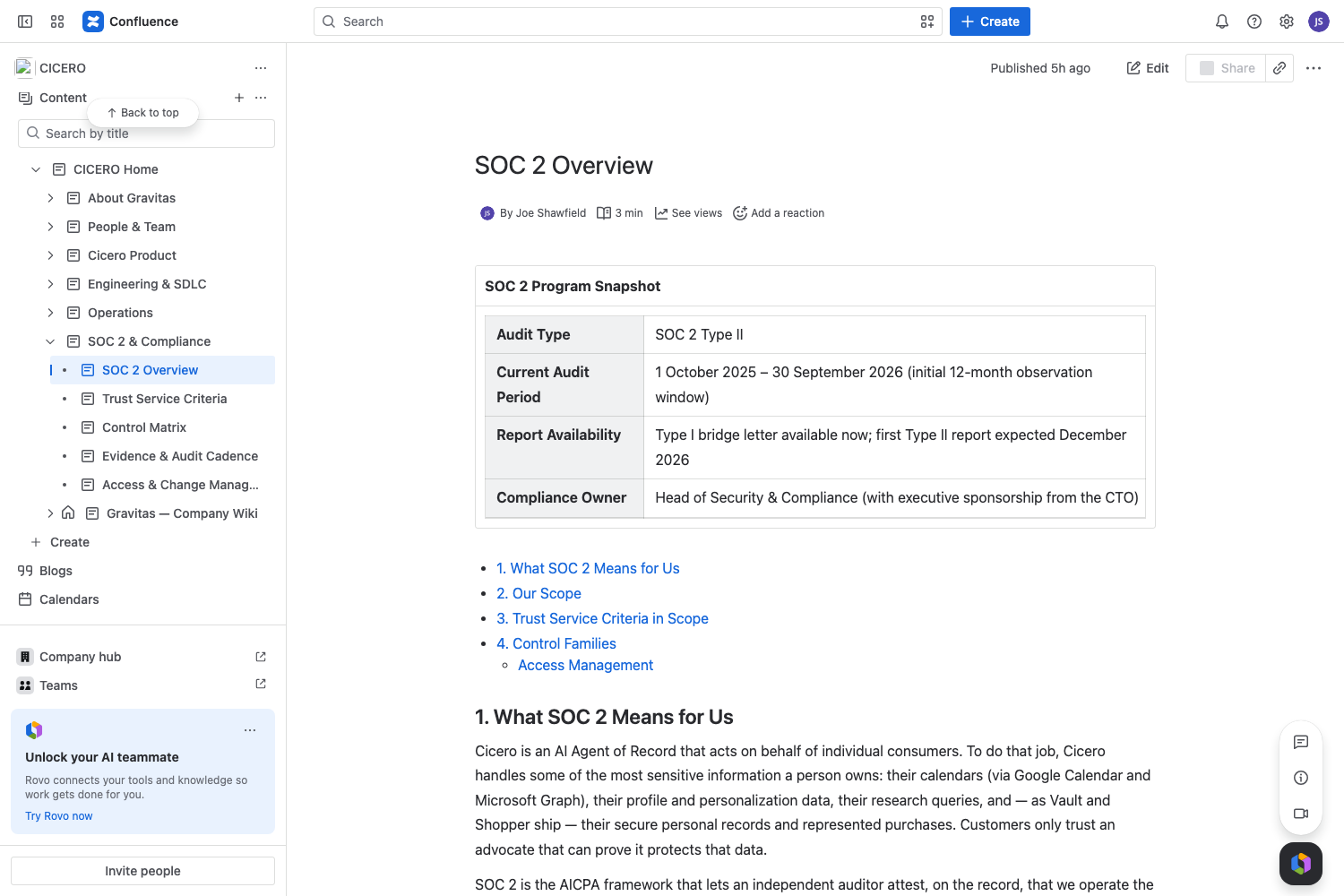
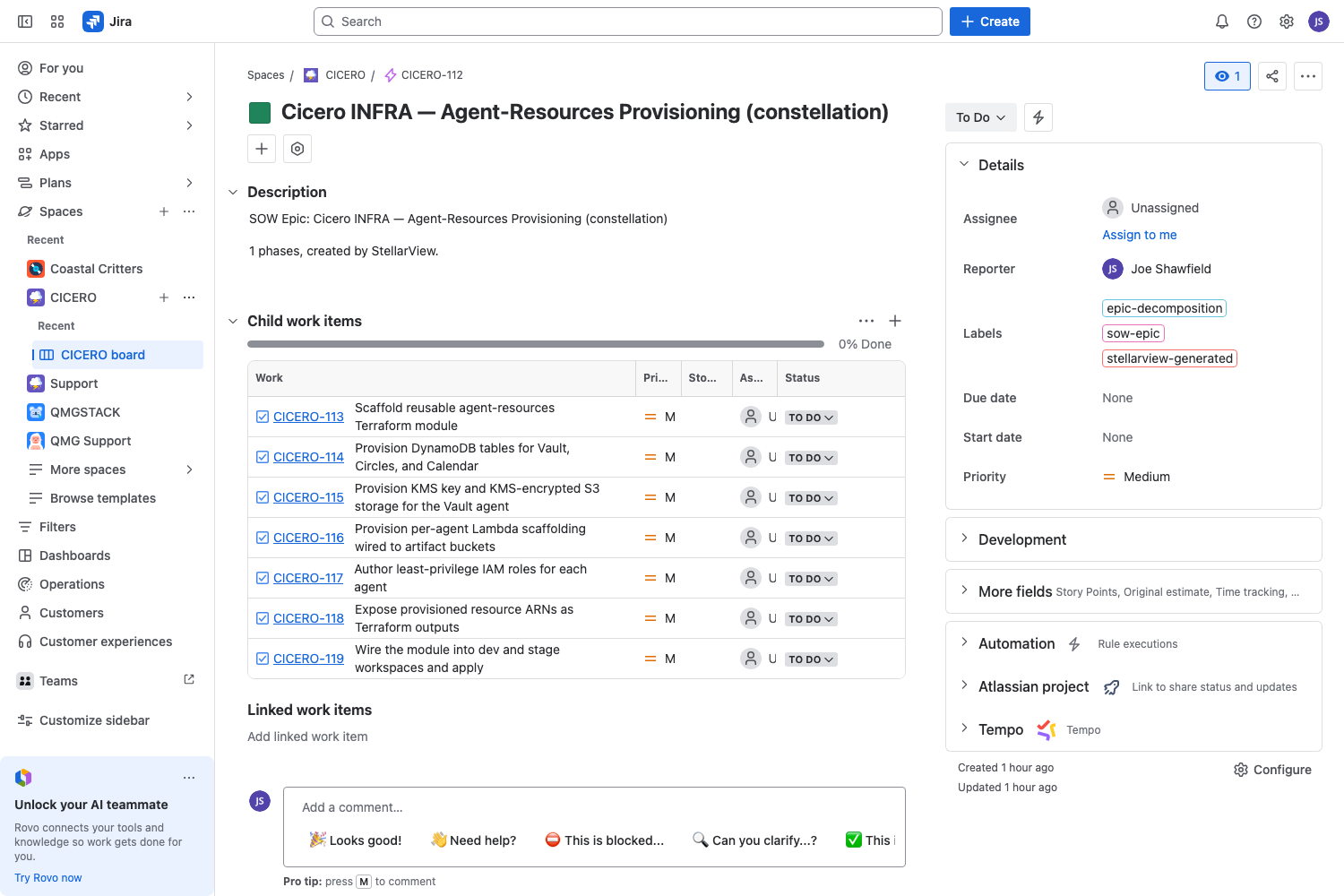
The parts of the iceberg nobody demos got written as the build happened: a SOC 2 page, a data-architecture page, and developer setup, all into real Confluence, with every work unit tracked as a real Jira issue.
That is one platform, all the way down. Now the point: it was never about one platform.
The Gang of Five
StellarView did not introduce itself with a single app. It introduced itself with five vertical SaaS platforms: different domains, the same grounded engine underneath, each a real running product in its own lane. (Cicero above is a client build we walked through; it is not one of these five.)
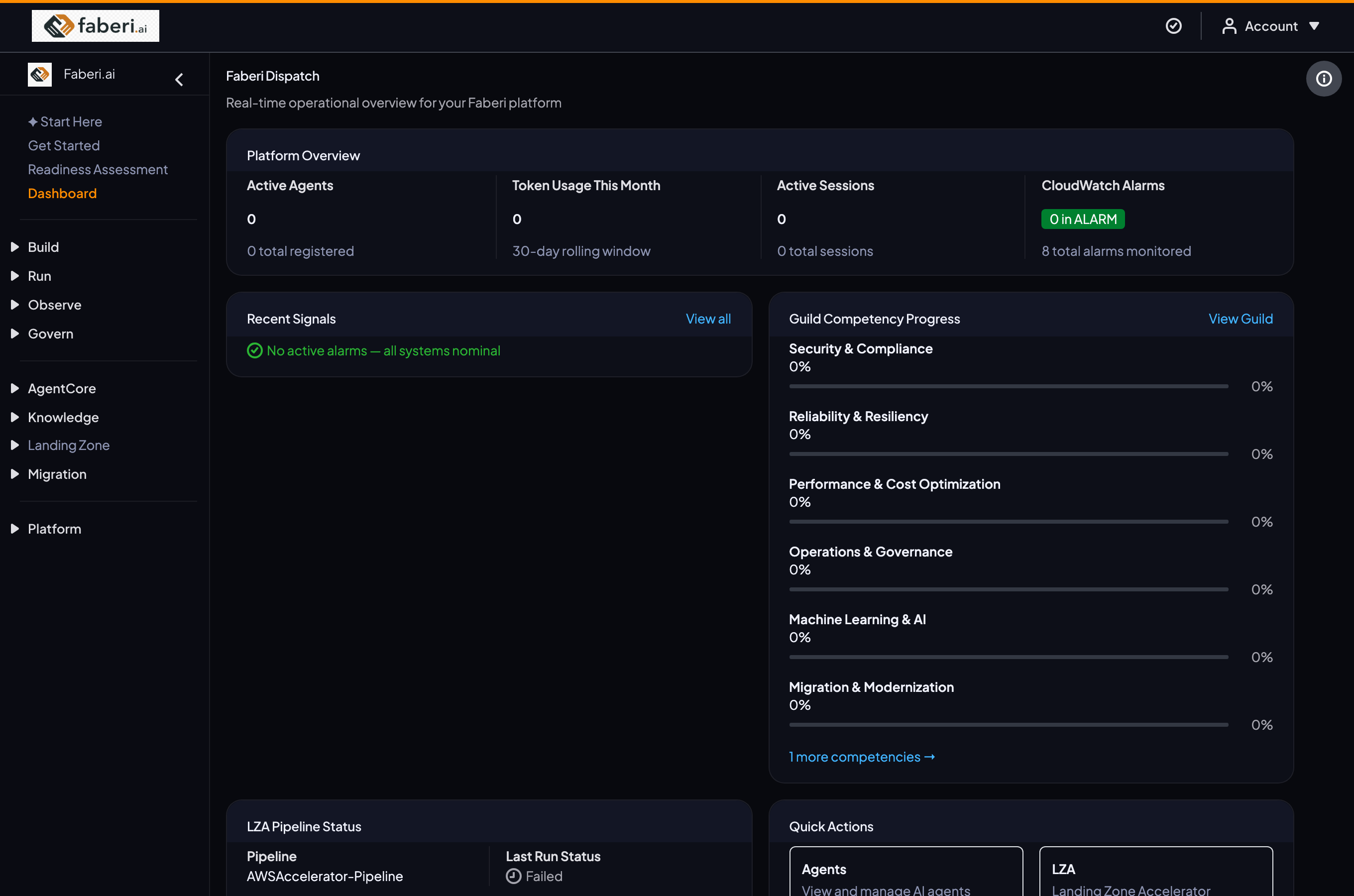
Faberi.ai — AI infrastructure. The flagship, and the subject of Part 1: an AgentCore-native Landing Zone Accelerator, agent orchestrator, and data-center migration platform. The control layer itself, as a product.
RE-Prise — real estate. Next-generation brokerage, title, and transaction management in one platform.
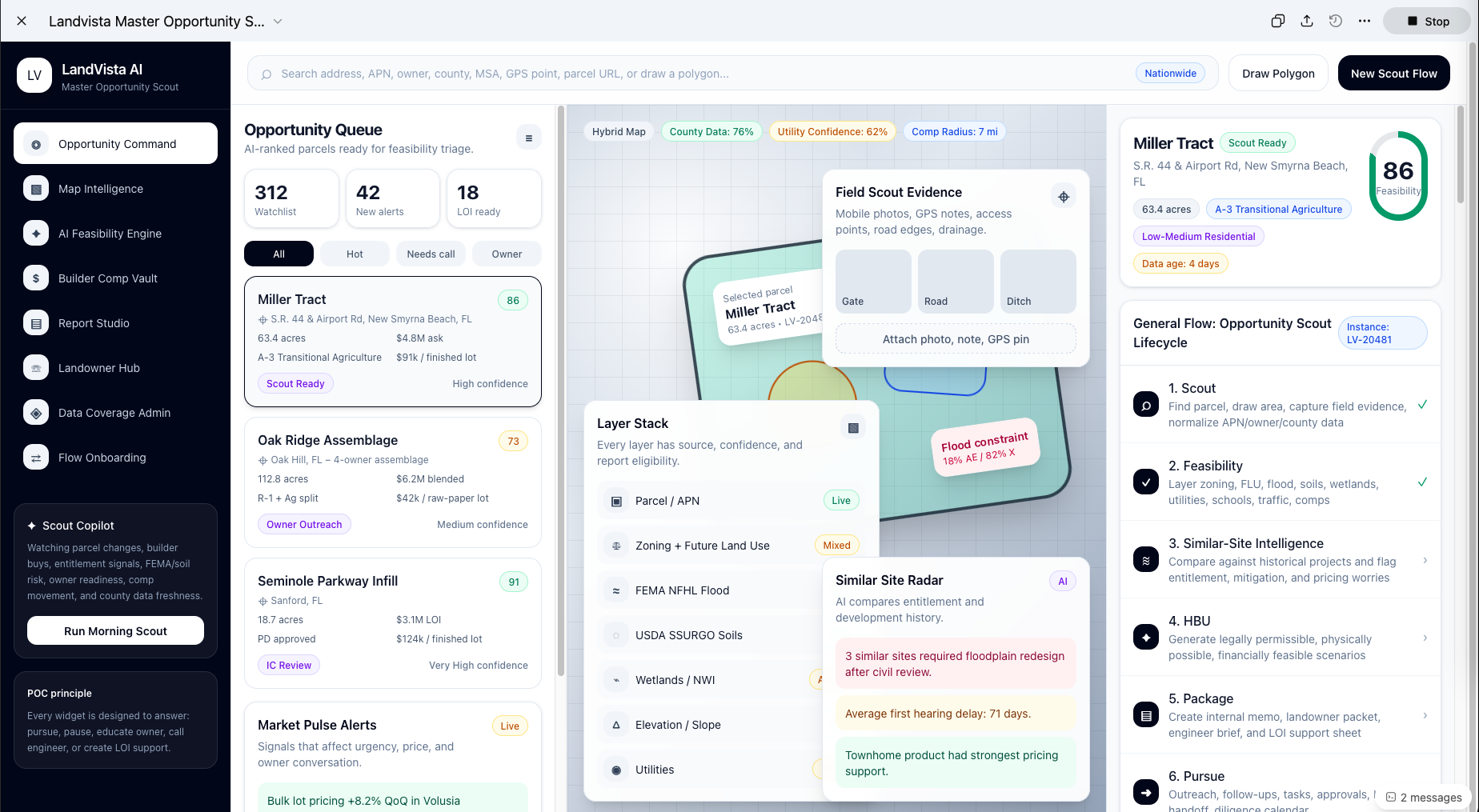
OutlawCounsel — legal. For attorneys: wills, trusts, probate, and closings, end to end.
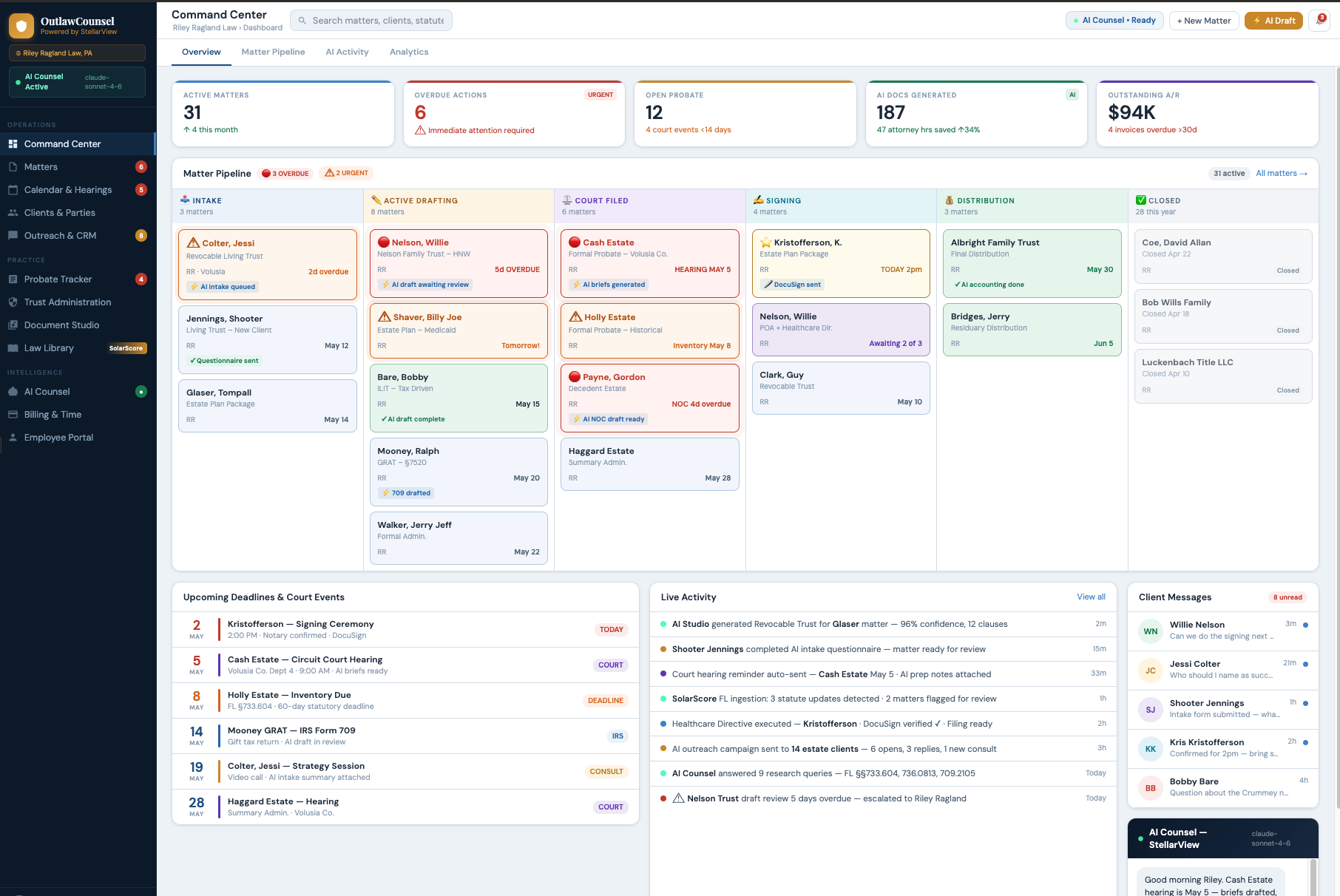
SolarScore — home services. Enterprise roofing, window, and gutter estimating with cross-sell and a customer-advocacy system.
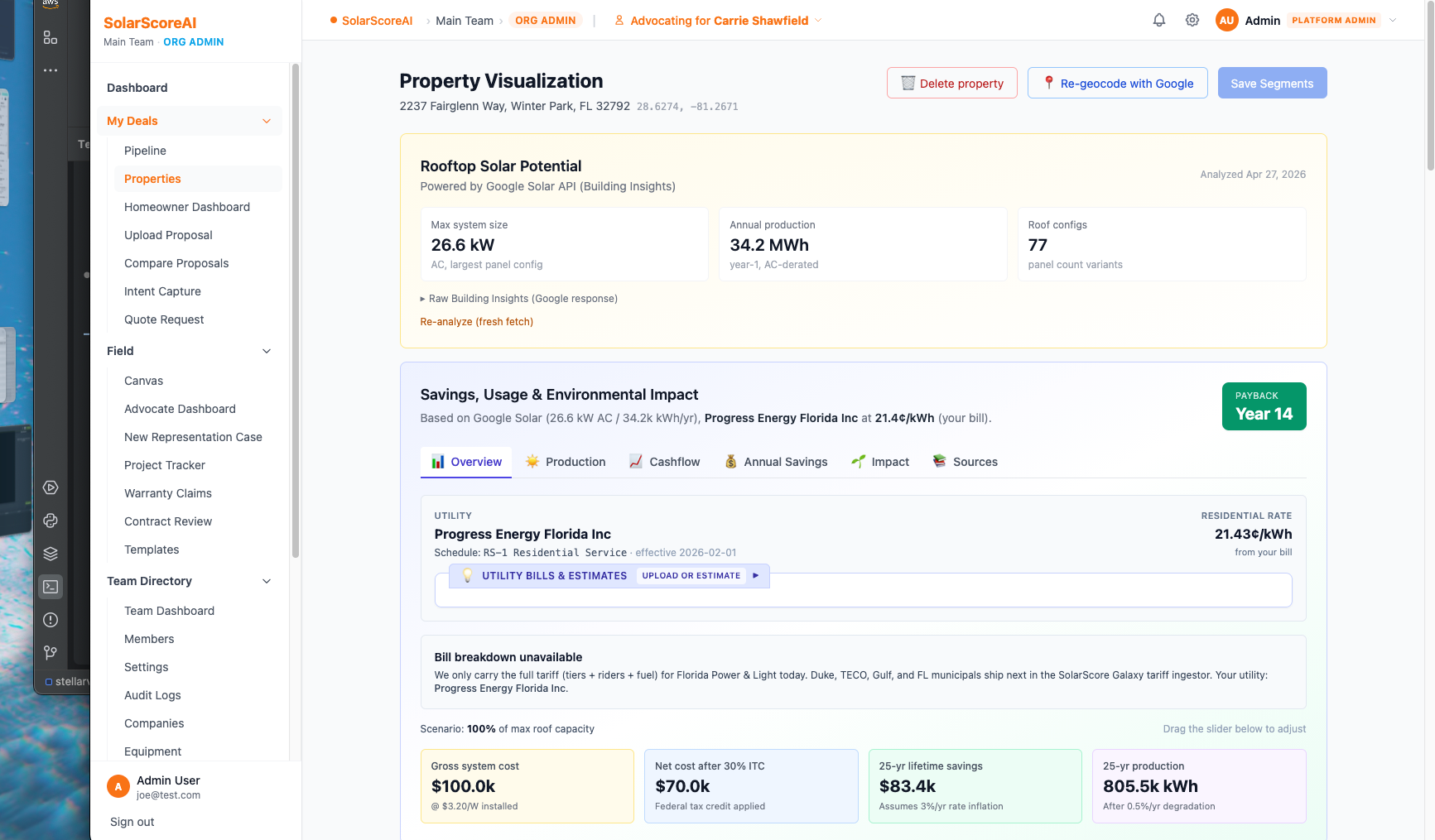
Youvocate — Health Advocate. A patient-side health-advocacy platform, delivered as a white-label medical pre-entry portal that meets the enterprise bar.
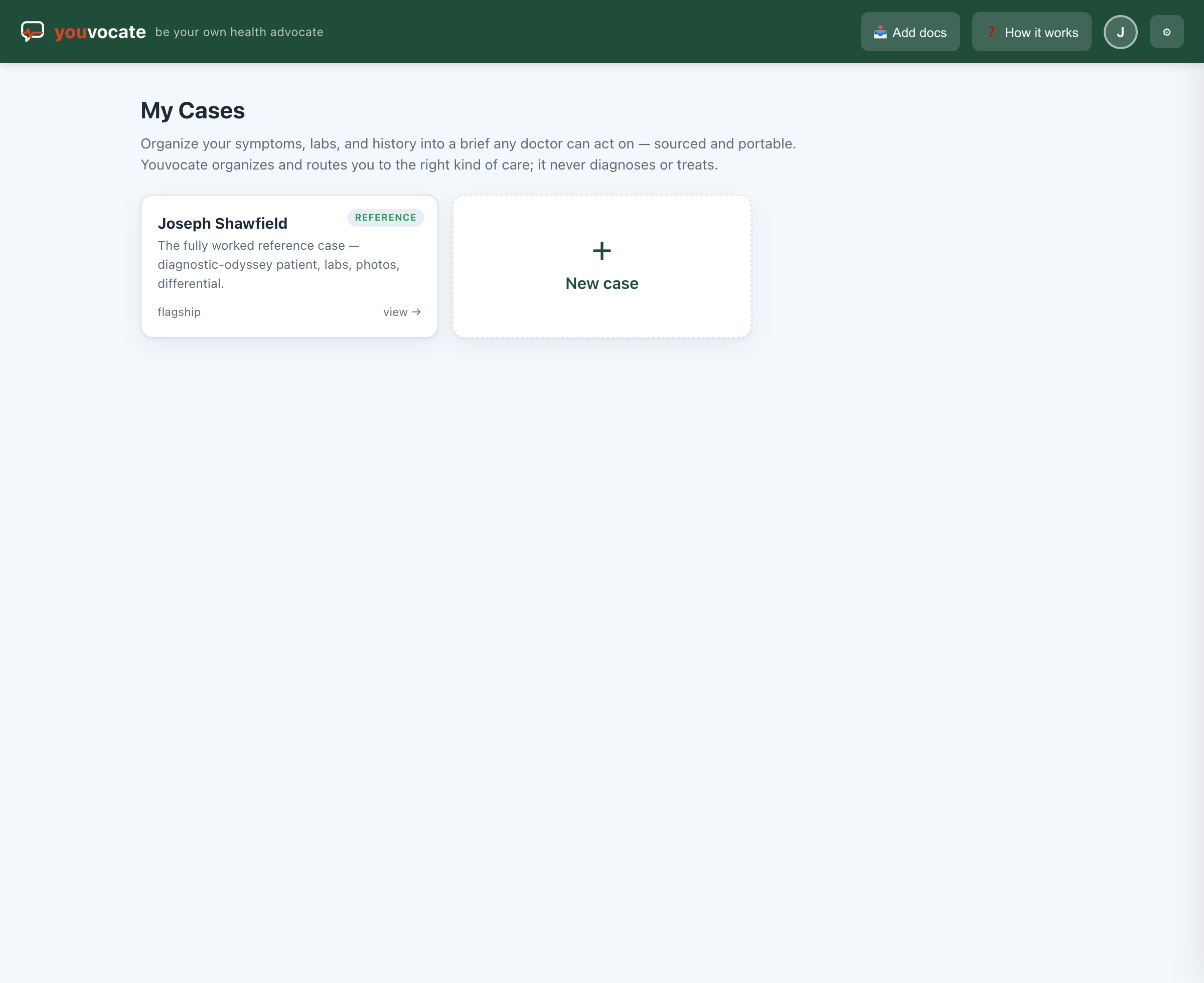
Five domains that share almost nothing on the surface (a broker, an attorney, a roofer, a patient advocate, a cloud architect) and almost everything underneath: the infrastructure and AWS foundation, the Terraform and the deploys, the Docker images and the fleets, the seeded data plane and its knowledge, the engineering and the whole lifecycle. Different tenth, same ninety.
The verticals built the platform
Here is the part that surprised even us, and it is the honest order of events. We did not build a platform and then go looking for verticals to run on it. It happened the other way around. Each vertical we built added the same realization: the slices underneath it were all things StellarView already did well, layer by layer:
- The infrastructure layer — infra, Terraform, deploy, AWS.
- The platform layer on top of it — fleets, knowledge, Docker, images.
- The software layer itself — how to build an API, how to run the jobs, how to model data in third normal form so it survives contact with a real business.
- The AI layer on top of all of it — the whole set of AI infrastructure: controls, permissions, routing, security, logging, costing. Dickerson’s control layer, and then some.
StellarView has all of it. Every layer, every slice, if you can find the screen and get to it. And there are a great many screens; that density is not a bug, it is the ninety percent made visible. The iceberg has an interior, and this is what it looks like to actually live in it.
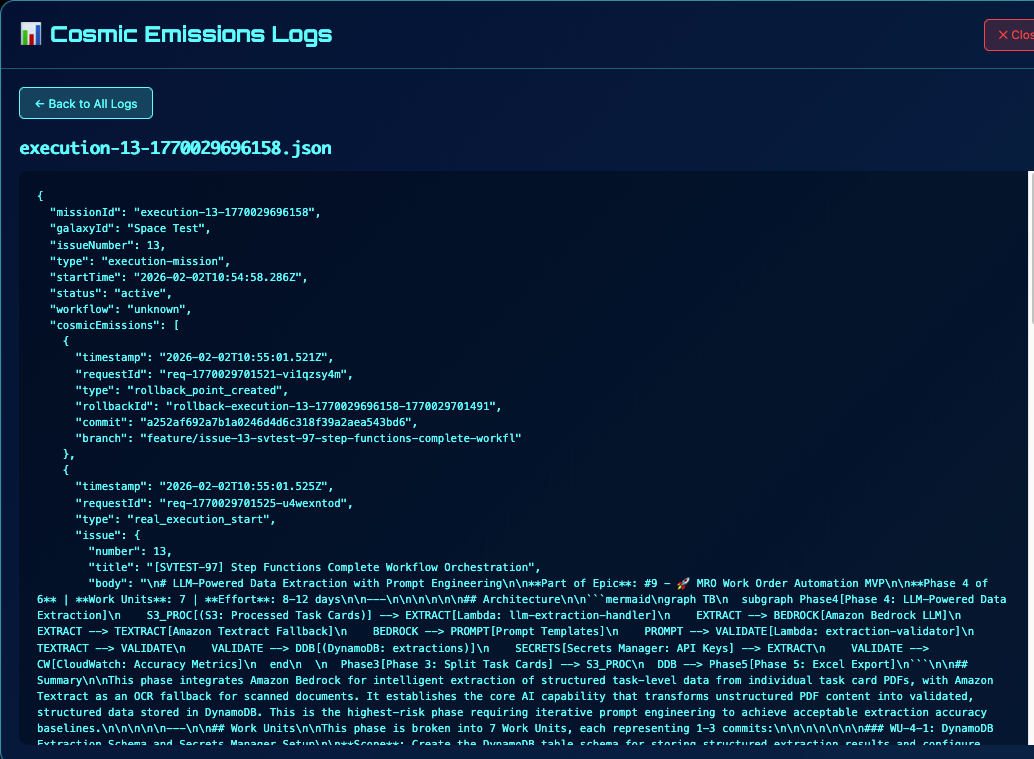
Take one screen as proof. Cosmic Emissions captures every AI interaction StellarView makes (prompt, response, model, tokens, cost, timestamp) and dumps the whole stream to S3. That is Dickerson’s “which model said what, when, to whom, and why,” not as an aspiration but as an object store you can query.
And the humans are governed too. PracticAI carries team control through the entire SDLC, with templated commits and pull requests, roles and gates, so the discipline is not a wiki page nobody reads but a default the platform enforces on every change.
RE-Prise proved it. OutlawCounsel proved it again. By SolarScore and Youvocate the pattern was impossible to unsee: that whole stack, the shared ninety percent, was not incidental to the products. It was the competence. The Gang of Five did not come out of the platform. The platform came out of the Gang of Five.
And many more, in the libraries
The Gang of Five is the introduction, not the inventory. Beyond the flagships, StellarView carries many more verticals in its libraries, demos, and templates: starting points a new domain inherits on day one, so the next platform begins at ninety percent built, not zero. The fleet is meant to grow, and it does.
The same call Dickerson and Tracy made
There is a through-line worth naming, because it is the most honest thing in this series. John Dickerson looked at the control problem and built Otari rather than wait for a vendor. John Tracy looked at agent workspaces and built Monacoder rather than buy one that half-fit. We looked at the whole iceberg (control, workspaces, data, lifecycle, governance, and the vertical products that sit on top) and built it, because the specific need was worth building for. We are not one-upping anyone in that essay. We are fellow travelers who started earlier and kept the receipts.
Control is the moat. The manager spins off the interns. The data plane is seeded and real. The proof is a fleet of running platforms, governed and documented, with more arriving from the libraries.
References: The Control Layer by John Dickerson, Mozilla.ai · Agent Developer Workspaces by John Tracy, Monaco · Amazon Bedrock AgentCore