
The Rings
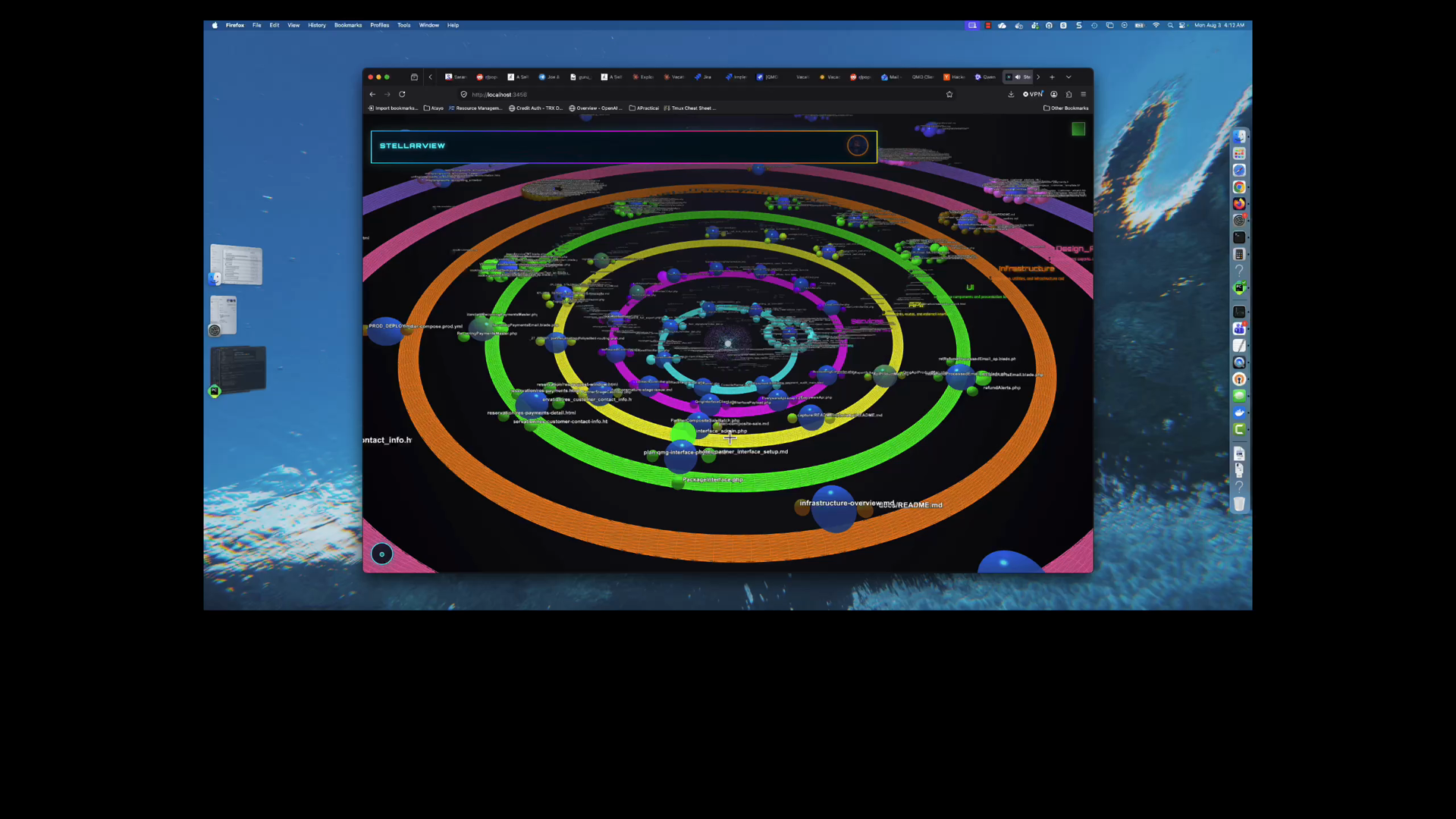
Open any project in StellarView and it looks like this. A galaxy of rings.
Each ring is a layer of the codebase. Core at the center. Then services, the APIs, the interface, and the infrastructure that holds it up. Five rings, five layers.
You rotate it to read the structure. And it pulses. The pulse is not decoration. A ring pulses when its code is active. Rotation and pulse are for observation. You are watching a system that is alive.
A ring is not a metaphor
Behind each ring is real architecture. This is StellarView’s own, drawn from its docs.
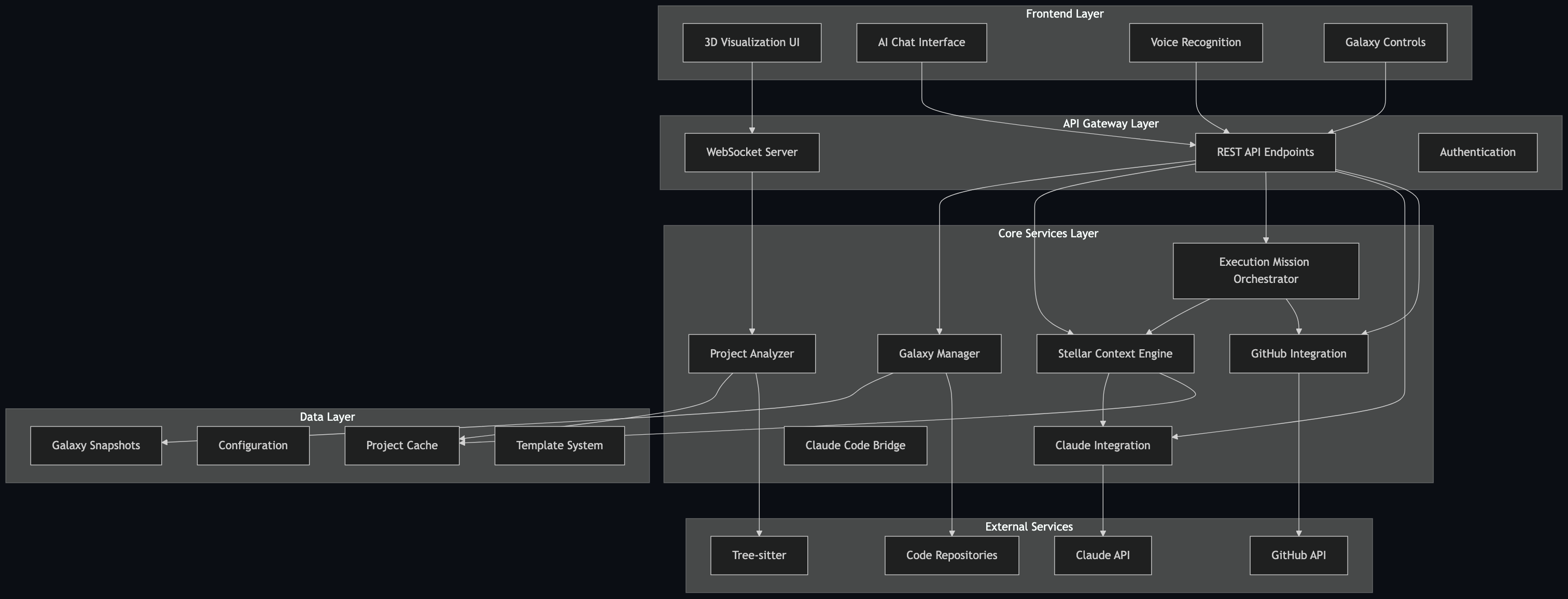
github: stellarview/docs/01-platform/04-architecture.md
Point it at another system, QMGStack, and the rings hold its architecture. The diagrams live in GitHub, next to the code.
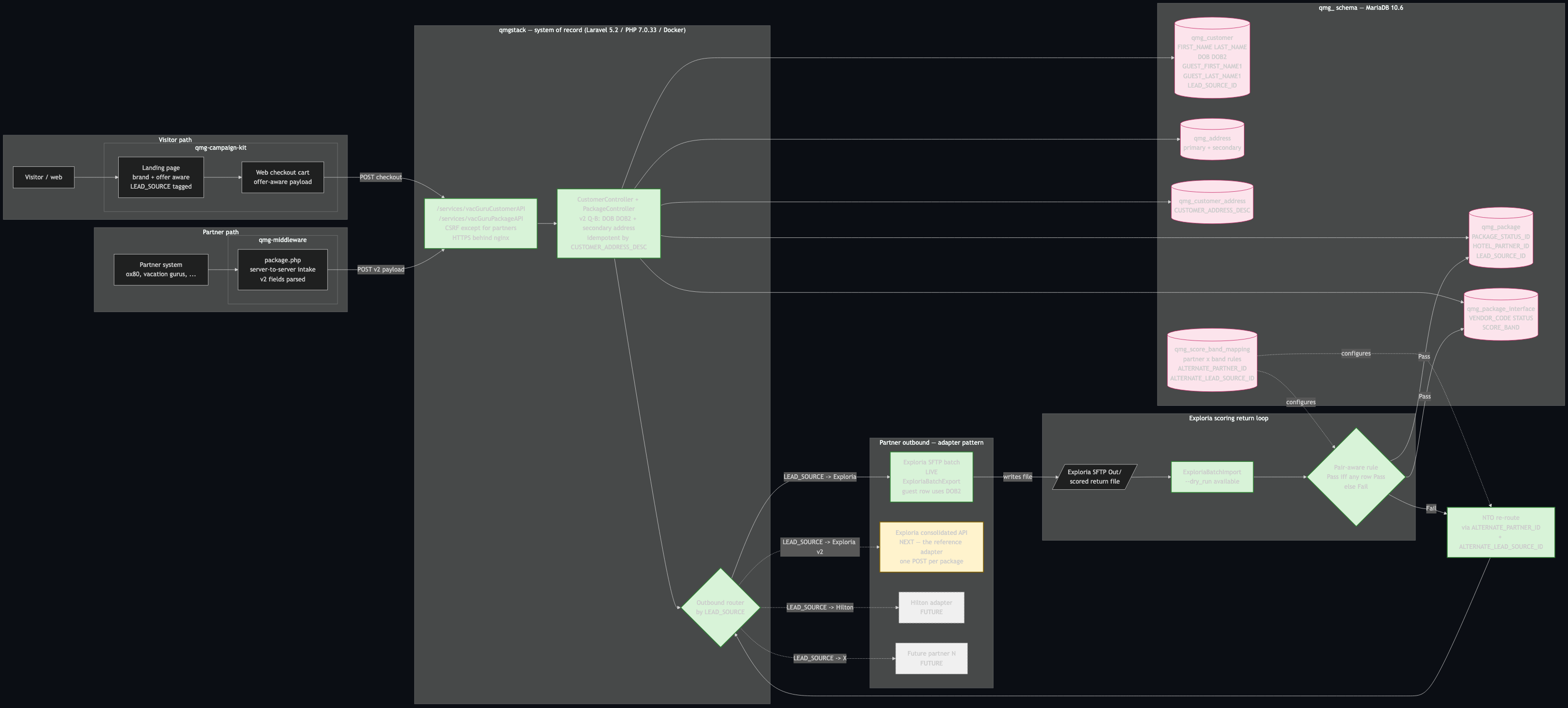
github: qmgstack/docs/architecture/qmg-master-flow.md
How a sale moves through it, end to end.
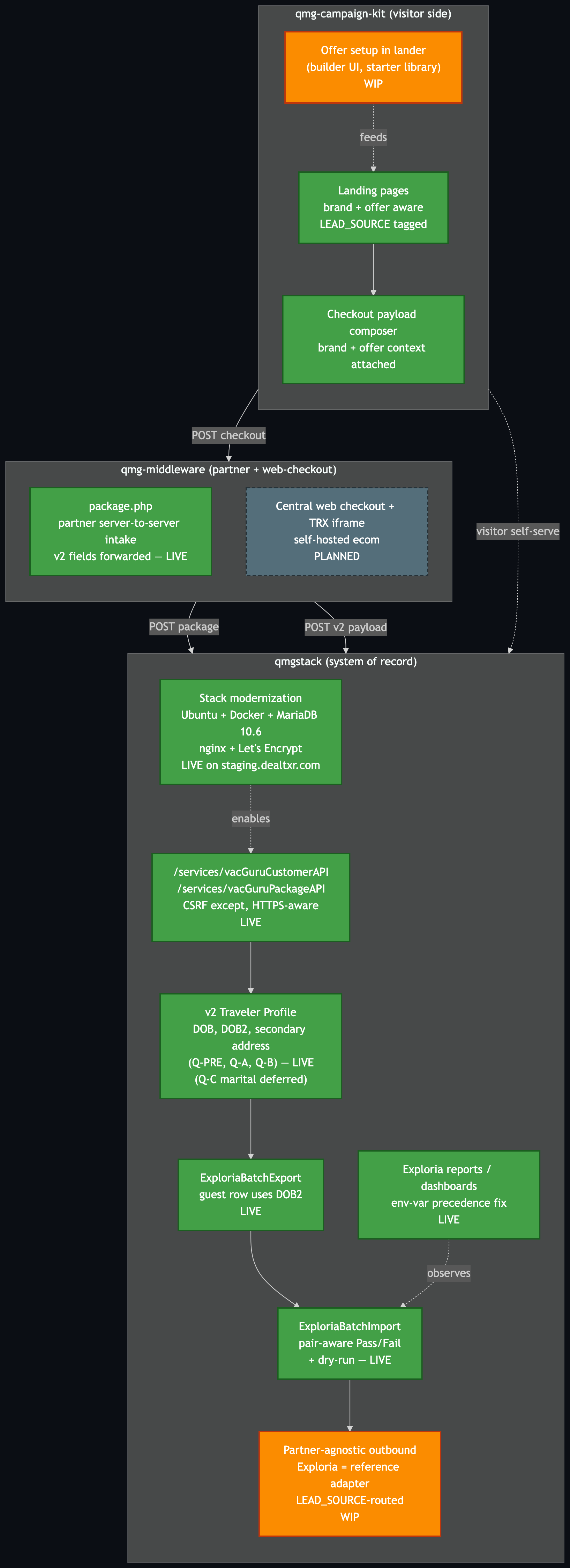
github: qmgstack/docs/in-flight-overview.md
Where the platform is headed.
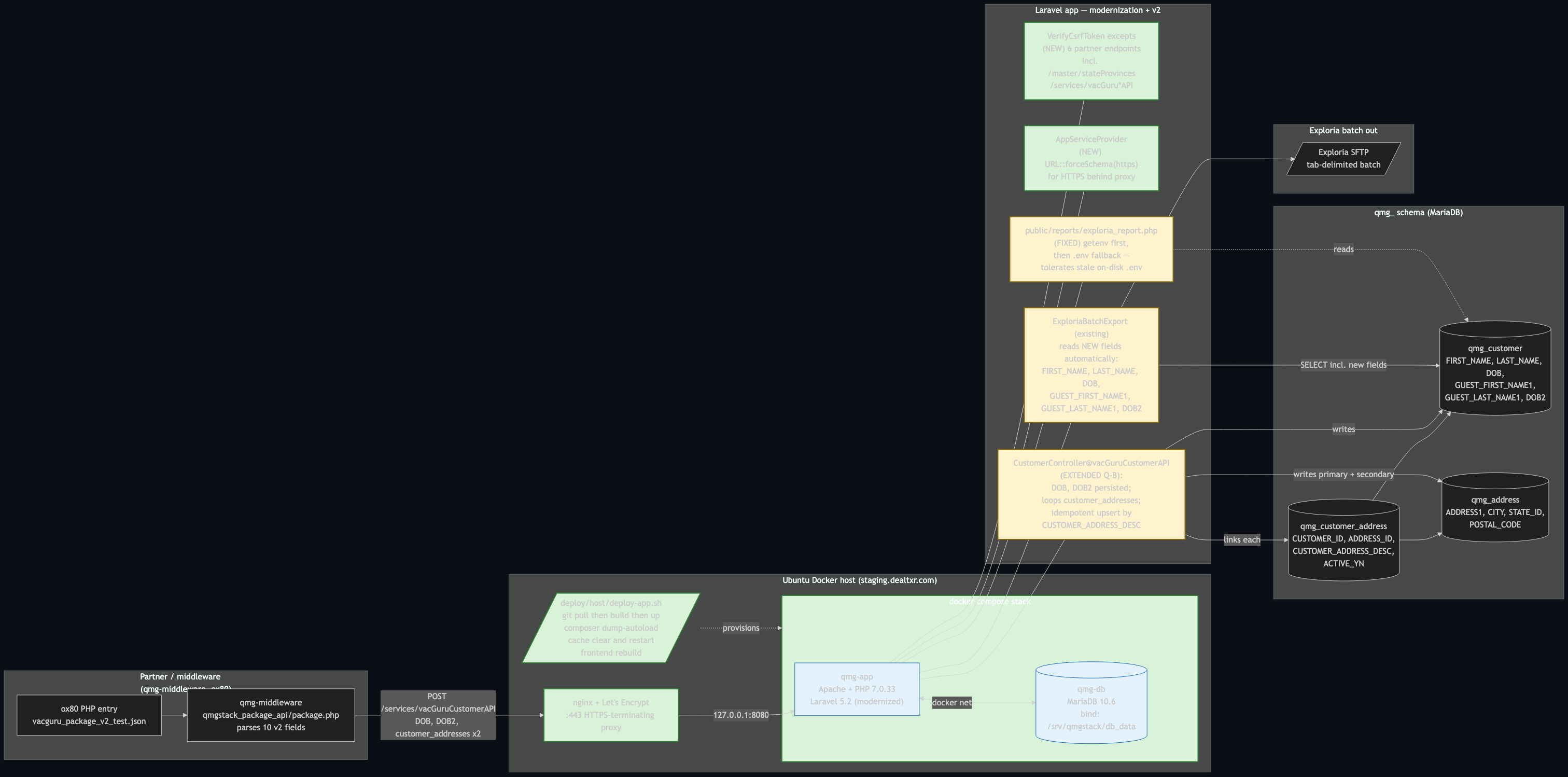
github: qmgstack/docs/architecture-modernization-and-v2.md
The docs behind the rings
The same system, written down. StellarView generated this wiki from the code.
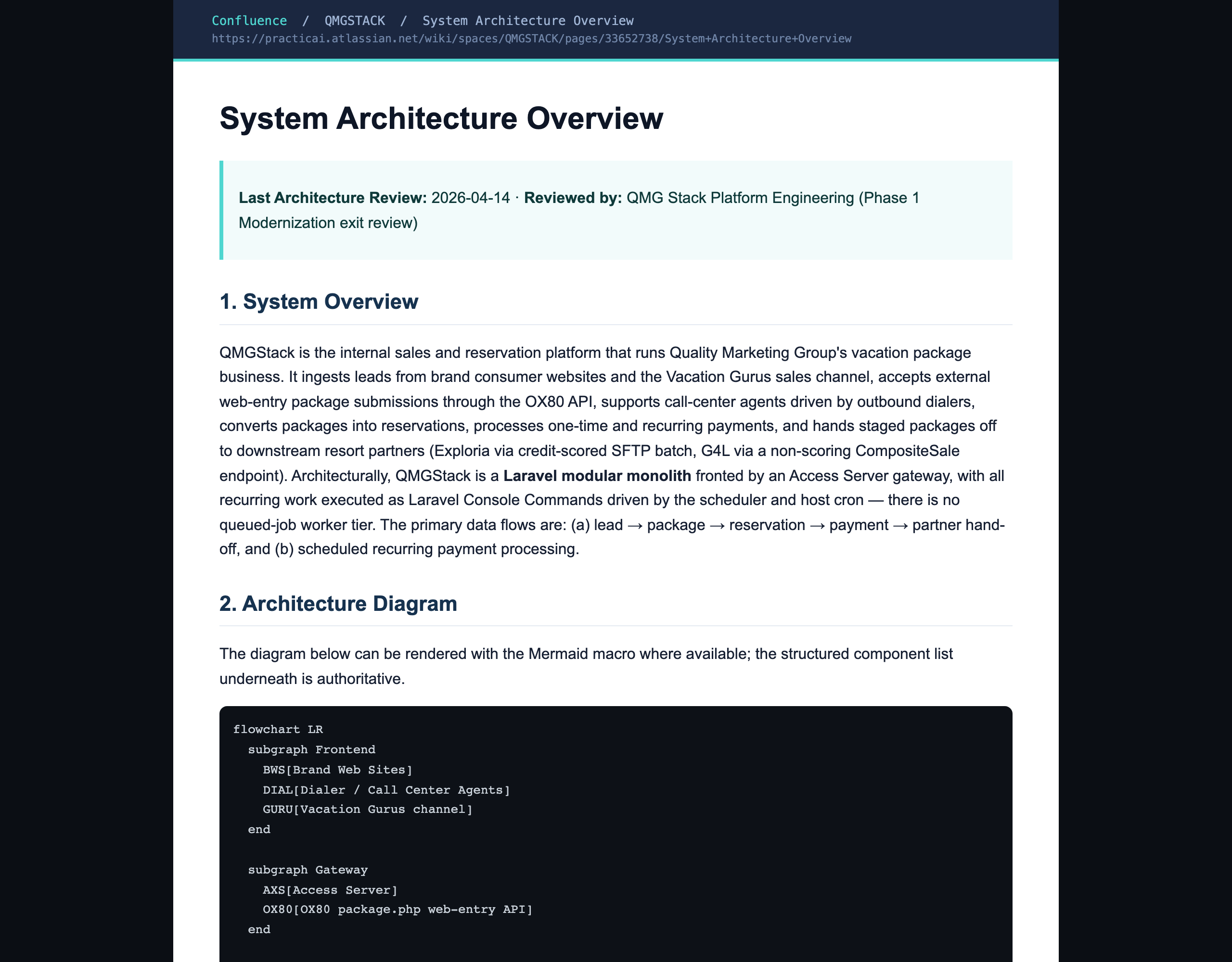
Confluence: QMGSTACK / System Architecture Overview
The deploy, in depth. Host, branch, database.
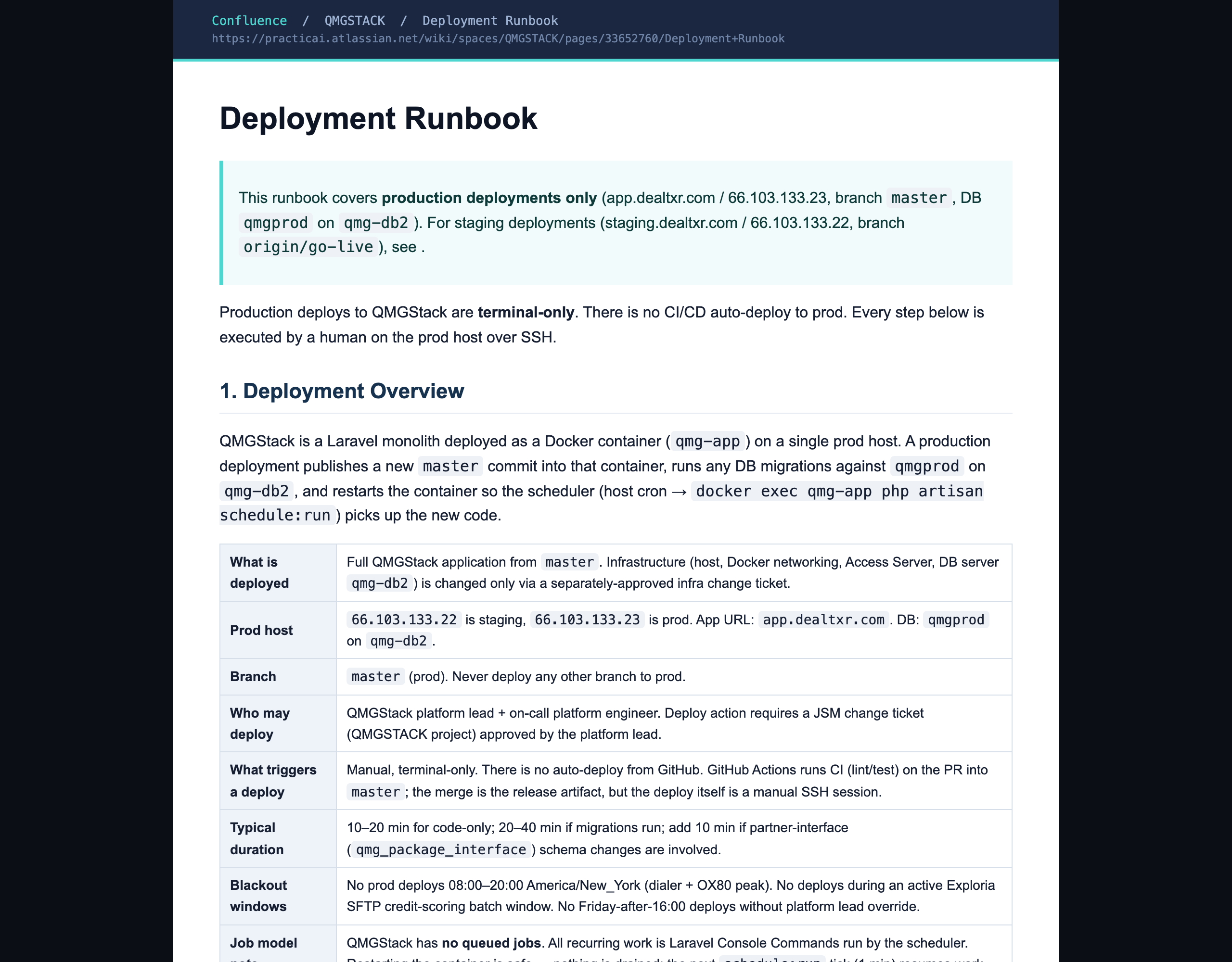
Confluence: QMGSTACK / Deployment Runbook
And the process to get there. Branch, open a pull request, one approval, green CI.
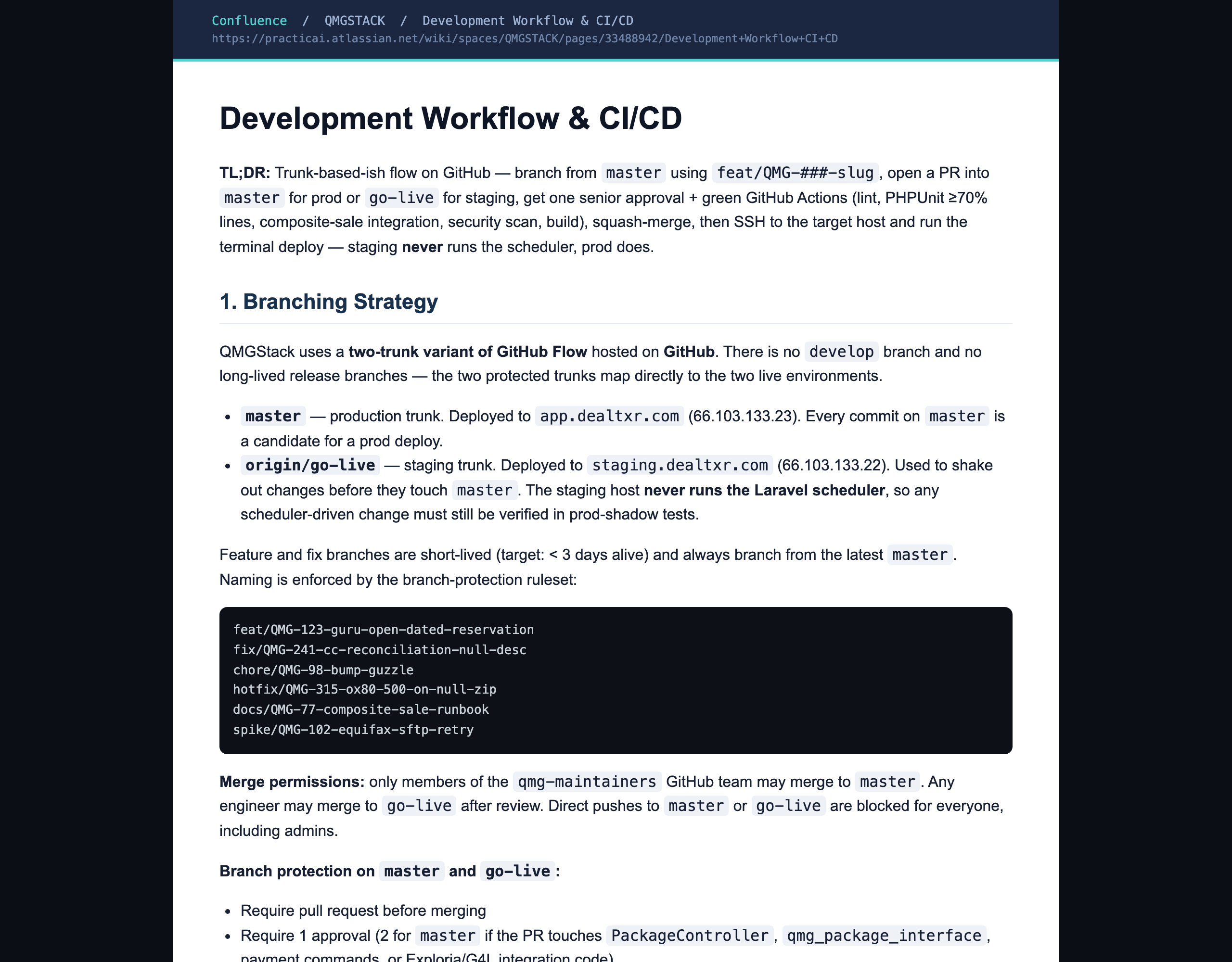
Confluence: QMGSTACK / Development Workflow & CI/CD
Observation
A pulse on a ring and a ticket on the desk are the same idea. Both tell you where to look.
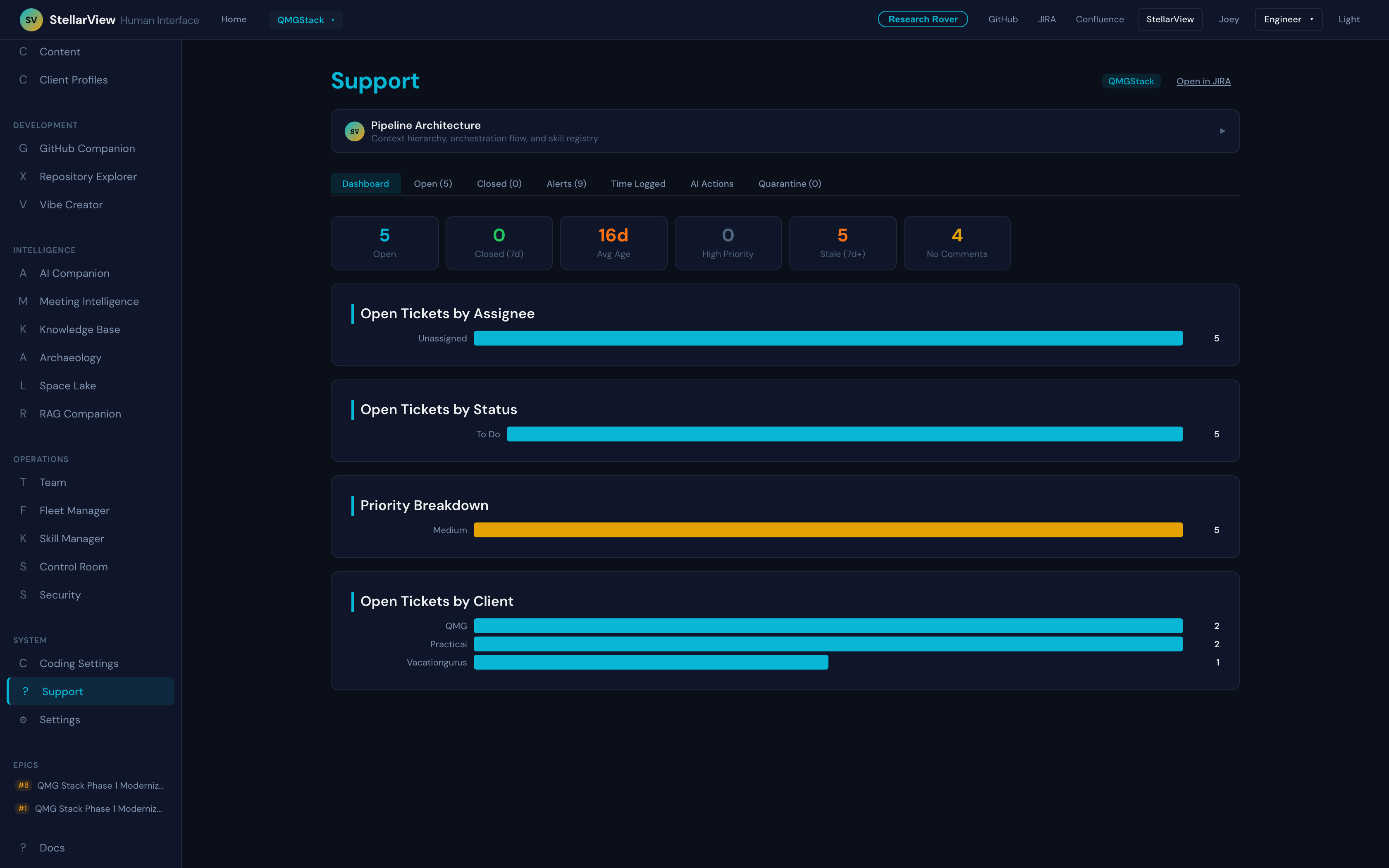
StellarView / Support (QMGStack)
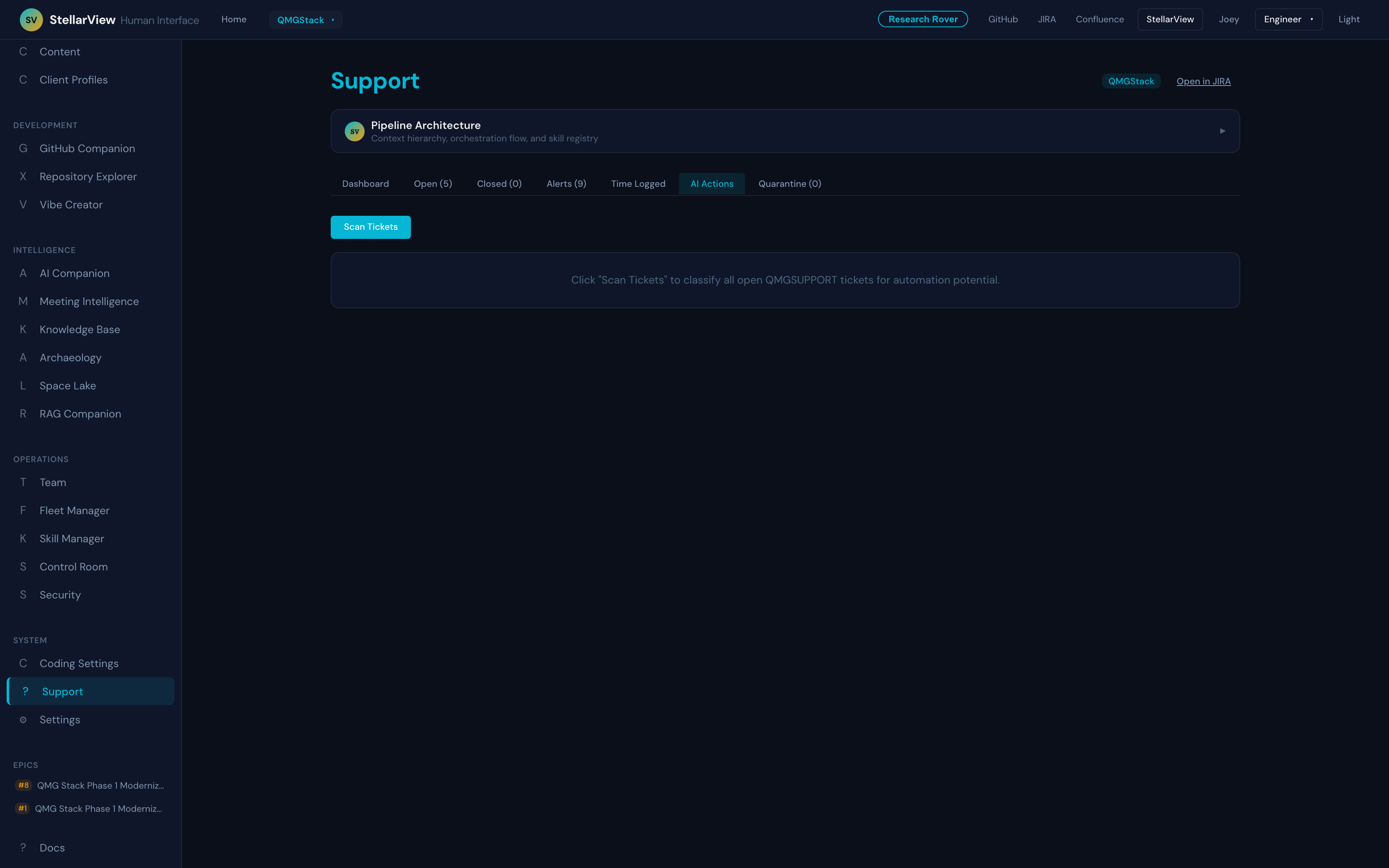
The Companion drafts the answer from the wiki and the code. The person confirms and sends.
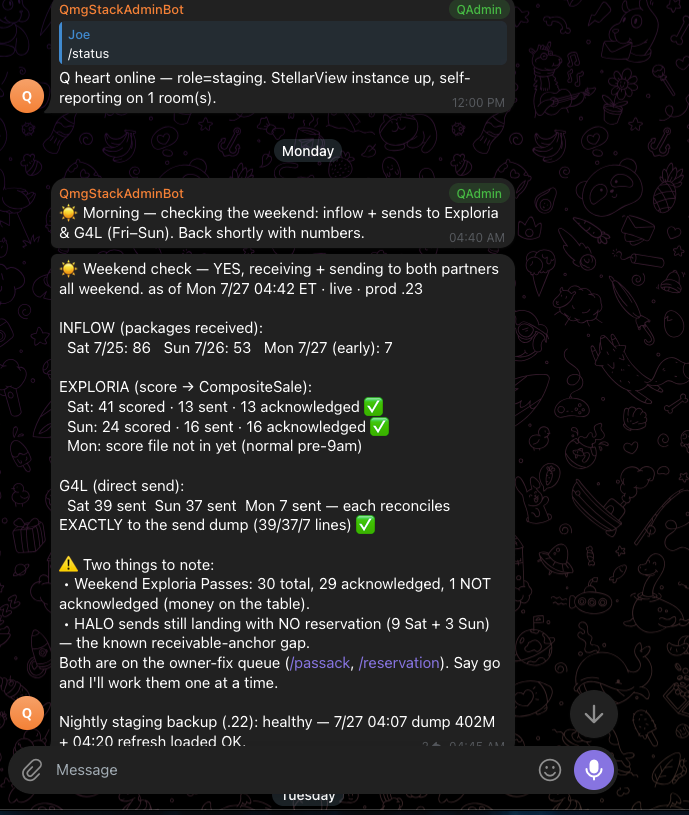
Bots watch it around the clock. This one checked the weekend, inflow and sends to both partners, and flagged two things to fix.
A constellation of repositories agrees on its terms as it builds. That agreement becomes a glossary.
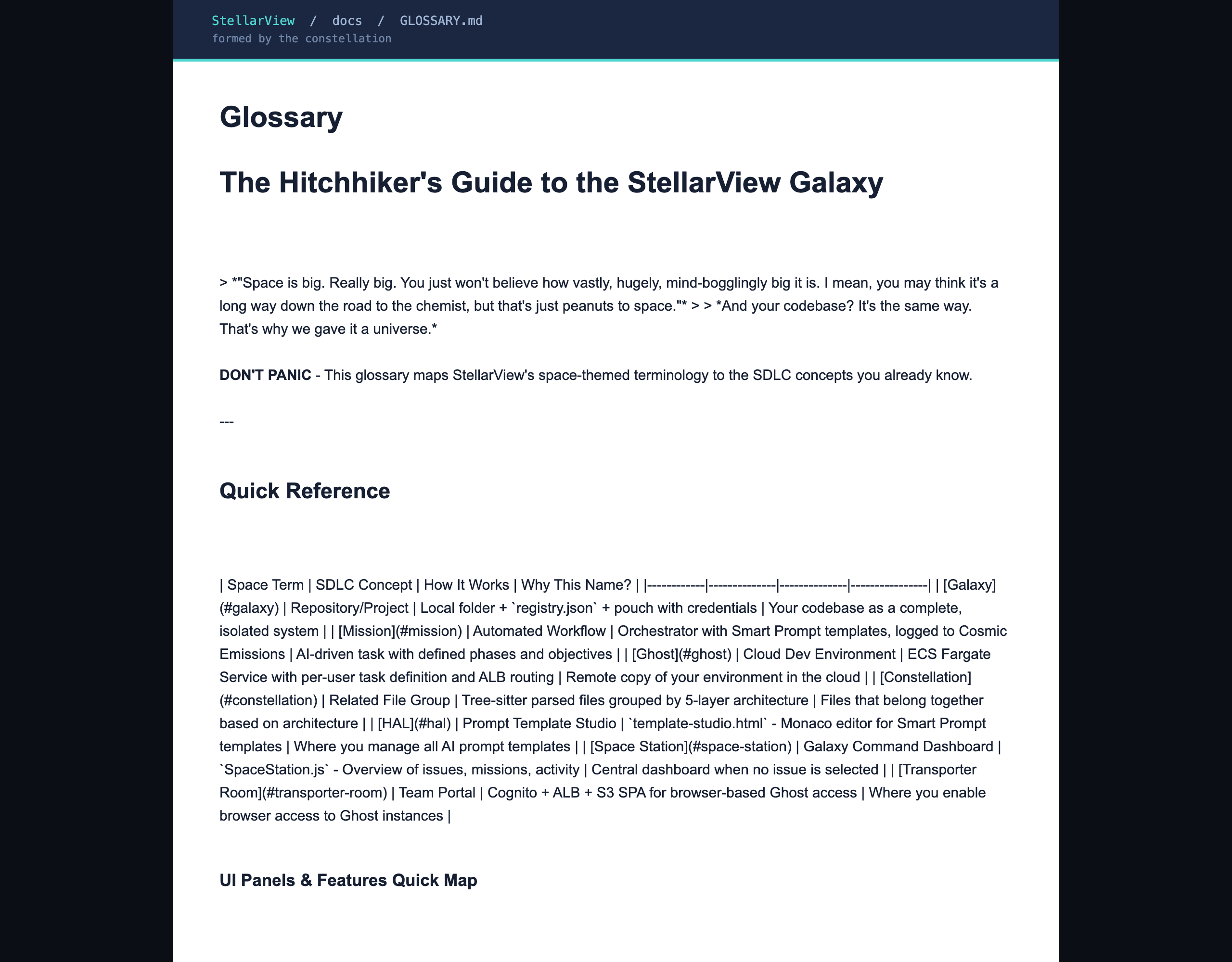
github: stellarview/docs/GLOSSARY.md
Rotate to read it. Pulse to watch it.
One living system.