
The Step 2 Gap
A demo is free now. A system is not.
The demo is the thing you show on social media. The system is the thing your client runs their business on. They are not the same thing, and the distance between them is not a spectrum. It is a gap.
The gap has a name here. It is the Step 2 Gap, and in our experience most of the professional world is still acting as if it is not real.
Step one is complete
Step 1 is done. Anyone who wants to can cross it. A person with no prior programming experience can open an AI coding assistant and, within an hour, produce a working prototype that does something: a dashboard, a data pipeline, a chat interface, a small scoring engine. The prototype runs. It even looks decent. It does the thing it said it would do.
This is a real achievement, and it is also a trap. The person who just crossed Step 1 has no way of knowing how far away Step 2 is. The prototype that runs on their laptop looks, from their laptop, exactly like the production system they are imagining. They cannot see, from where they are standing, what separates the two.
Every “look what I built this weekend” is a Step 1 artifact. So is every demo on every AI-coding thread. None of these are production systems, and none of them will become production systems without a second, harder crossing that almost nobody is discussing.
The gap is not a spectrum
A tempting error is to treat Step 1 and Step 2 as points on a line: the prototype is ten percent of the way to a system, some more work gets it to twenty, more gets it to fifty, and eventually it is a system.
That is not how the crossing works. The prototype and the system are different categories of object. They share a codebase the way an embryo and a fish share DNA. One is not a small version of the other. One is a starting material.
What is in the prototype:
- code that runs on a laptop
- rough styling
- placeholder data
- an enthusiastic first user who already understands what it should do
What is in the system and not in the prototype:
- an architecture that someone who did not build it can read
- pull requests reviewed by people who catch what the AI got wrong
- unit tests that hold under refactor, and integration tests that simulate real traffic
- a deploy pipeline that a second person can run
- observability that reports failures to the people who will fix them
- documentation that explains why, not what
- a security review that considered the attack surface
- a cost model that someone accepts responsibility for
- a rollback path that has been tested
- a plan for when the first real user does something the enthusiastic first user never tried
- a way to change the data model in production
- a team who can hold all of the above
The list is barely a sketch. Every item on it is the work of a craft, and the prototype has none of them. Here is what several of them look like when they are built, on our own screens:
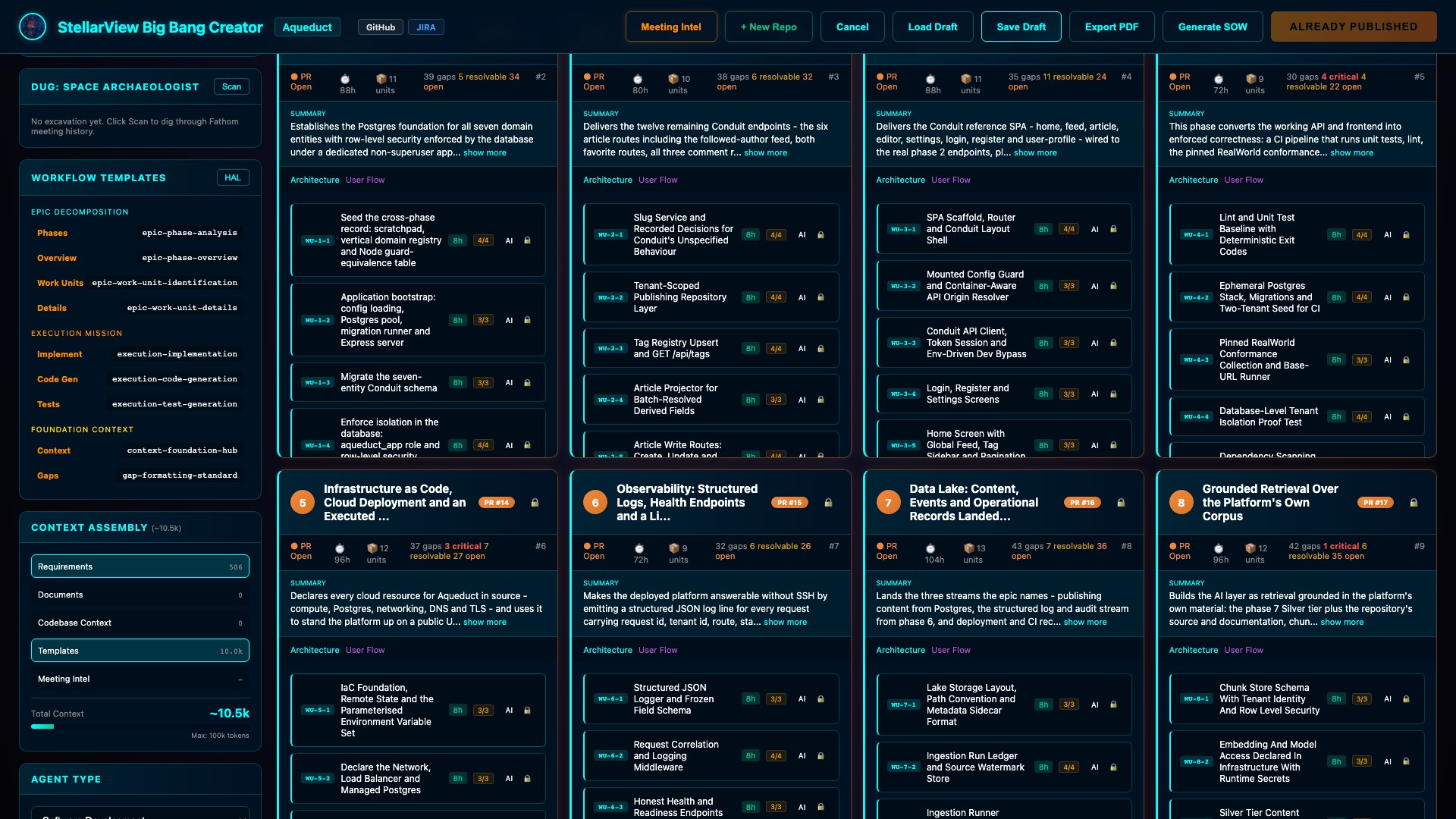
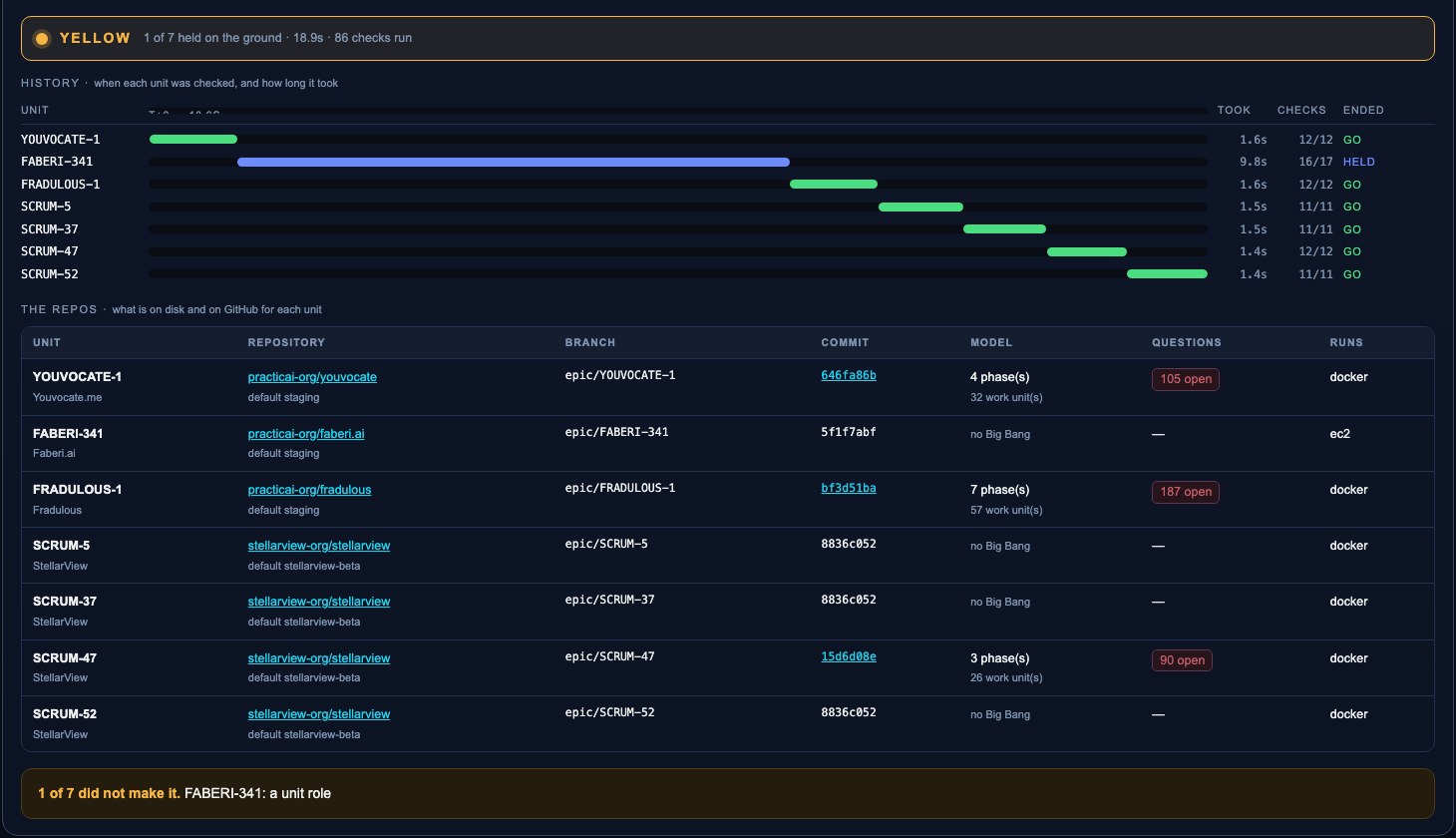
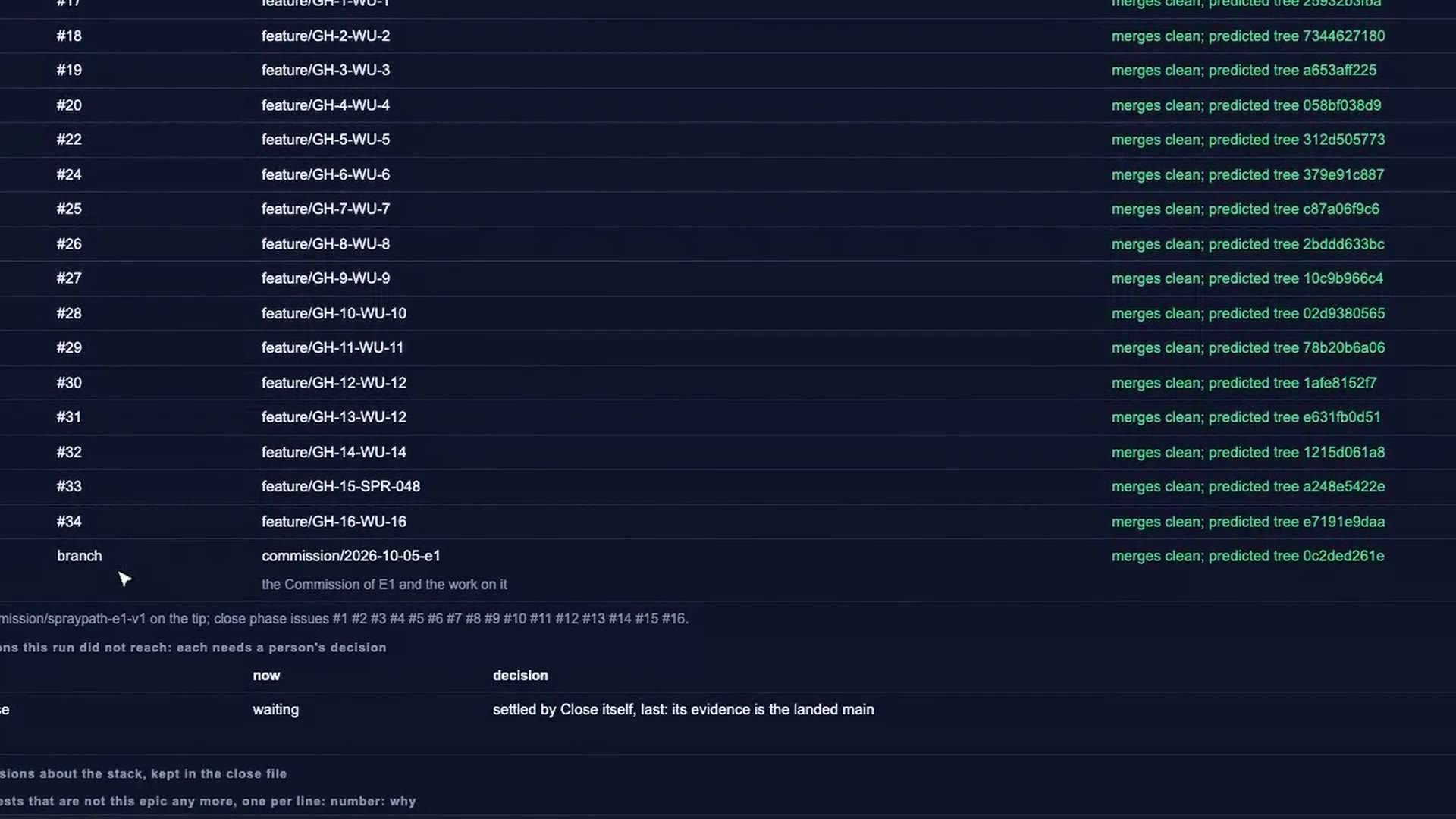
Read · a launch engagement, handed over
Why AI did not shrink the gap
The mood of the last two years assumes that AI will, eventually, close the Step 2 Gap: that the tools will get better, the integrations will mature, and Step 2 is a temporary inconvenience on the way to one sentence to production.
This reading misunderstands what Step 2 is.
Step 2 is not a set of tasks that happen to be hard. Step 2 is the work of holding a system in a human mind well enough to change it on purpose. The tasks follow from the holding. When you can hold the shape, writing the test is straightforward. When you cannot, no amount of generated test code will save you, because you will not know what to test against.
AI generates code. It does not, by itself, hold the shape of the resulting system in anyone’s mind. Someone has to do that, and that is exactly what Step 2 demands. Every improvement in code generation makes it easier to produce more code, which makes it harder to hold. More code is more progress only if someone can still hold it. Otherwise it is drift, and drift is what the Step 2 Gap is made of.
So we measure it. The Spectrograph reads every model call of a build: what each one carried in, where the context filled, and where the work was handed on. You find out where the work went before you change the process.
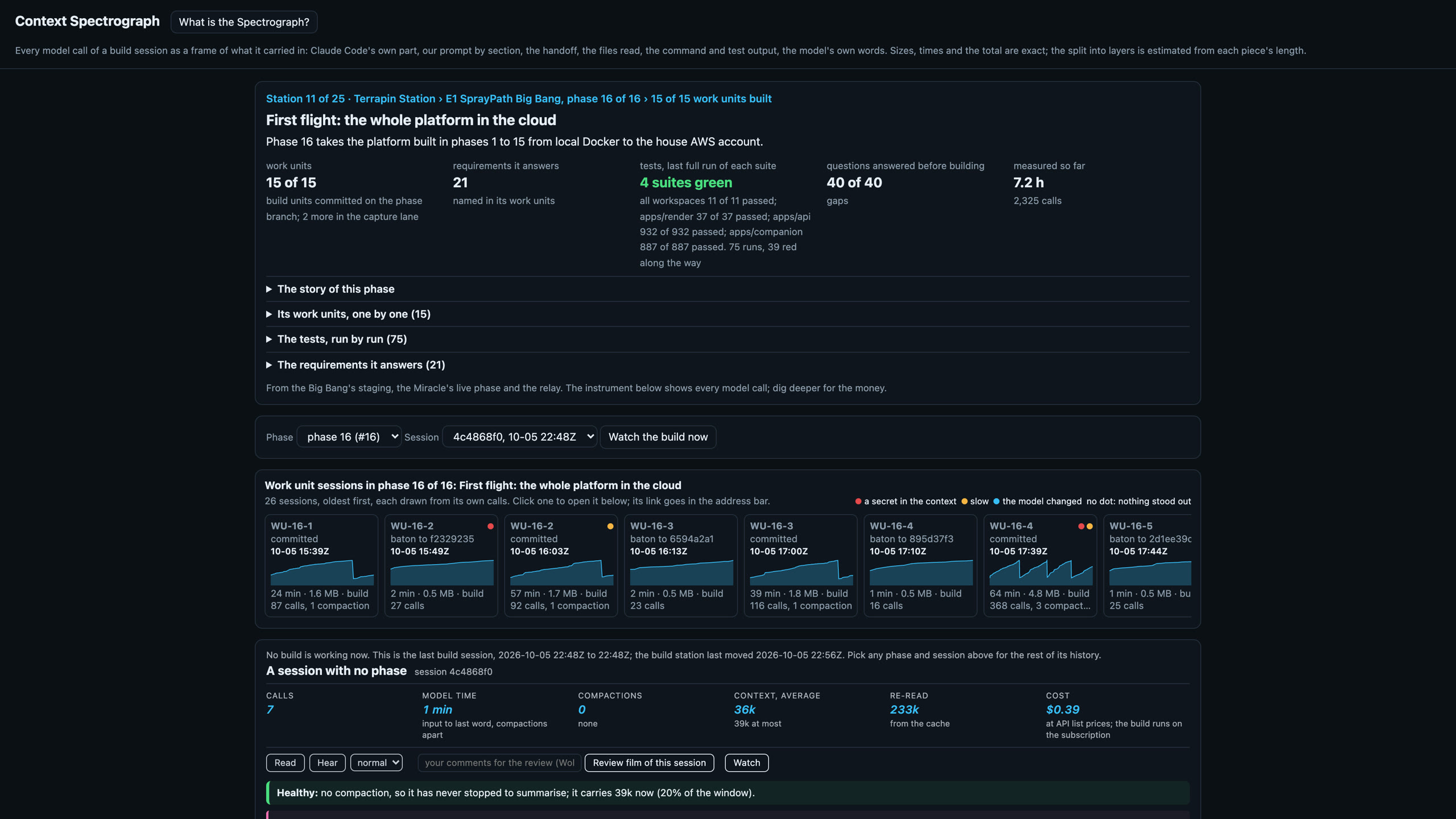
Read · Spectrograph, in the vocabulary
The gap is where AI work fails silently
Here is a shape this failure often takes. A business unit pilots an AI-generated internal tool. It works in the demo. It ships to a small group. Early feedback is positive. The sponsor tells the board, and budget goes to scaling it.
Months later the tool is still running, but nobody is adding features to it. The original builder has moved on. A few small changes were attempted, and most of them introduced regressions that took weeks to find. The business unit has quietly gone back to its old process for anything important, and uses the tool only for the case it was first built for.
This is not a launch failure. It is a Step 2 failure, and it is usually read as a Step 1 success, because the tool does, technically, still run. It hit the Step 2 Gap the moment the original builder’s context left the building, and from then on it could not move.
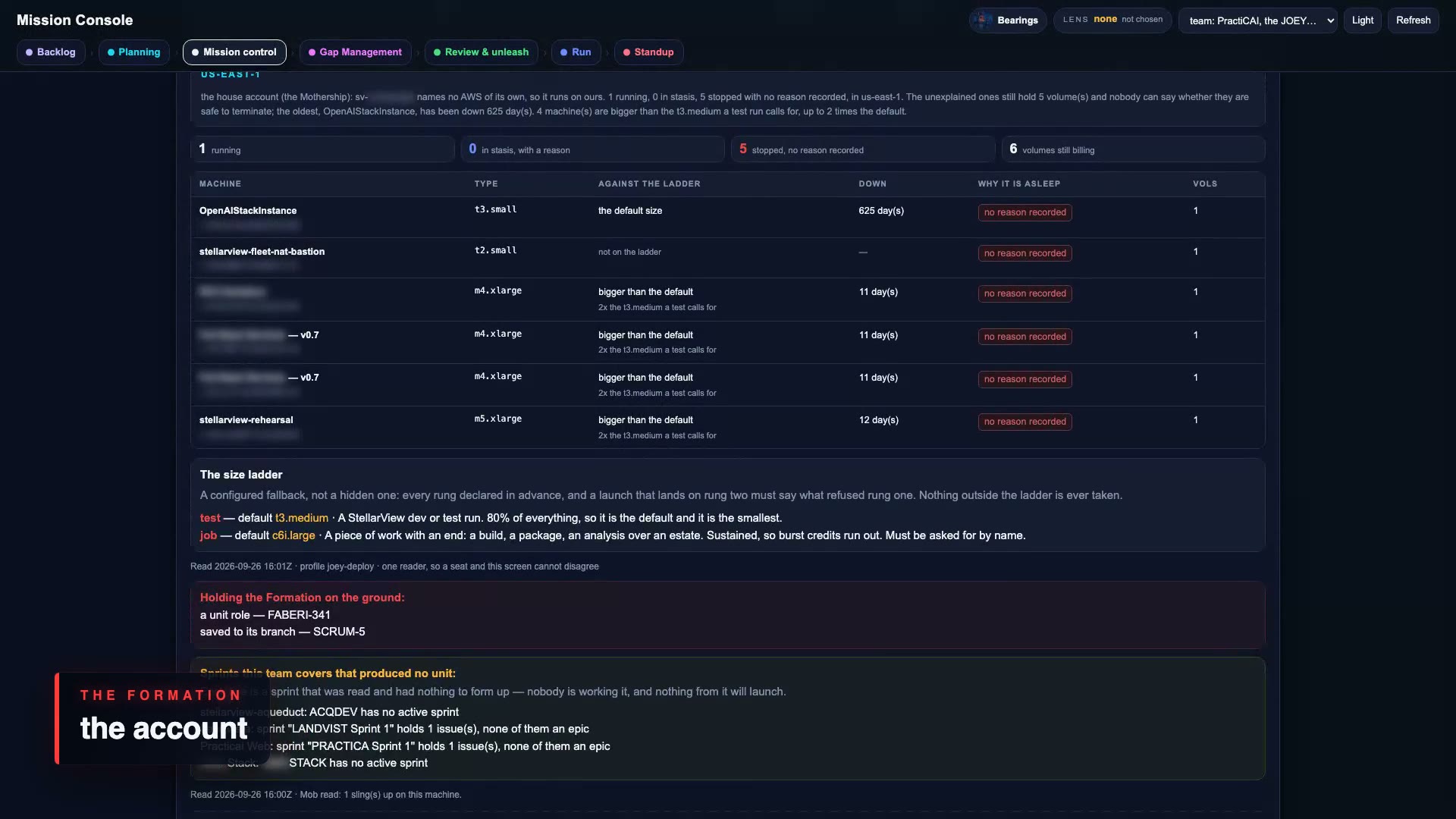
The opposite of failing silently is saying out loud what is not done. Our own product does that on its own screens:
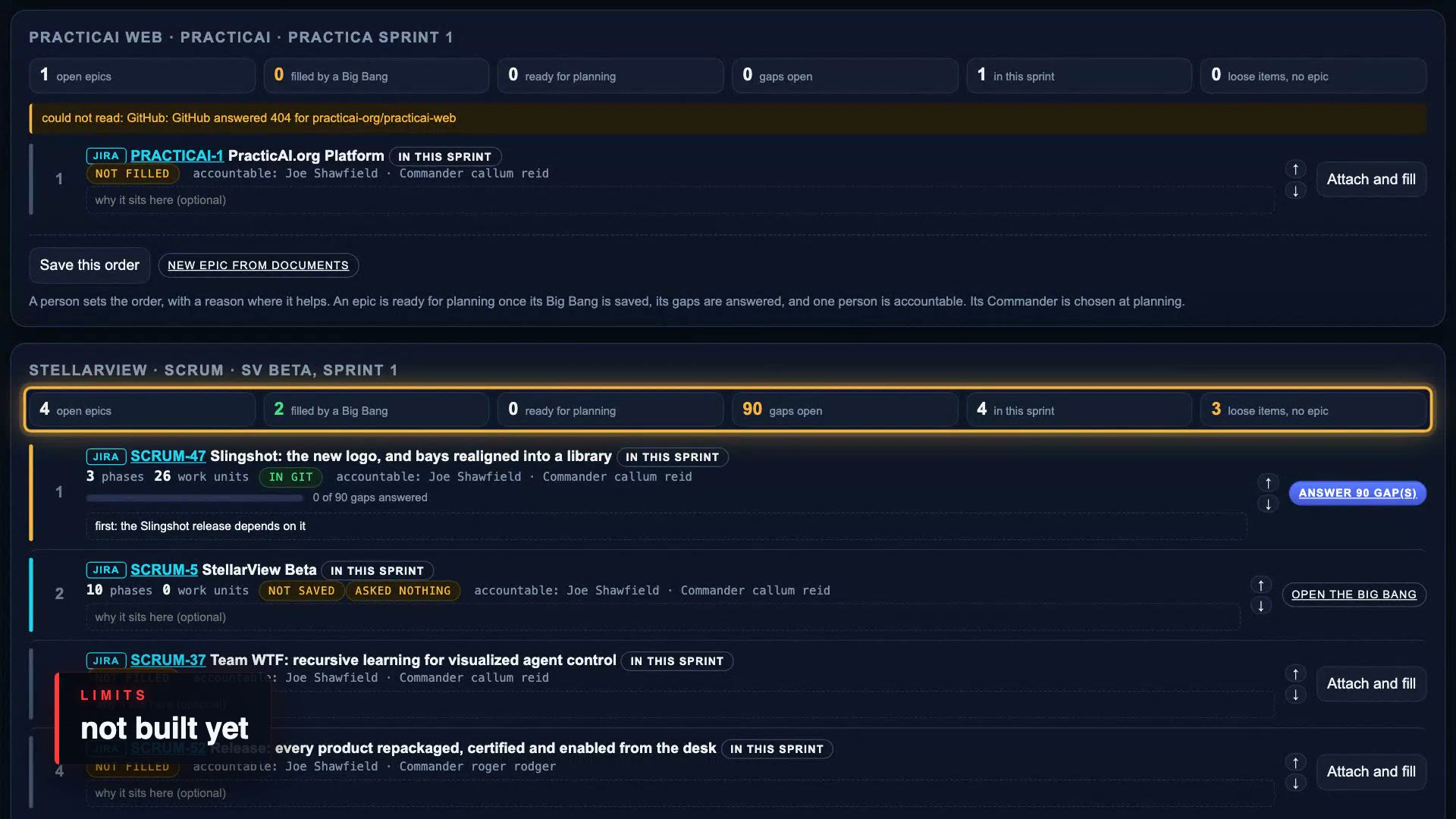
PractiCAI is the practice of Step 2
The editorial project of this site is organized around the Step 2 Gap. Every piece here names the gap, shows a technique for crossing it, or reports someone crossing it. The Discipline is the craft that makes the crossing possible. Pulse Operations is the rhythm that holds a system after it. Foundation Inversion is the ground the crossing starts from. Who Runs It? is the Step 3 question that opens once it is done.
These are not separate topics. They are facets of one subject: holding an AI-accelerated system in a human practice well enough to ship it and run it, then to change it and one day hand it off.
StellarView is the vehicle that makes this practice work across many builds. The vehicle is not the practice. Someone who picks up StellarView without the practice will build Step 1 prototypes faster and fall into the Step 2 Gap faster, because StellarView is very good at Step 1.
On the record, Step 2 can be crossed fast. Madstone sent two documents. Two days later there was a running service in the cloud, the build as stacked pull requests with passing tests, a company wiki in their Confluence, their own keys wired in, and a film of every step.
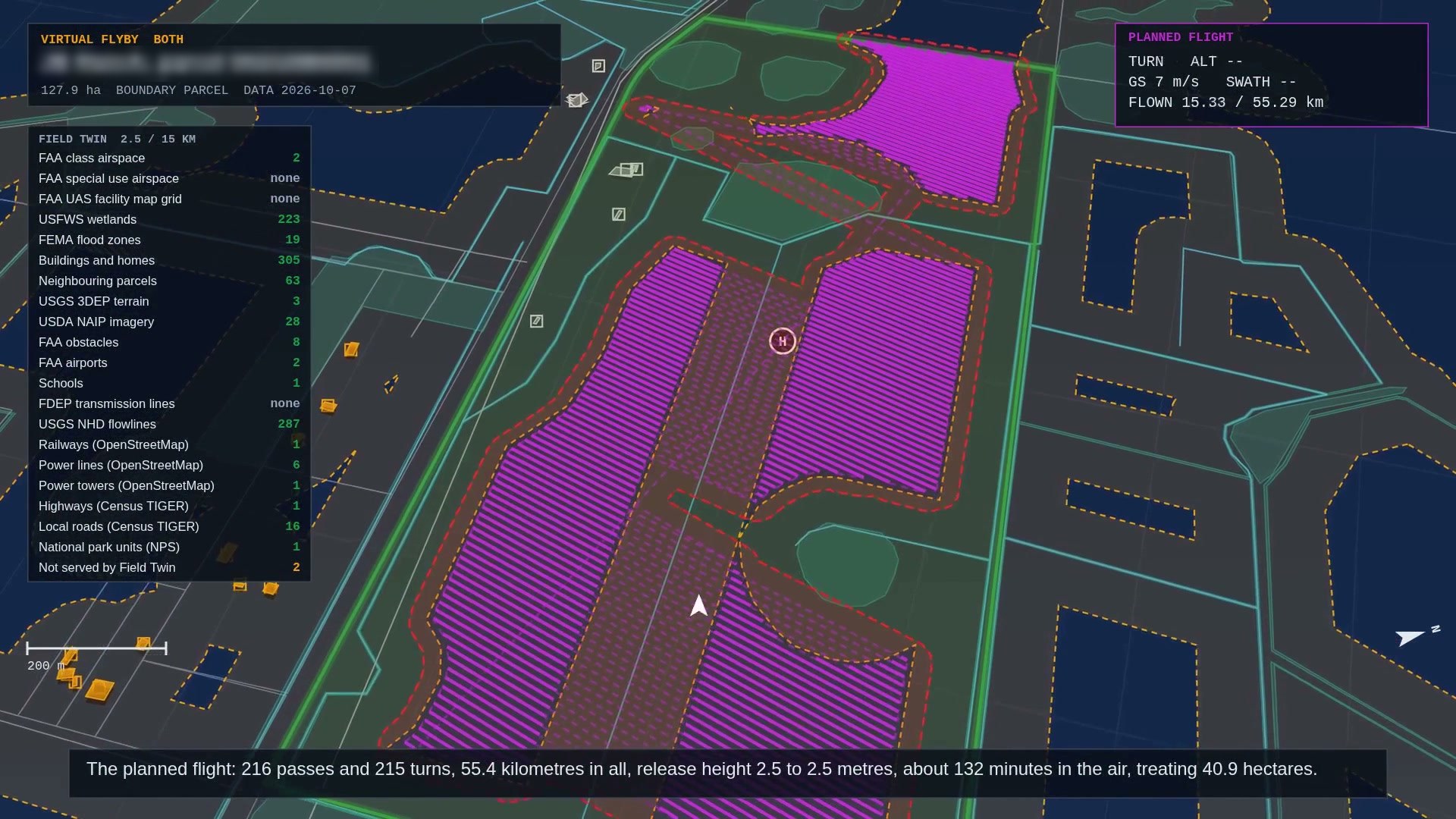
Read · a launch engagement, handed over
Why naming the gap matters
The gap does not go away when it is named. Once it is named, it can be organized around.
A firm that recognizes the Step 2 Gap hires for the craft of holding systems, not the theater of producing prototypes. It scopes for the life of the system after the crossing, not the demo before it. And it treats Step 1 artifacts as raw material for a Step 2 decision, not as deliverables in their own right.
The firms that do not name the gap cannot organize around it. They keep celebrating Step 1 victories while their Step 2 reality rots, and they do not understand why their AI investments stopped compounding. The investments were always in Step 1, and Step 1 never compounded. Step 2 compounds.
This is the work ahead of us. Not more prototypes, and not faster models. A profession that can hold Step 2, name the gap when it appears, and make the crossing repeatable rather than heroic.
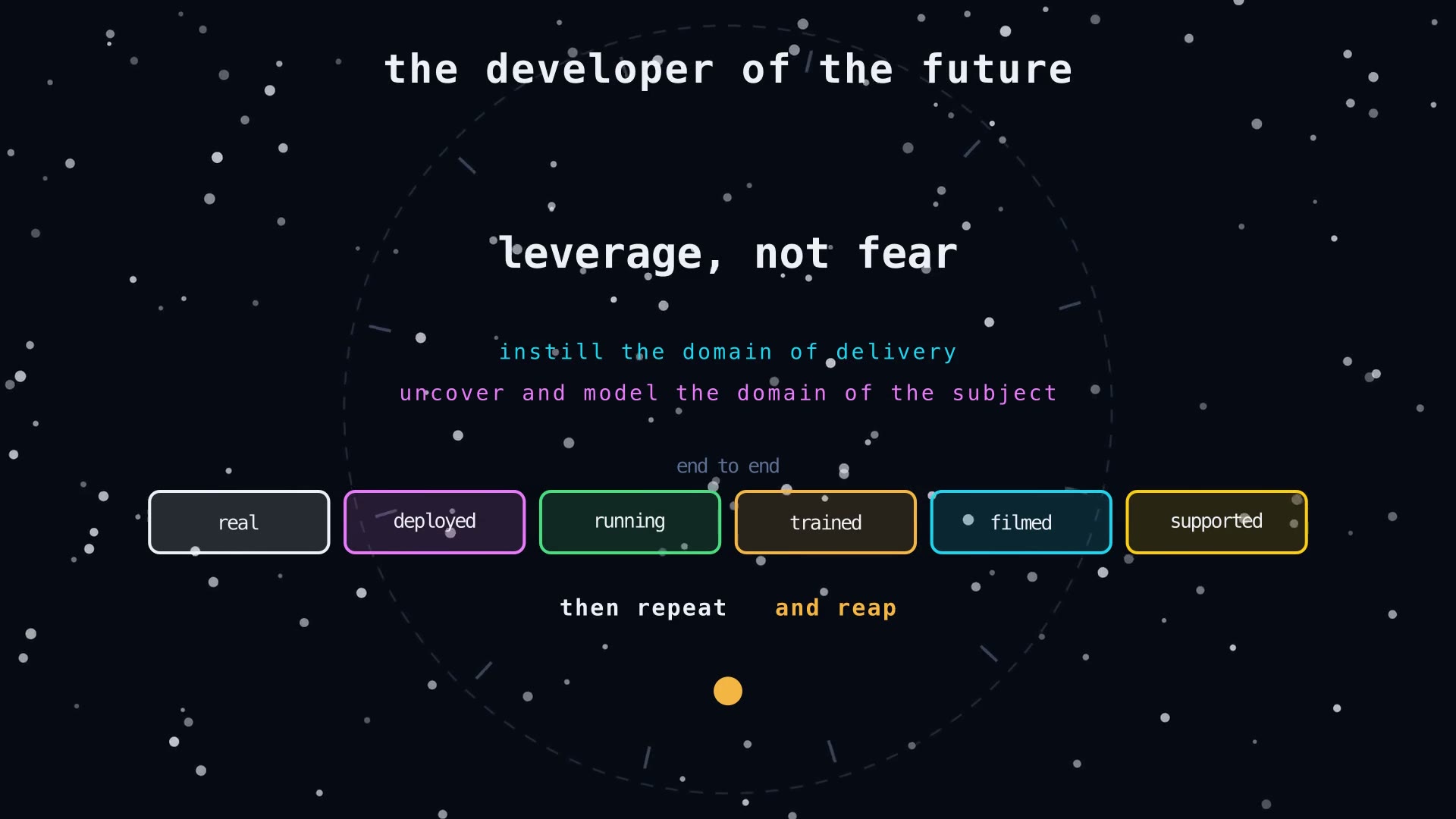
The gap has always been there.
The drawings are explainers, and they are labelled as drawings. Every other picture here is a real screen.
Enter the practice
- If you want who crosses it: read The Modern Principal.
- If you want the craft of crossing: read The Discipline.
- If you want what comes after: read Who Runs It?.
- If you want to watch a crossing: follow Cyborg SDLC.
- If you have a Step 1 that needs to become Step 2: bring your documents.