

The foundation is already there.
Most people, and most machines, assume the job is to make software faster: point the model at a blank page and let it generate. The assumption is so common it has gone invisible, and it is the wrong one.
The making got cheap. Any machine produces artifacts now: the document, the boilerplate, the first draft. If speed of production were the prize, it was already won, and won for everyone at once, which means it is worth nothing. The value moved. It is no longer in producing the thing. It is in recovering the foundation that already exists, and honestly wiring to it, and in the judgment that knows the difference between the two.
Read what is real
A running system is not a blank page. It is littered with intent: the schemas someone chose, the routes they exposed, the contracts they wrote down, the panels they stubbed and labeled “Coming Soon.” Every one of those is a declaration. The team already tried. They did not finish the sentence.
So the first move is not to generate. It is to read. Recover the foundation out of what is already there, detect the patterns the builders started, and continue them, the way a careful colleague joins a codebase and matches its idiom instead of rewriting it in their own. Continue by default. Stop only at an obvious defect, and when you stop, say why.
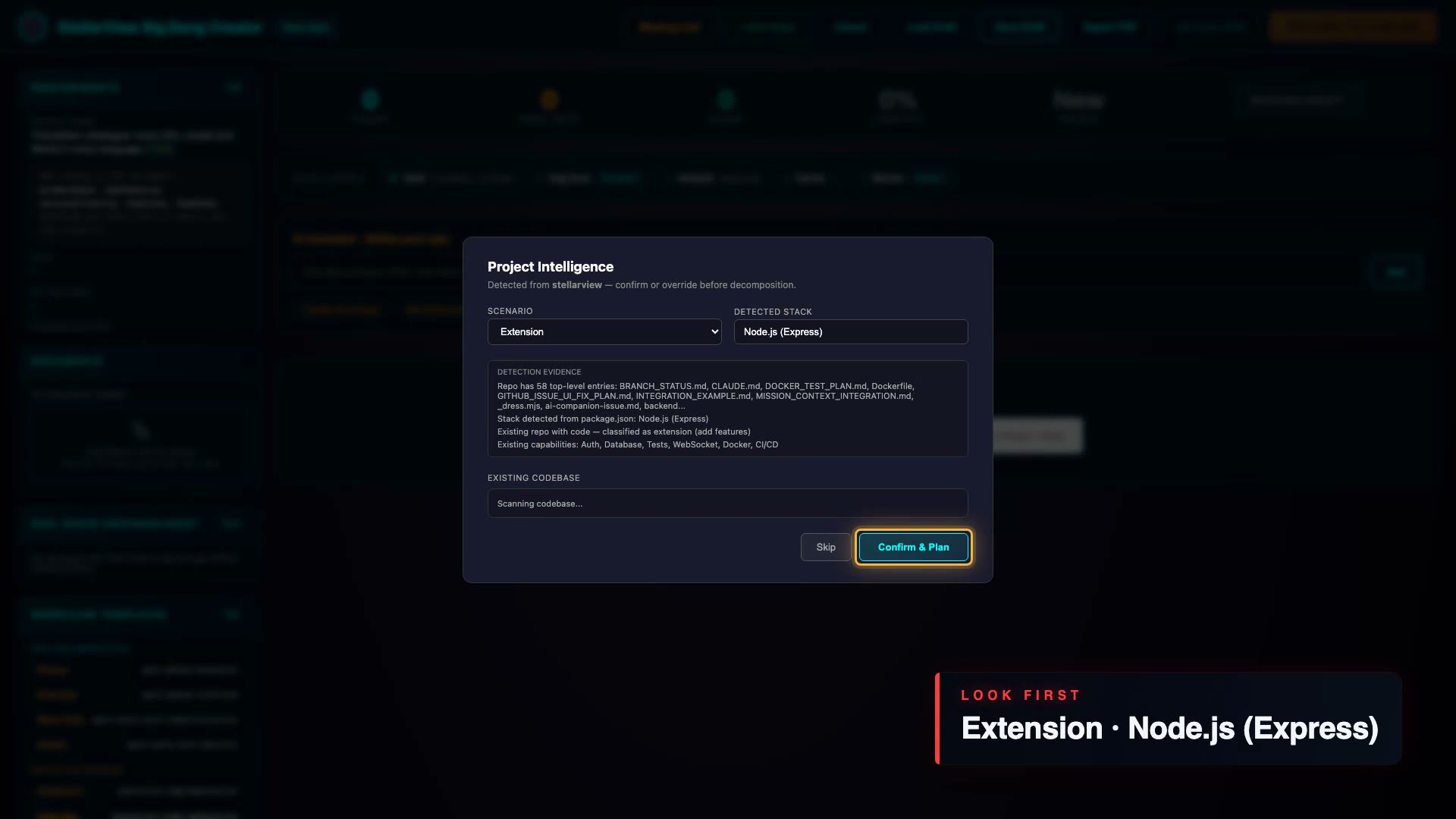
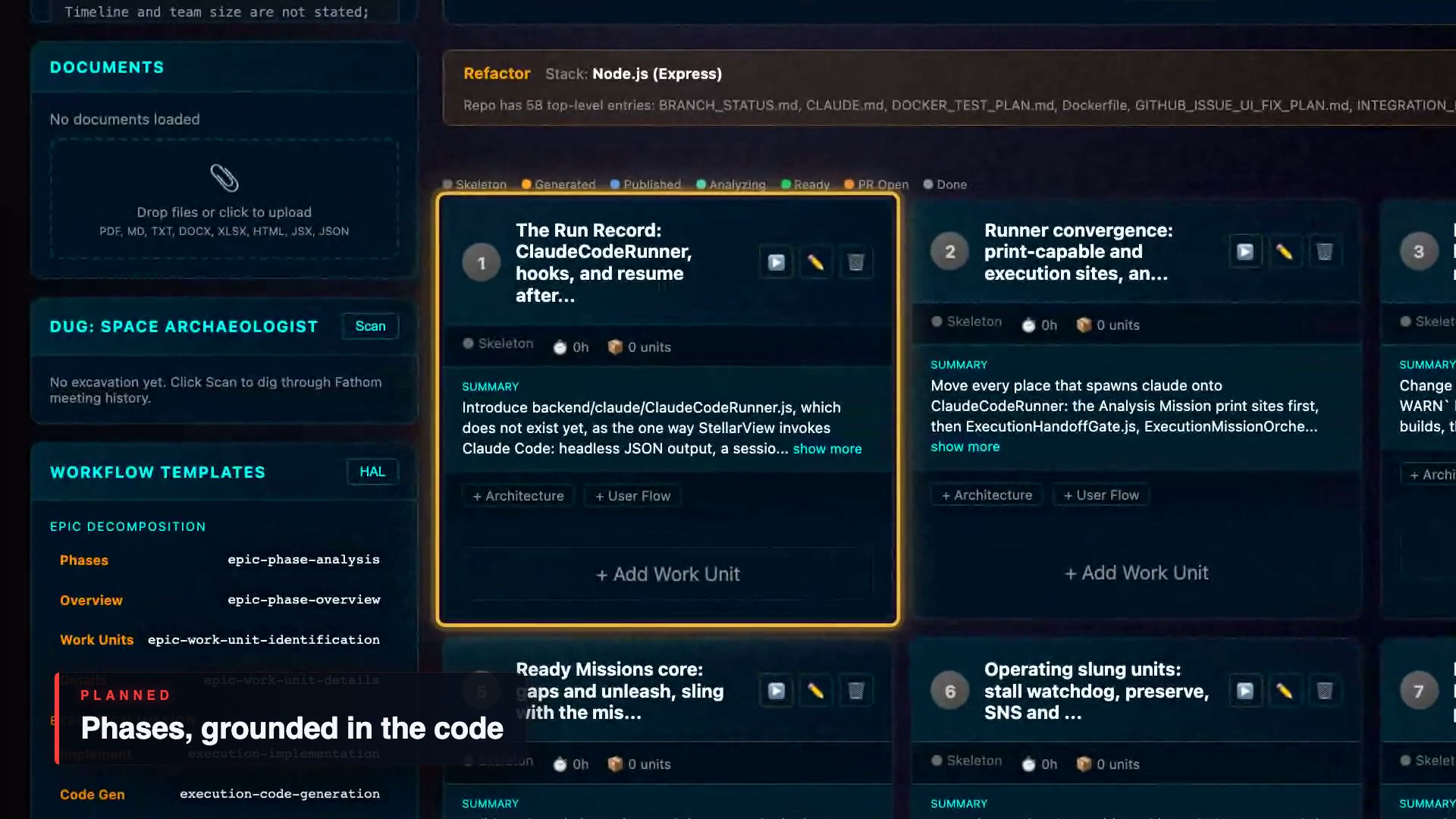
That is how StellarView starts on an existing product. Before it plans anything, it looks first: it reads the repository, says what it found (an extension of a Node.js app, in this case), and asks a person to confirm or override it. The plan’s phases are then grounded in the code that is there.
Read · Every claim cites a fact
Two doors, one epic
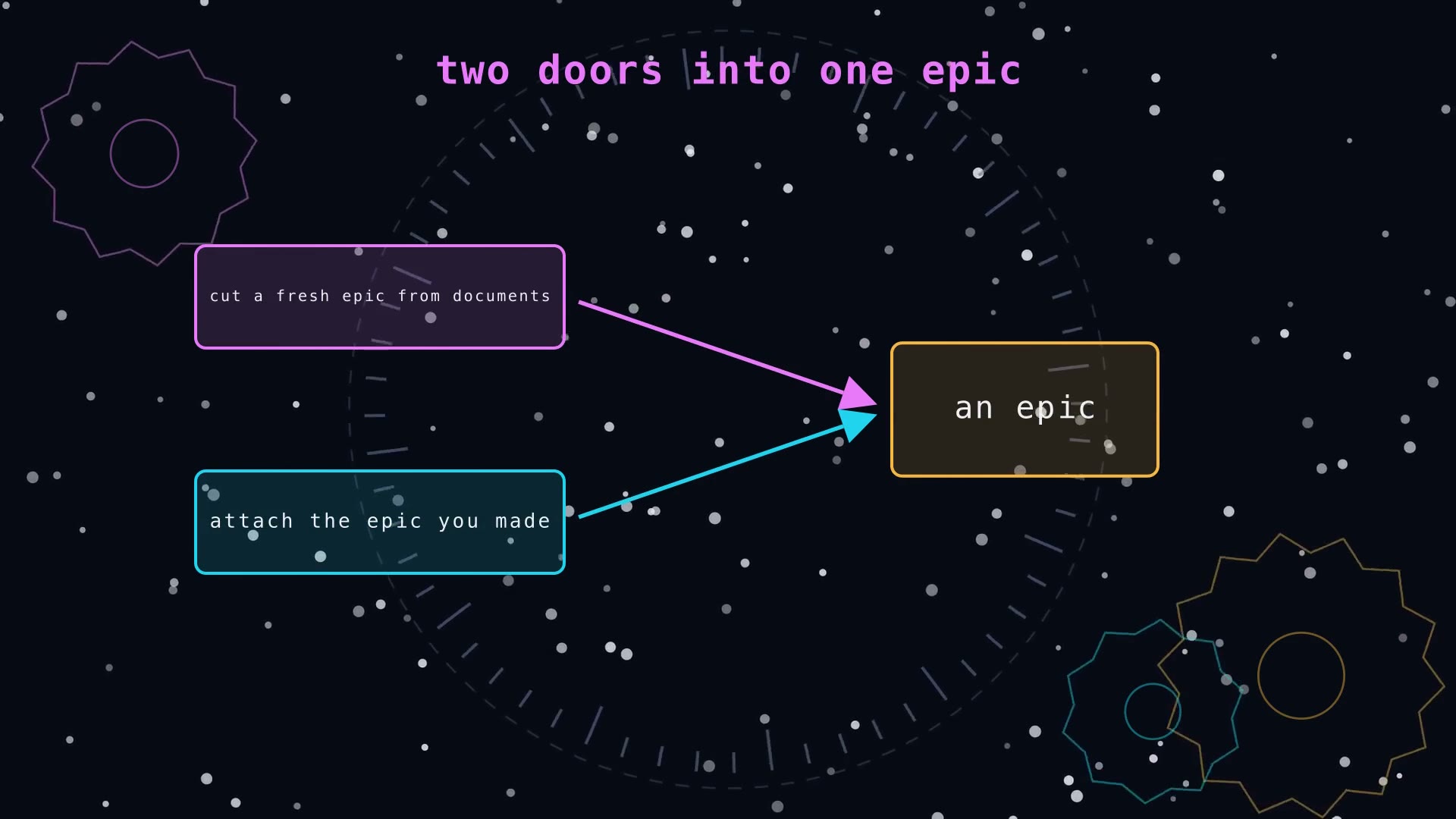
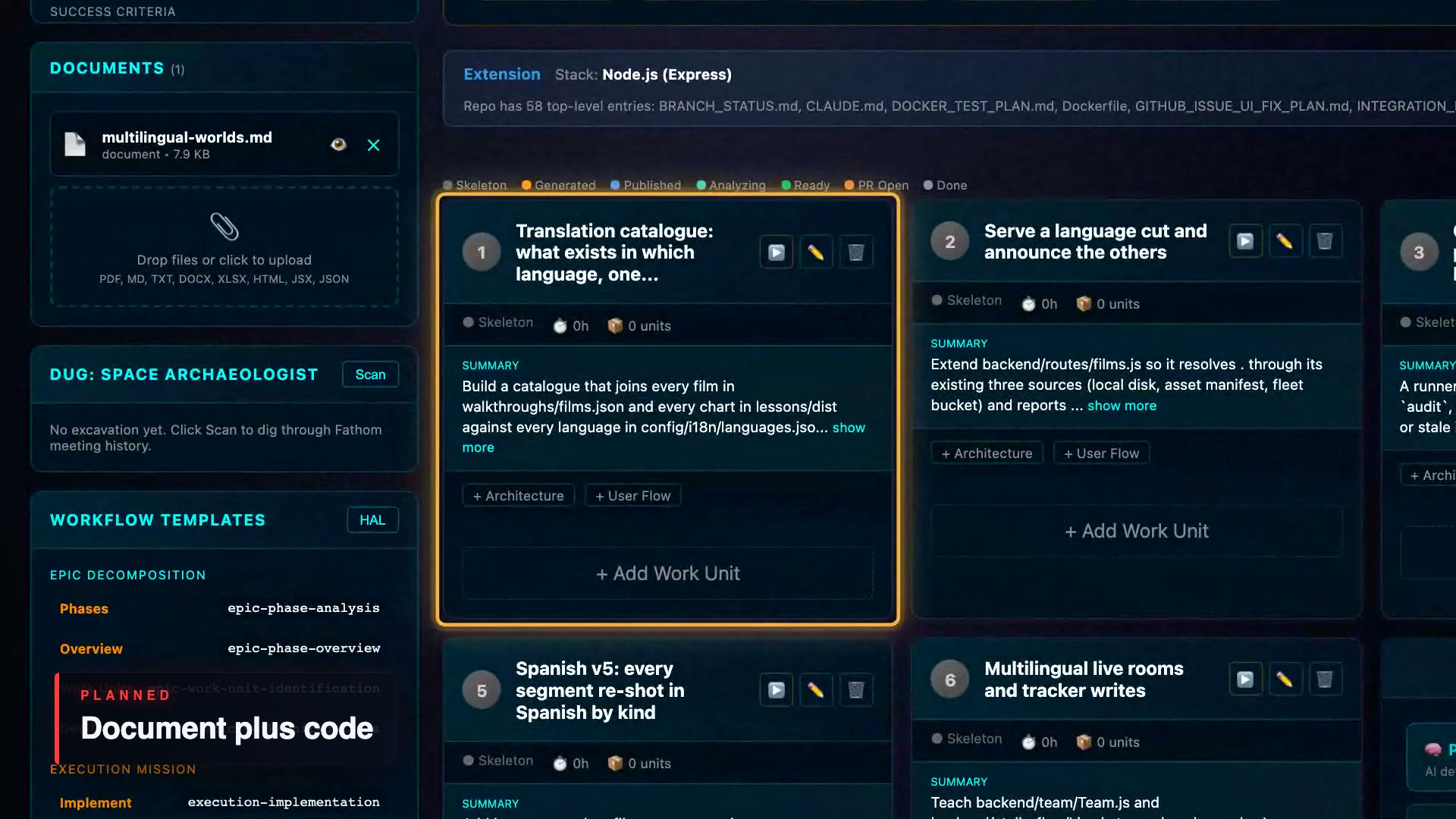
There are two ways into the work, and both start from what is real. You can attach the plan to the Jira epic your team already wrote and fill it. Or you can cut a fresh epic from your documents. Either way, the document and the code are read together, and the plan comes from both.

Read · Every claim cites a fact
The gap is a wire, not a hole
Look closely at a system that “isn’t finished” and you usually find the opposite of what you expected. The capability is there. The endpoint already ships. The panel says “Coming Soon” over a thing that was built weeks ago. Nobody connected the two.
The gap, most of the time, is a missing wire and a missing name, not missing code. Name that gap and you can close it. Refuse to name it and you will rebuild what already exists.
In StellarView a gap is exactly that: a question the plan cannot answer on its own, listed rather than guessed at. It waits for a person.
Honest about what you cannot see
There is a line that must never be crossed: wire what exists, and only mark what would have to be created. Never fake the connection. A proposal dressed as a running thing is a lie the build will eventually tell on you. So the honest system keeps two columns and never blurs them: connected to something real, or inferred and not yet built. The running thing has the last word, and it does not flatter.
Ask the epic a question and the answer says where it comes from: the plan and the repository, and what each phase does not depend on.

Read · Every claim cites a fact
The part that is yours
Everything above the wire is judgment, and judgment is the part that did not automate. Knowing what is true. Knowing what done actually means when the machine reports done. Knowing which pattern to continue and which one is a mistake wearing the costume of a convention. The producing left; the deciding stayed, and the deciding was never the same skill as the producing.
This is why the discipline points the opposite way from the fashion. The fashion is autonomous generation from nothing. This is disciplined recovery of what is already real, kept honest, with a person’s judgment load-bearing at the center. Not the machine replacing the person. The machine amplifying exactly the person who knows what done means.
Read · Every claim cites a fact
Your own Latin
Everything here has names, and the names are not the point. What one practice calls the void, another calls the gap; what one calls the amplifier, another calls the line. Fix the concept and let each person bring their own vocabulary. Nomen non res, the name is not the thing. The Living Curriculum has ours, ridiculous and dead serious.
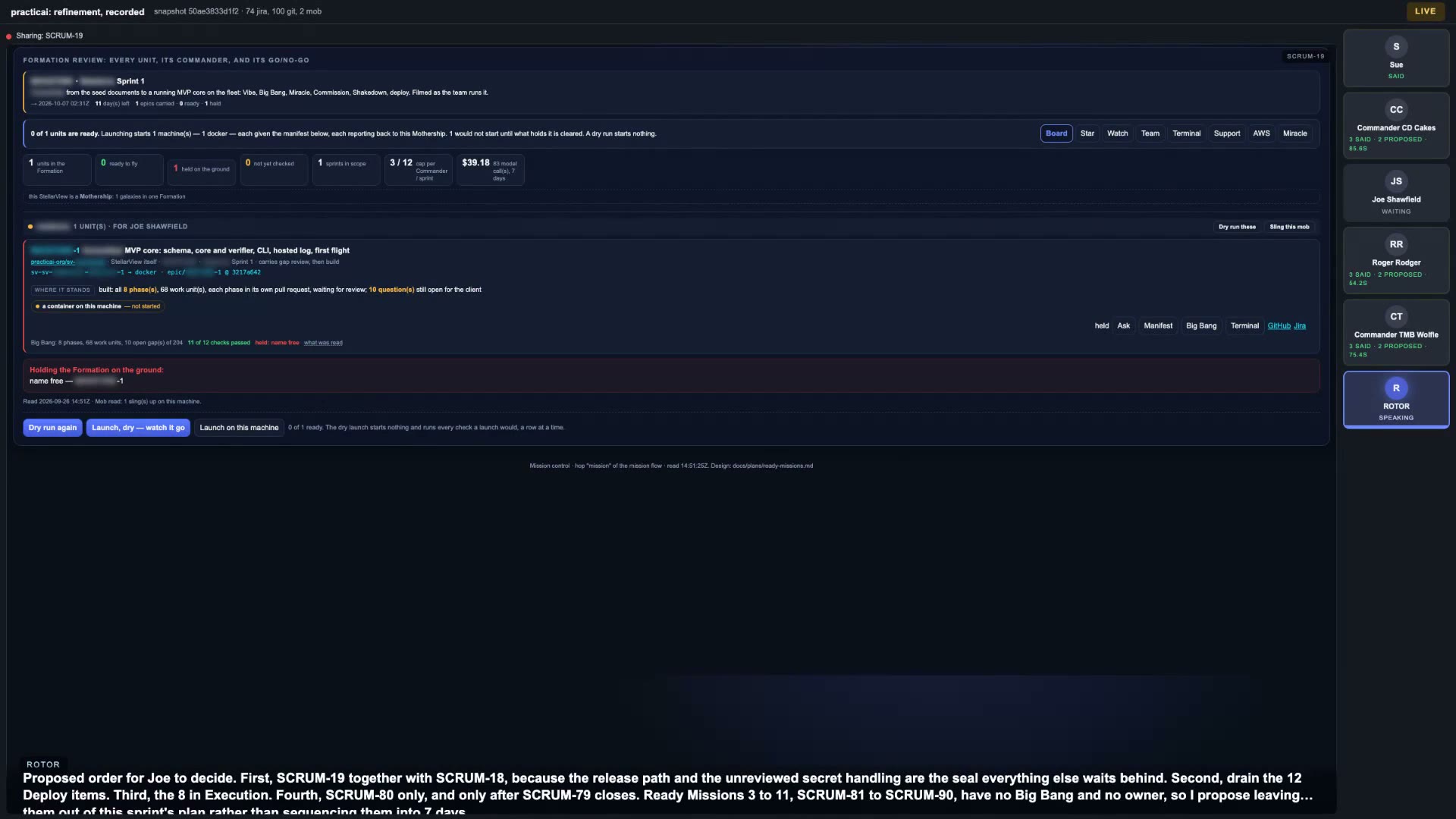
The drawings are explainers, and they are labelled as drawings. Every other picture here is a real screen.
Enter the practice
- If you want who does this work: read The Modern Principal.
- If you want the craft at each gate: read The Discipline.
- If you want to see it on a real build: follow Cyborg SDLC.
- If you have a product that is already running: bring your documents, and your code.
The foundation is already there. The work is to find it, wire to it without lying, and keep the judgment human. That is the whole of it, and it is enough.