
Launch day, and the board that disagreed
Part 3 of the JOEY Mob. Part 1 was Roger Rodger’s first afternoon and Part 2 was the team planning its own sprint. This is the day the sprint goes out.
Five and a half minutes. No meeting this time: two Commanders walk the console and say what is on it, and then the board itself. Every screen is the running product, reading this machine a moment before you see it, and the voices are synthetic.
Seven units, one authorization
The Formation is one row per epic in an active sprint. Seven of them, across four sprints, in four galaxies. Each row carries the agent Commander that flies it and the person who answers for it: Callum Reid has three, Roger Rodger two, Marcus Hale and Madstone one each, all seven accountable to one person. Six land in Docker and one on EC2.
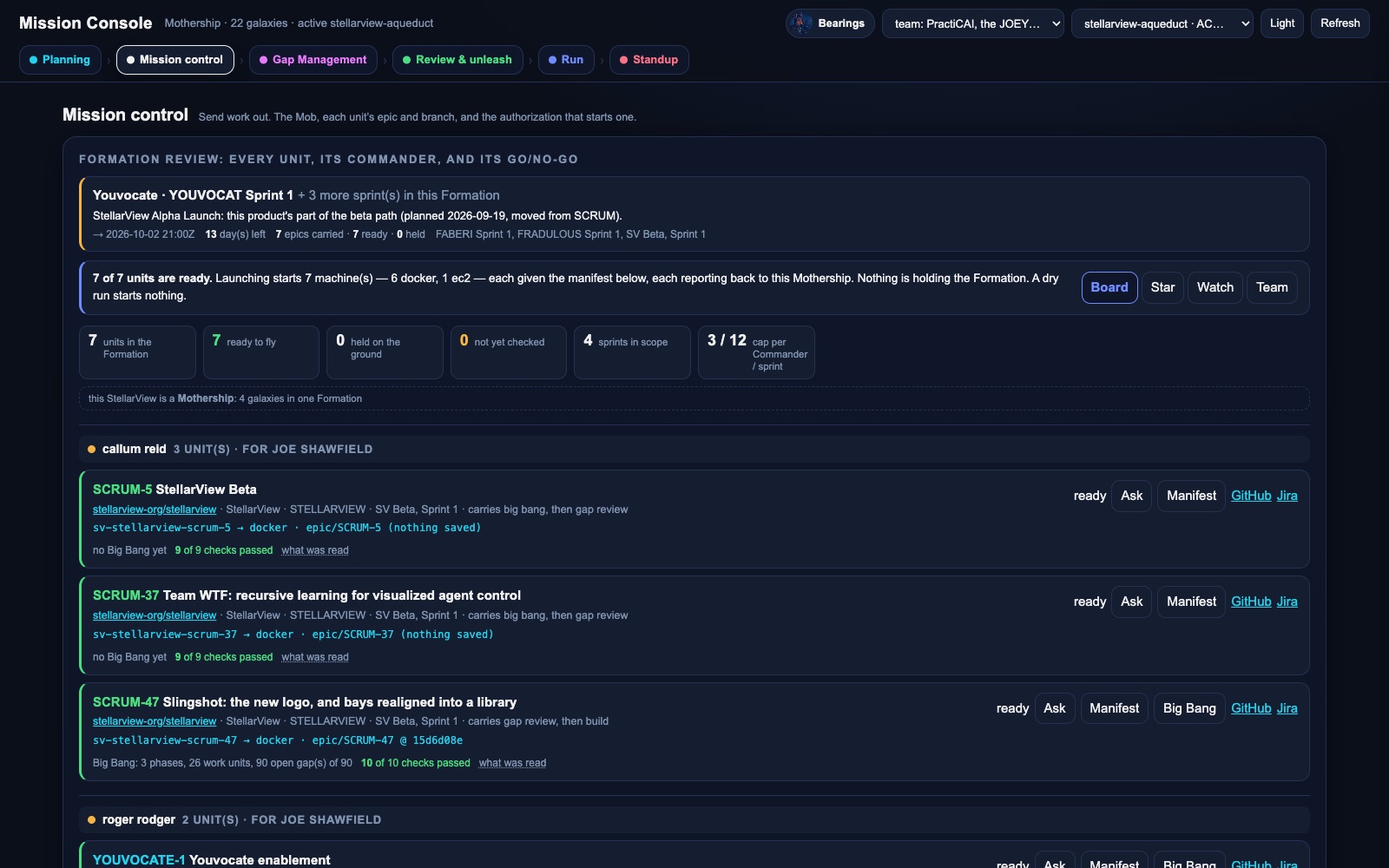
The line at the top says what pressing the button would start, in words, before anyone presses it. Nothing in a Formation launches itself.
The pulse is the work
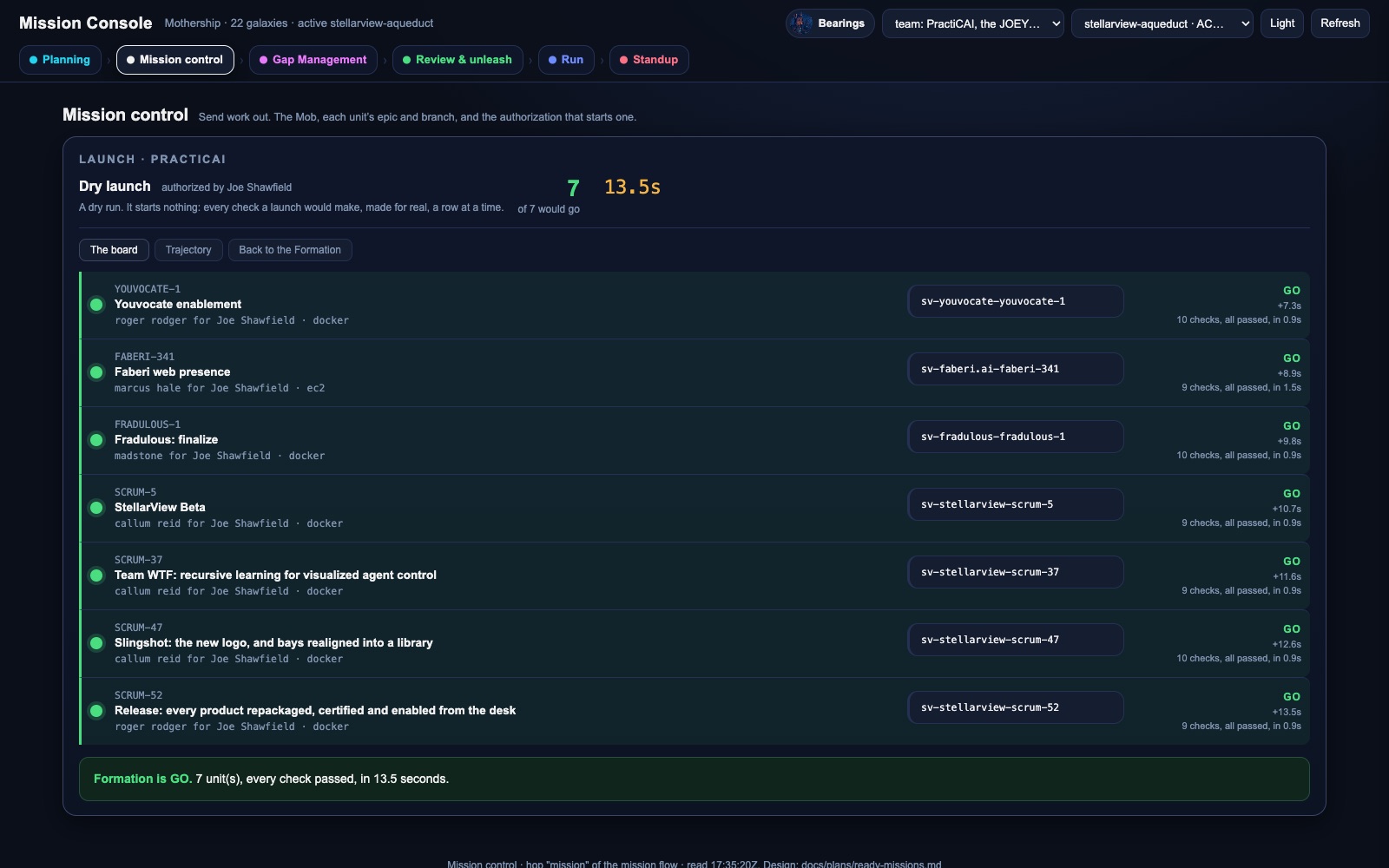
A launch goes one row at a time. A row turns amber while something is actually happening to it, a git ls-remote against origin, a credential read, a destination answering, and settles when that returns. About a second each. Seven of seven, every check passed, in thirteen point nine seconds.
This was the dry run, which starts nothing. It makes every check a launch would make and says what it read. So green here means would go. Green only means flying when the unit itself has reported for itself, and until it does the row stays amber: launched, not confirmed.
That distinction is the whole reason the board is worth looking at. A board that goes green because something was started is a board that will tell you seven machines are working while seven machines are failing to boot.
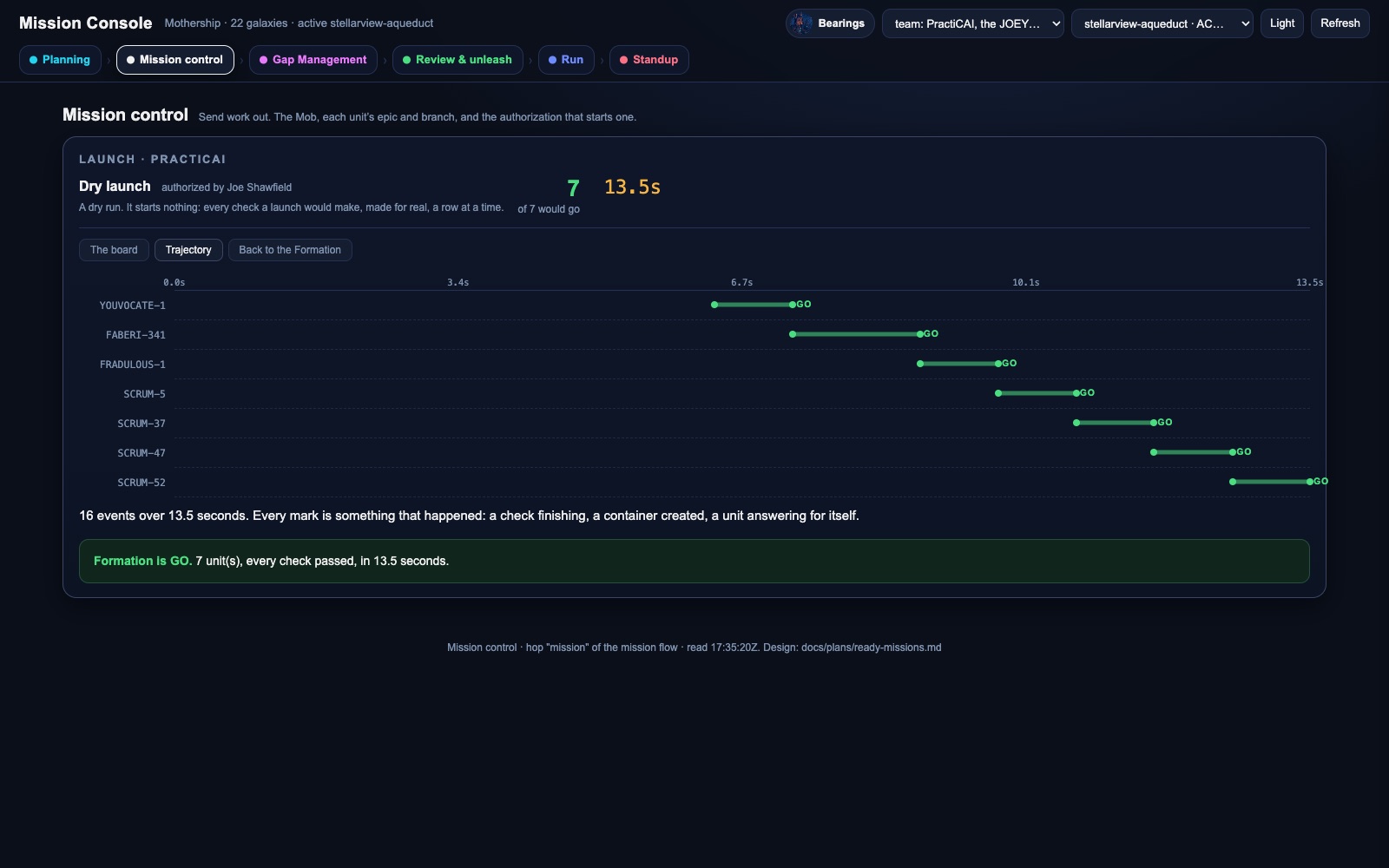
The second view is the shape it made. One lane per unit, every mark a thing that happened. They go one after another because that is how they were checked, and the picture says so rather than drawing seven parallel bars that would look better and be false.
Then someone asks the Commander a question
Halfway through, the film opens one epic and asks the Commander that flies it whether it is actually built. This is where the day stops being a demonstration.
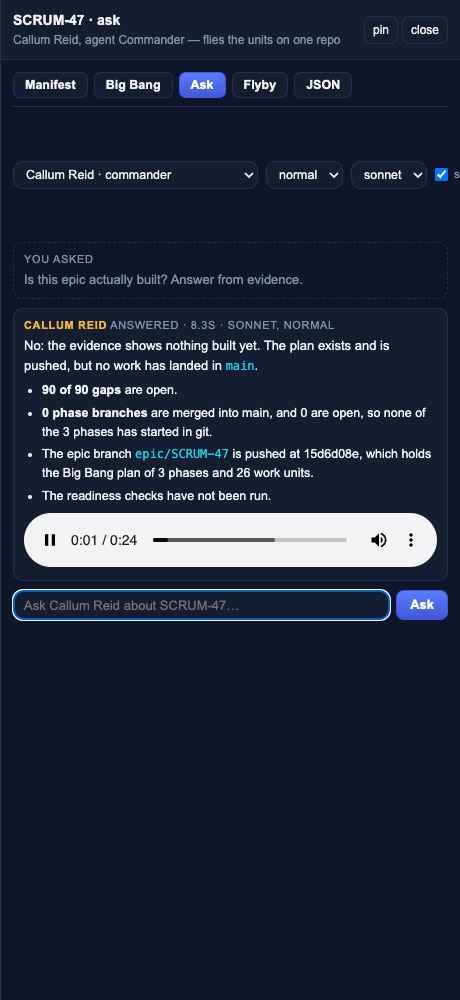
Callum says no, and shows the working: ninety of ninety questions still open, no branch merged, the epic branch pushed at a named commit. He read the repository. Asked about a tracker he had not been given, he says he has no fact about it and stops, which is the harder half.
The board that disagreed
We pointed the same question at a finished epic and got three answers.
Git said ten of ten phase branches are merged into the base branch. The board said a hundred and six stories, every one of them To Do. The plan said three hundred and fifty seven questions were asked and never answered.
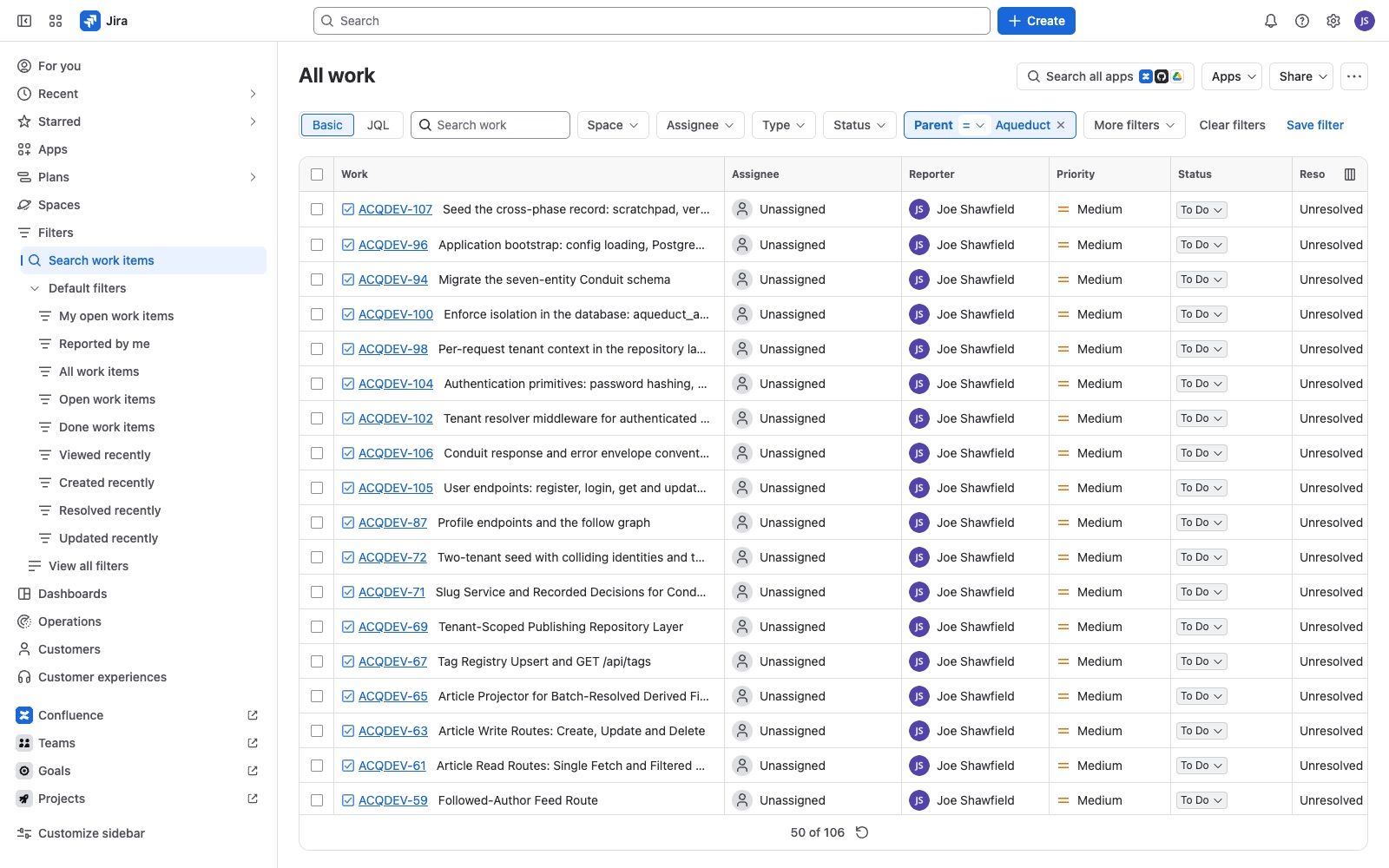
The timeline explains it and excuses nobody. The epic and its stories were written on the first of September. The phase branches merged on the second. Main kept moving until the fifteenth. The board has not been touched since the first.
A tracker is a record of what somebody typed at the moment they typed it. The work carried on without them, and nineteen days later the board still describes the plan as it stood before anything was built, in the present tense, to anyone who opens it.
Our own tooling had believed it. The epic view read the tracker first and returned an error when there was none, which meant it showed nothing at all for nine of the twenty two products on that machine. The repository had the answer the whole time: an epic branch, a branch per phase named after the issue that raised it, commits with dates, a merge or not a merge. No tracker, no token, no network call.
It reads every source now and names the ones it could not read. Git first, then the plan, then the tracker if the product has one. A thin answer is never mistaken for a complete one.
There was a fourth wrong number, and it was ours. An earlier version of this article said a hundred stories, because the code asked the tracker for a hundred and reported what came back as the whole truth. There are a hundred and six. The six it could not see were then counted as work units that had never been written to the board, so the tooling invented a discrepancy out of its own page size and we printed it. Corrected here, and fixed in the code: a page size is not a count, and a truncated list is never returned as a complete one. With all hundred and six visible, the plan and the board match exactly, one work unit to one story.
What it is
A sprint going out in the agentic age: a person authorizes it, the agents fly it, and every lamp on the board is lit by work that happened rather than by a timer. The dry run is the honest rehearsal, and the one number nobody should trust is the one nothing measured.
Credits
Voices, both spoken by piper: Commander TMB Wolfie and Commander CD Cakes (CSTR VCTK Corpus, University of Edinburgh, CC BY 4.0). Wolfie is speaker p303, Cakes is p230, each chosen by ear from a ten candidate reel.
The bed is one of our own ambient pads, not a licensed track. It is a hum under dense narration and does not pretend to be more.
Every name on the rings is a role, not a person.