Two documents in, a running product out
Part 4 of the JOEY Mob. Part 1 was Roger Rodger’s first afternoon, Part 2 the team planning its own sprint, and Part 3 the day the sprint went out. This one is the whole engagement, done for someone else.
The whole engagement for Madstone, twenty-six minutes: the flyby of what they asked for, the plan, the launch, the build, the demo, the deploy, the docs, the handoff, and the crew's own close.
Madstone Technology sent us two documents, a product handoff and an architecture, and nothing else. No repository, no tickets, no team. We did the whole engagement gratis. Forty-some hours later they had a service running in a cloud account behind a sign-in gate, the build as a stack of pull requests with passing tests, a thirty-five page company wiki in their Confluence, enablement that runs on their own GitHub token and Claude key, and a twenty-six minute film of every step. We call the pattern the Slingshot Launch Engagement, and it runs under what we now call the StellarView Pulse SDLC Methodology. This is how it works, with the screens it actually runs on. Nothing recorded here was staged: every screen was driven in real time, by the agents, using the platform and nothing else. Not a single thing in the film was driven by a person. The only human input was notes on the cut, the kind any editor gives: the demo of the app looks plain, fix it.
The crew: real agents, in a live room, with people
The JOEY Mob is not a chatbot with a persona. It is a room with seats. Sue coordinates, ROTOR keeps the cadence, a Commander answers for each product, and specialists speak when their specialty is asked. Some seats are agents, some are people, and some are agents standing in for a person who is away, which the room shows. The agents are real in the plain sense: each one reads a frozen snapshot of the work (git, the tracker, the build record, the cloud account), and every claim it makes has to cite a fact id from that snapshot or it is not said. They propose; they do not act. Every proposal sits under a Veto button until a person decides.
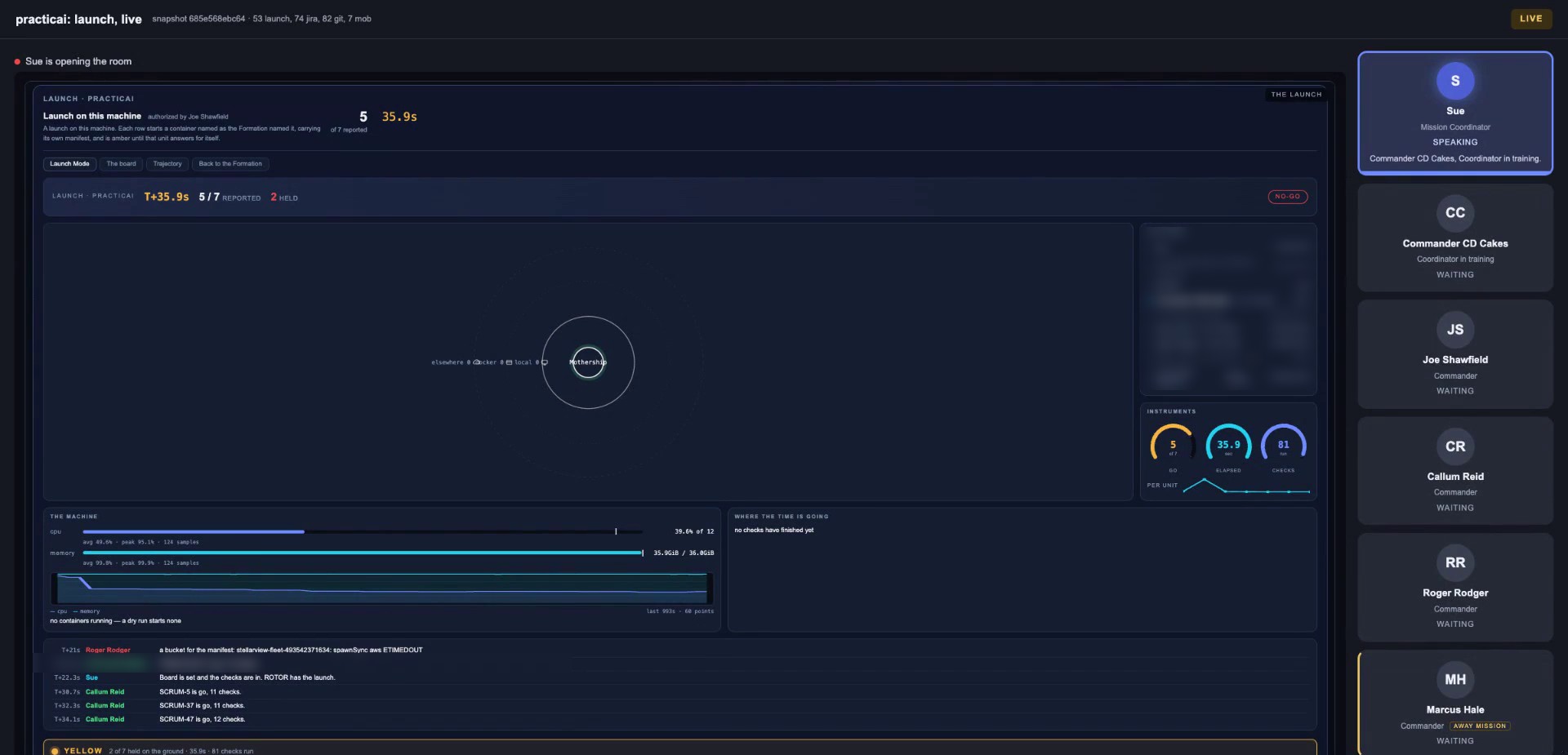
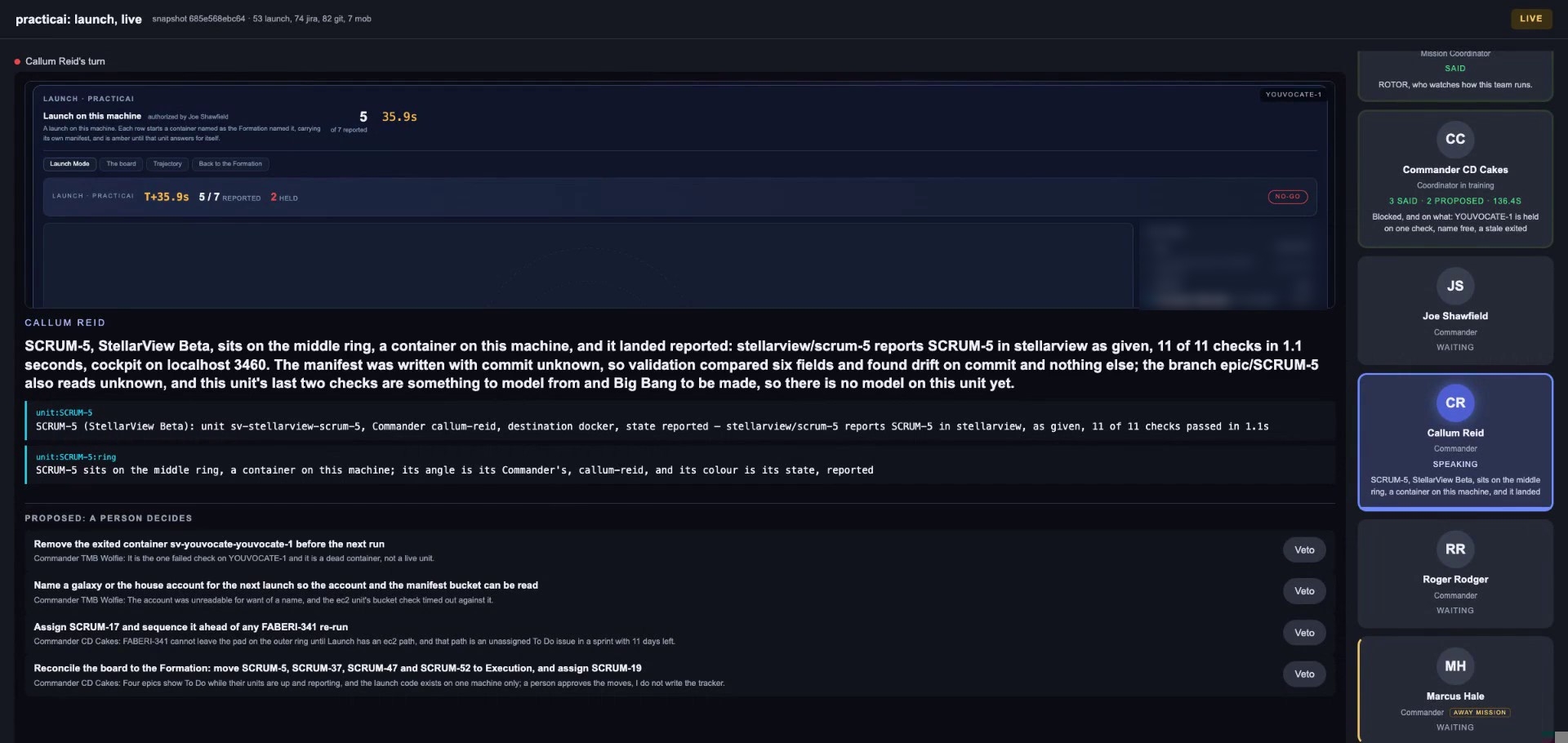
The work itself runs in units. A unit is a full StellarView for one epic, with its own checkout, its own branch and its own agent Commander. Units run locally, as containers on the machine in front of you, or remotely, on an instance in a cloud account, and the room does not care which. It reads each unit’s own record.
Day one: nothing but their documents
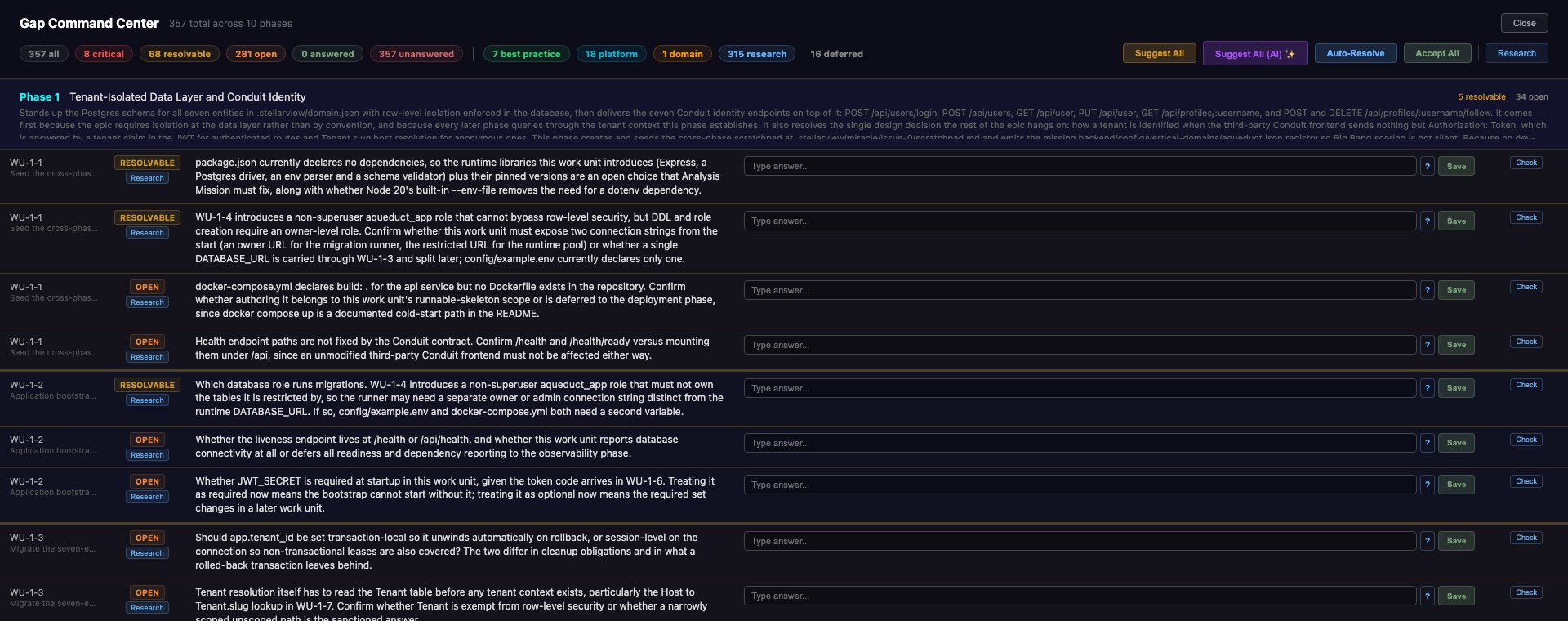
The first room is a read of the seed. Its job is not to admire the documents. It is to find what they leave open and where they contradict each other, before a single machine starts. On the first engagement the room found the one place two documents pulled against each other: a verifier that works fully offline cannot see a withdrawal that happened later. That exact case became exit code 2 in the finished tool. A gap is written down as a question. It is never filled in to keep things moving.
The plan, in the open
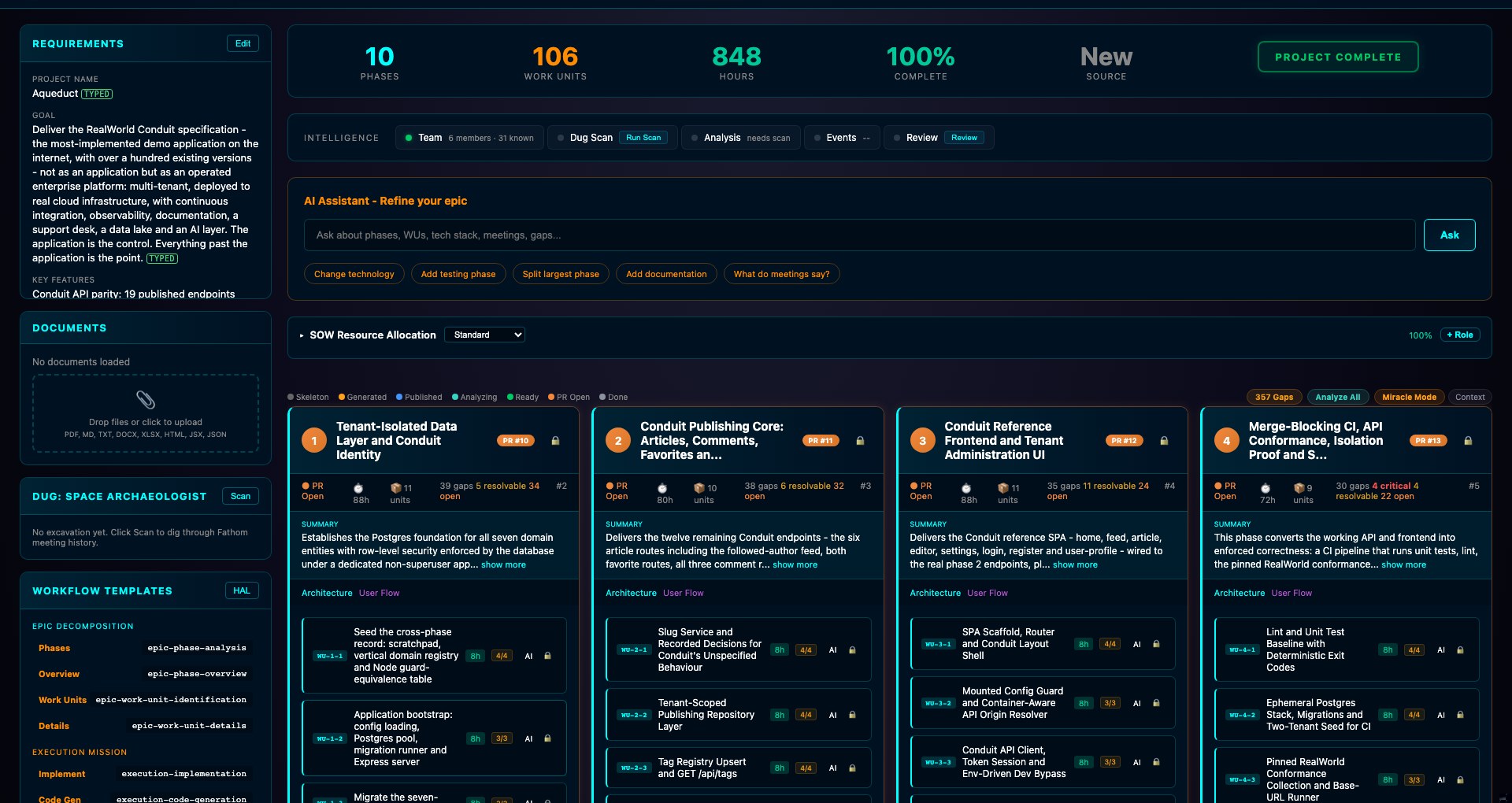
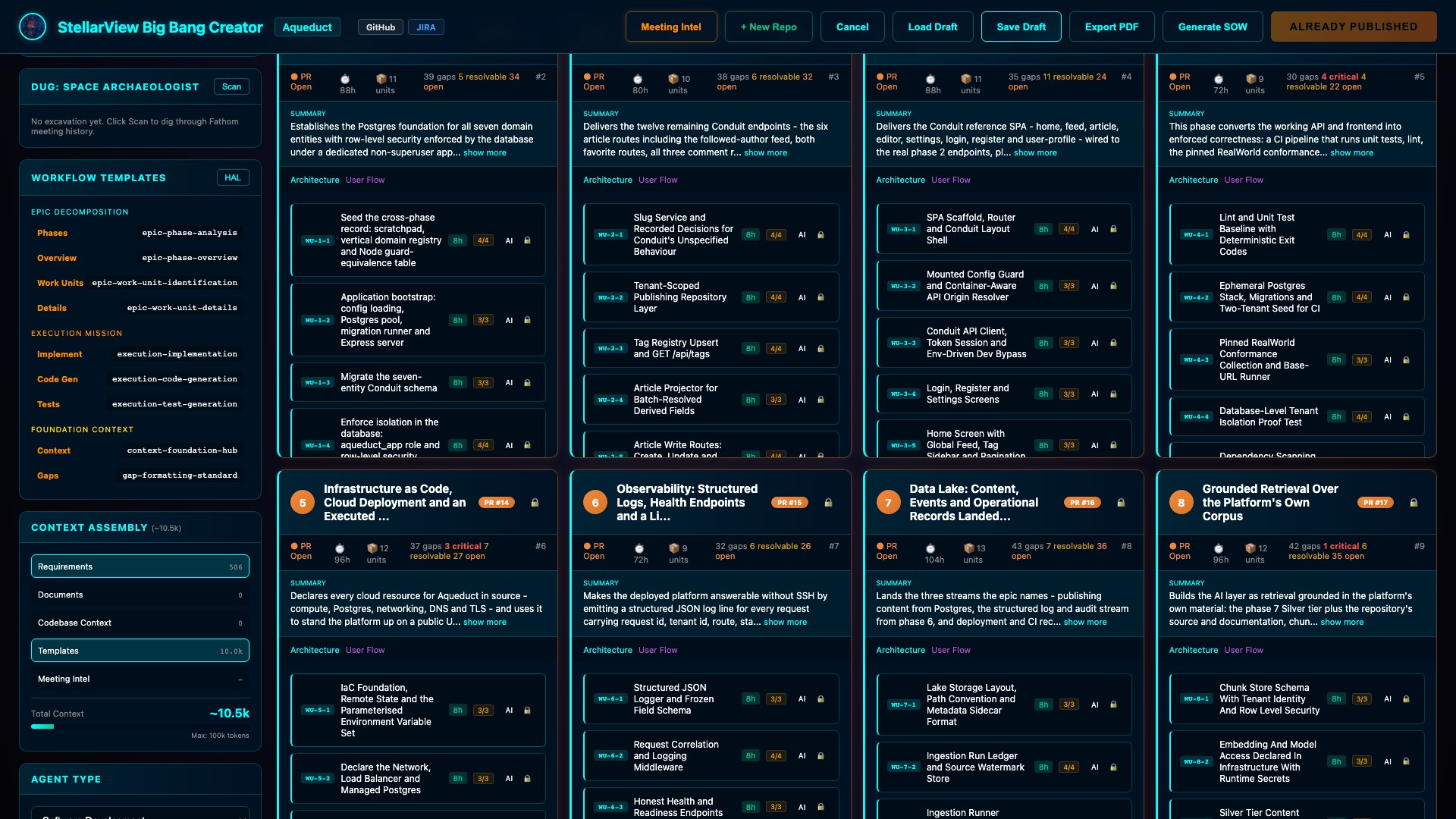
The Big Bang turns the documents into one epic: phases in dependency order, work units in plain words, an architecture drawing per phase, and a quality gate that scores the requirements and names what is missing. On the first engagement that was eight phases, sixty-eight work units and two hundred and four open questions. A hundred and ninety-four had a suggested answer by the time a person looked; ten waited for the partner, by name. The partner can read the whole plan before anything is built, and so can whoever joins in a year.
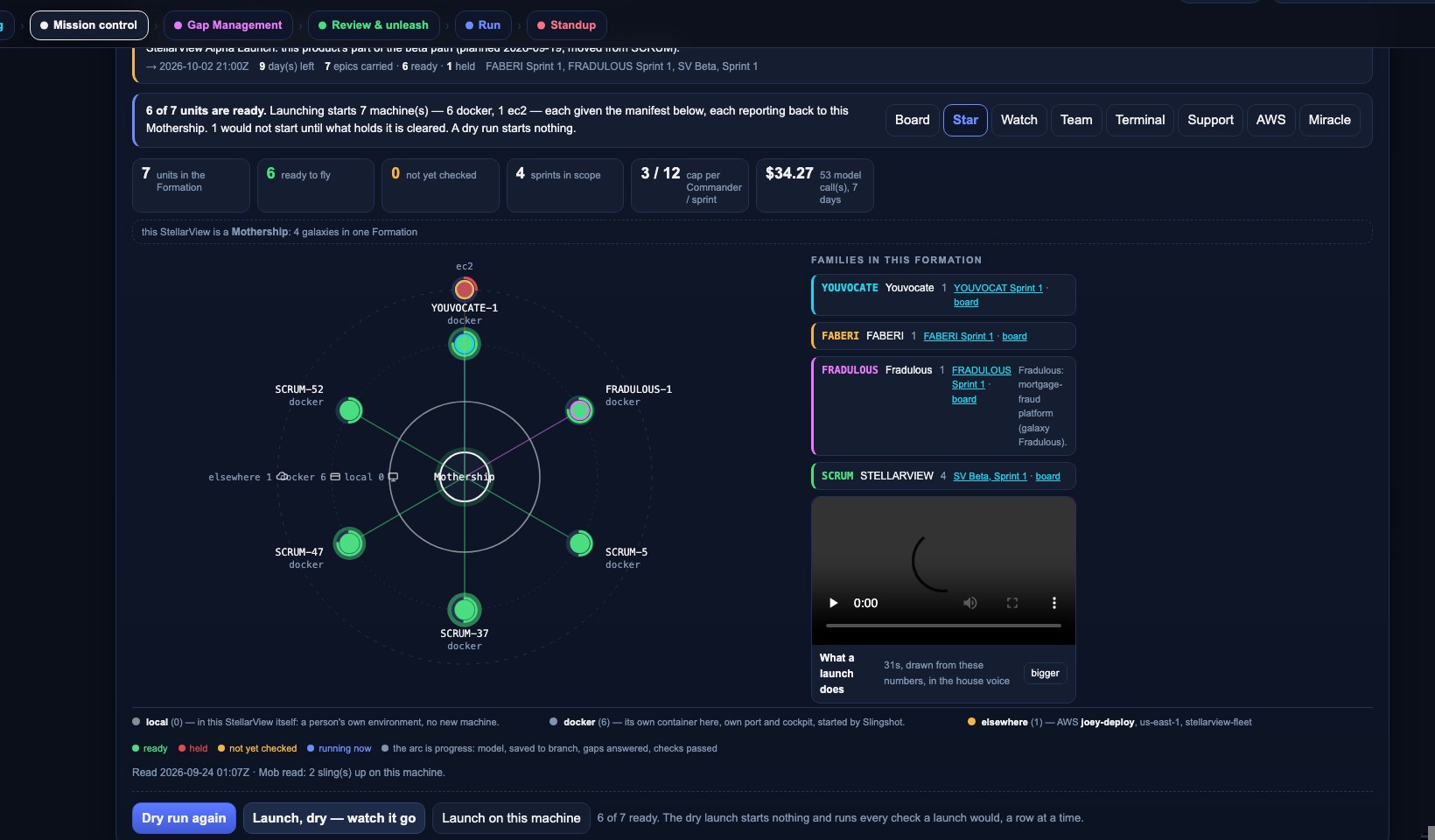
Launch: a Formation of units, local and remote
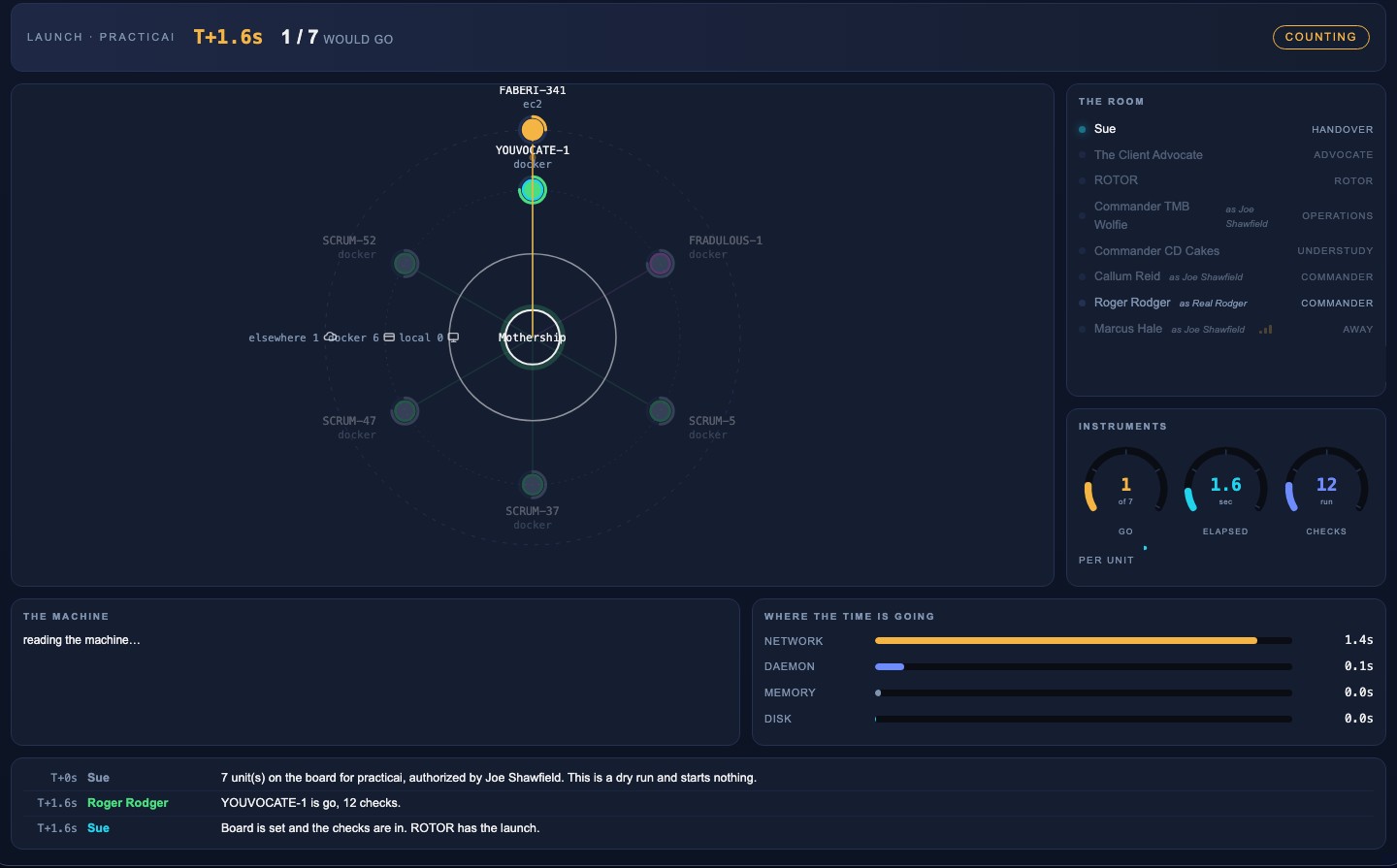
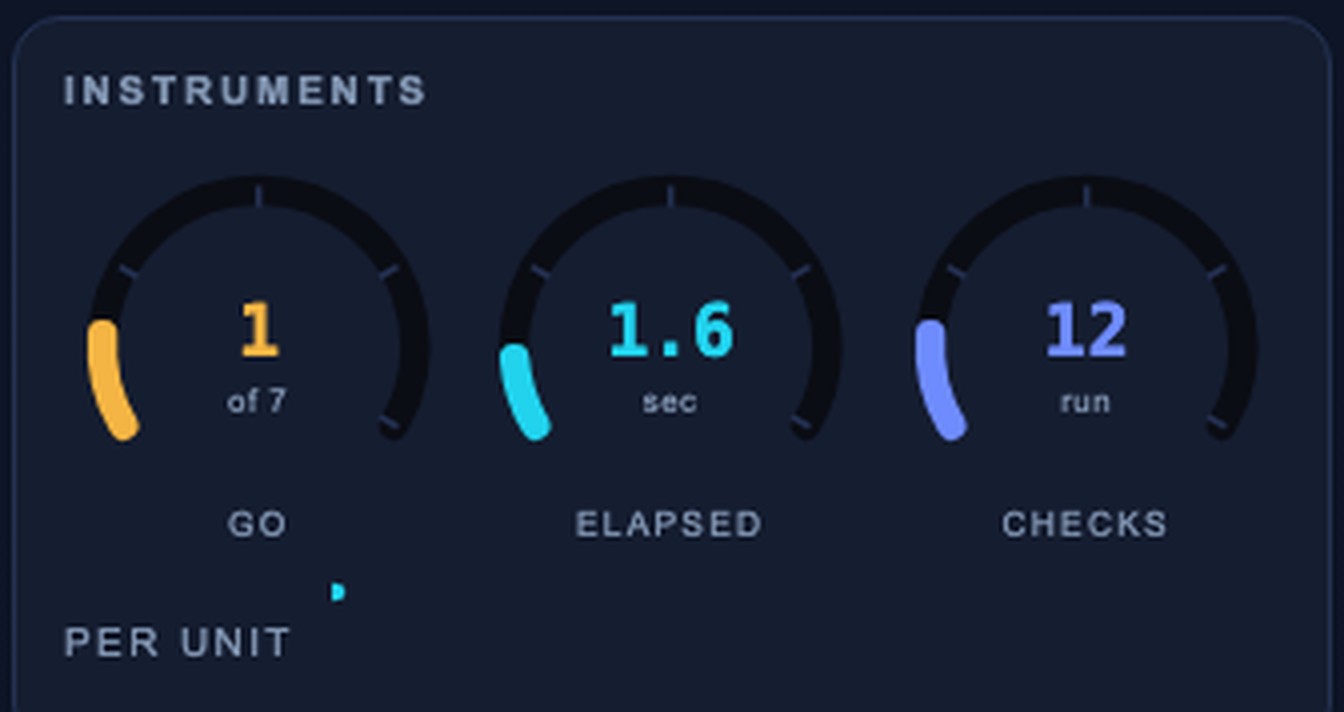
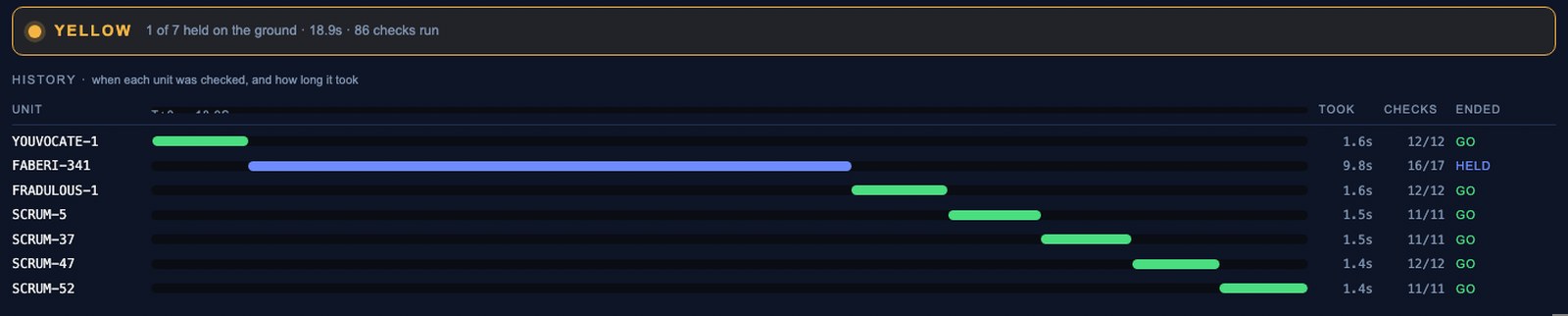
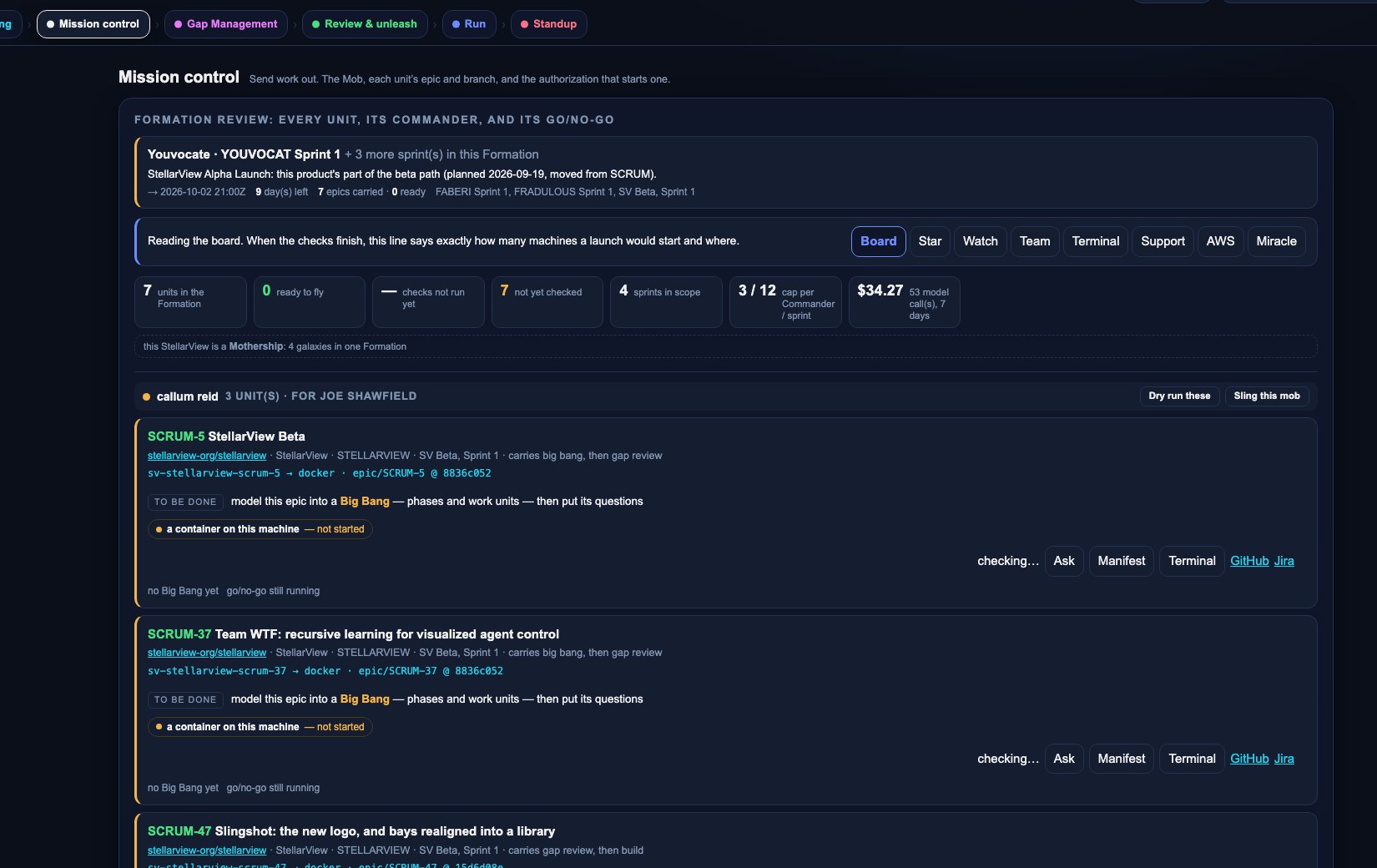
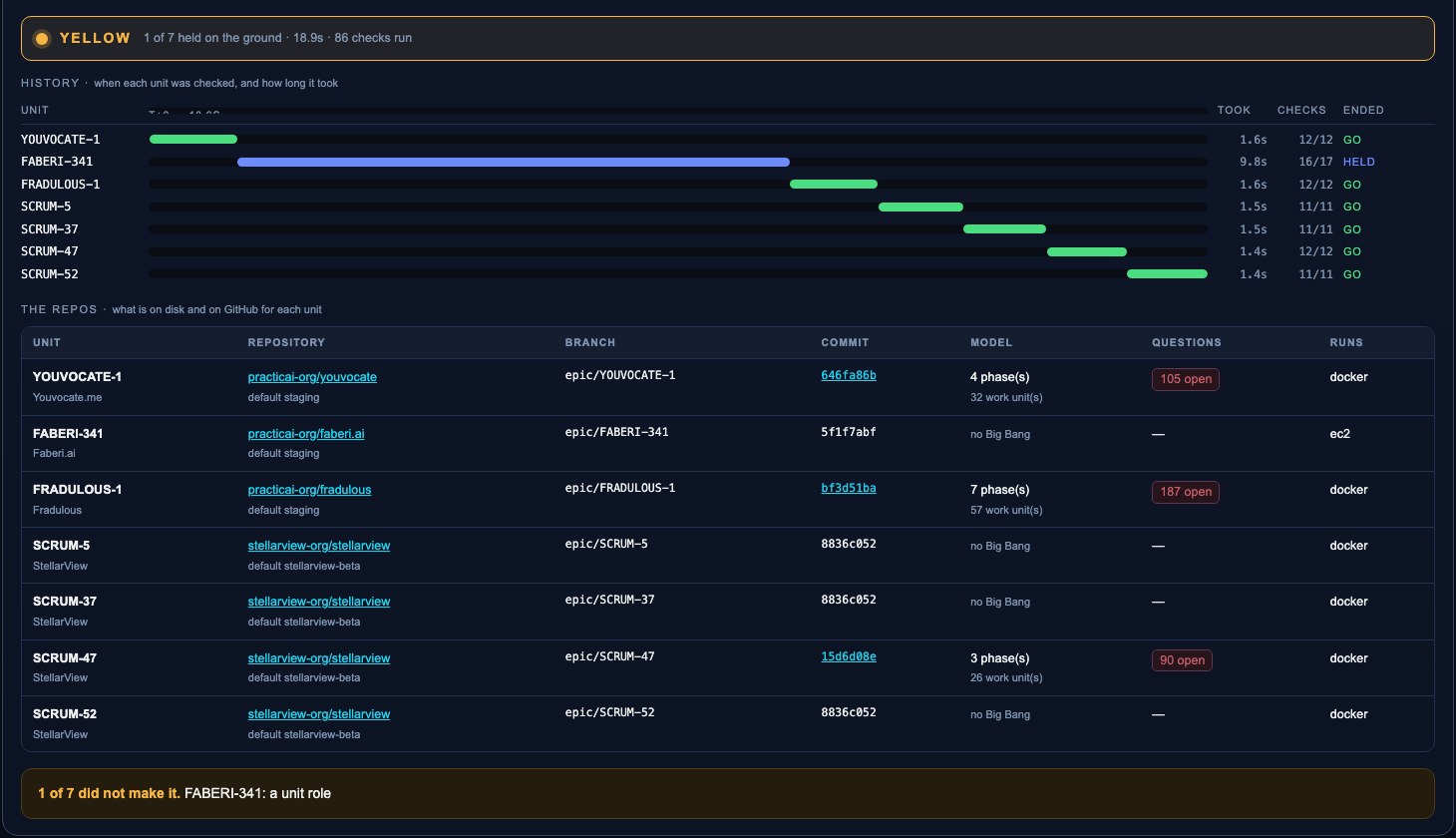
Mission control is where a Commander sits. Each unit says where it stands in one sentence. Starfield is the launch view: units on their rings around the Mothership. Press launch, dry or real, and the instruments come up: how many units would go, the elapsed time, the checks run, and where the time went, network, daemon, memory, disk. The report grades it the honest way. Worst state wins, so six green and one held reads yellow, and it names the one.
Build: a stack of pull requests, and a script to land it
Claude Code builds each phase on the branch of the phase before. Every pull request is only
its own work, so a reviewer reads one phase at a time and nobody waits for a merge. If a phase
goes sideways you cut the stack there and rebuild from the phase below it, keeping what is
already paid for. Landing is a script, merge-stack, that reads the chain from GitHub, shows
its plan, merges bottom up with merge commits, and retargets each child to the base before any
branch is deleted. Deleting a base branch first silently closes the pull request stacked on
it. We learned that the expensive way.
Prove it, then show it
A build is not finished until it boots from nothing and passes its own tests. The Commission does that and fixes what it finds through the project’s own mechanisms: a migration, not a hand-altered table; the package manager, not an edited lockfile. Then the product is shown doing its job in its own interface, in colour. Filming the test run with the cache off caught a test that failed about one run in three. The cache had been hiding it. It was a real ordering bug, fixed the same evening with a test that fails three times in three on the old code.
When a partner gives no brand, we find theirs, from their own public site. Nothing ships with the look of a generated demo.
Deploy, document, hand over
The fleet deploys the service into a cloud account behind a sign-in gate. Its secrets go to Secrets Manager, never into an image. A gated address answers the same whether the app exists or not, so up and down are proven from AWS itself, not from the URL. The wiki is a real company space: the platform, the runbook, the workflow from a page to Git to the cloud, a security control matrix, policies, and the first ninety days for a new hire. Where it describes things that are not built yet, it says so. The handoff is an email with a signed download, two commands, and two keys that stay the partner’s. Slingshot, the desktop client, puts StellarView on their machine or into their own account.
The film is the report
The engagement ends with a film in a fixed form, and the form is now a recipe: seventeen parts in order, each with its reason written down, assembled by a tool that refuses a film that breaks it. The house rules travel with the recipe. Always be showing the product. Push in on what is being said. Speak about money once. Never put a machine’s plumbing on screen as news. The film we delivered runs twenty-six minutes. The first cut ran sixty-four, and the partner would have been right to stop watching.
What it cost
The model calls for the build, read from the ledger rather than estimated, came to about nineteen dollars. The rooms, the renders and the voices run locally. The honest expensive parts are elsewhere: the people who review, and the questions only the partner can answer.
What does not work yet
The main gate on what is left is law, not code. Moving a repository, a cloud account and the data into a partner’s name happens under a signed agreement, and the tooling waits for it.
- Moving the whole thing from our identity to the partner’s (the repository, the space, the project, the account) is done by hand. We call it Transfer Identity, and it is not built.
- Removing a deployed app leaves its secrets behind until a person deletes them.
- The voices are synthetic, and the flybys are drawings, labelled as drawings.
- The wiki is generated from the requirements and the build history, and a person still reads it before a partner relies on it.
Build Ahead
This is the offer. We build the product, deploy it, document it, train the team and film it before the partner pays for anything, and all of it is delivered with the product. When they are ready, the same engagement repeats with us, sprint after sprint. We call it Pulse Ahead.
Credits
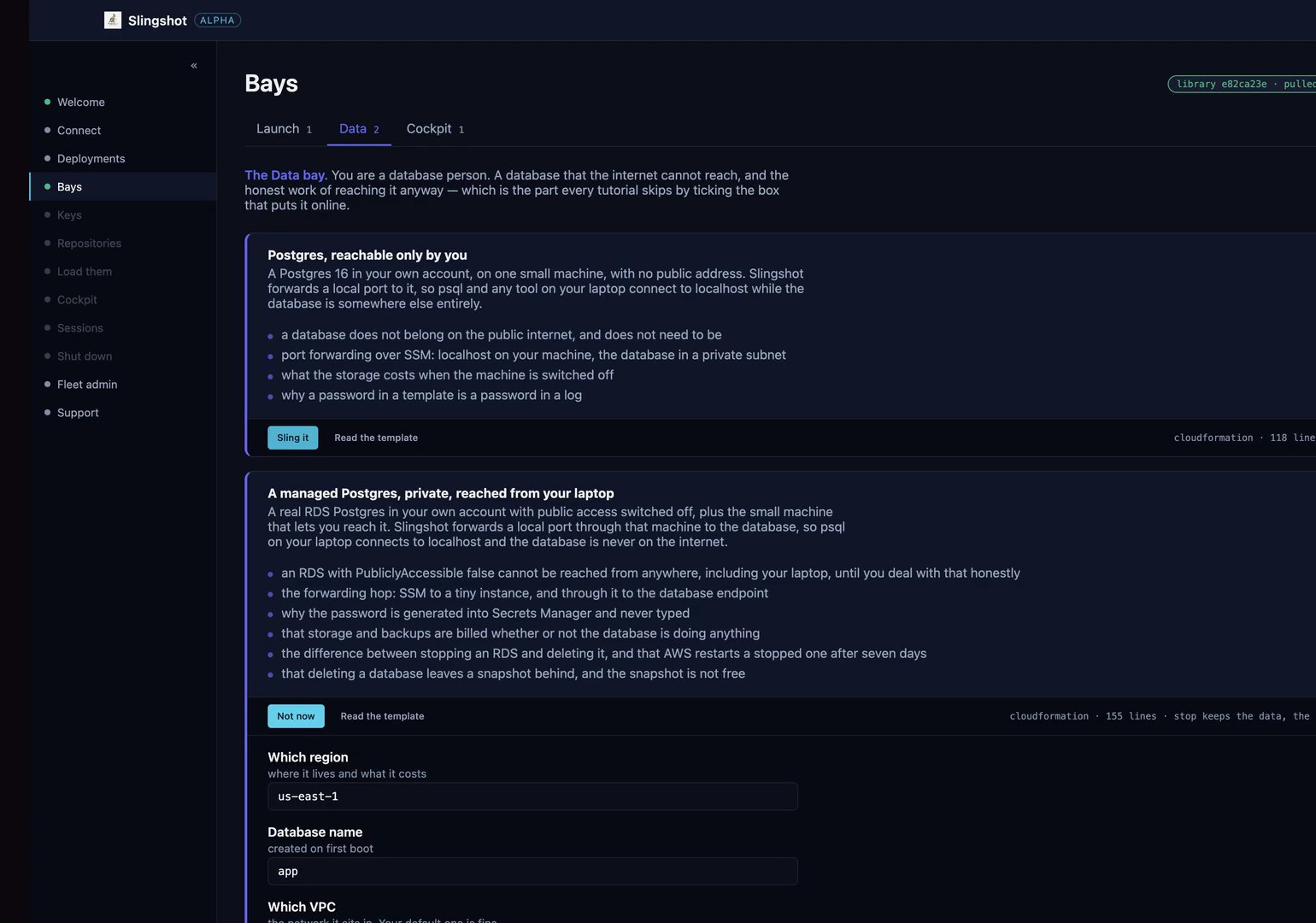
The film at the top is the Madstone engagement itself, done at no charge. The screenshots in the sections are captured on our own StellarView, our own Formation and our own demo repository. The narrated flyby is in the house voice, Sue, which is synthetic. Click any still to see it large, and use the arrows to walk through them all.